


1996 Ignition Control Module

Freshman User
Joined: Jan 2003
Posts: 40
Likes: 0
I think I just might kill the whole internet! I just spent 20 mins typing a whole explanation of what I have done and when I tried to enter a hyperlink I lost it all! Just what I need today!
I will retype it all because I have to so I will be back to you shortly!
I will retype it all because I have to so I will be back to you shortly!
Freshman User
Joined: Jan 2003
Posts: 40
Likes: 0
Any how DeathRanger I tried starting fluid from the get go on this fiasco as it it my "Old Standby" when anything like this happens. It didn't do jack! Even spayed straight gas in it with a spay bottle while my girl cranked it yesterday. Still not diddly
I have tested or replaced everything except for wires, plugs, rotor and cap (These where new 2500 miles ago when I did the engine swap.).
I know the PCM is working from various tests that I have done. Read back through the thread since the time of my first post and you can see what I have done. I even checked the timing with my light after the PIP replacement to make sure the timing hadn't slipped.
Okay Subford; I replaced the ACT/IAT sensor and the ECT and still nothing. Although it did seem to be catching more often. At first it was like cranking 10 seconds and trying to catch for 5 seconds and now it is doing like 5 and 5.
Strange thing at AZ! I forgot and told them I needed the ACT/IAT for a '96 instead of an '89 and when he brought out the sensor it was the one for the intake and not the one for the airbox like the diagram you posted shows.
I am in no way trying to degrade or underrate your standings, ability or knowledge; But why? Your diagram shows that it is supposed to be in the airbox and mine is in the intake and my '96 wiring harness is appropriate for the intake location and not the airbox location. Even though in mid-'94 it was supposed to be deleted from the intake and moved to the airbox; Thus the name change!
Also my truck is an OBD-I truck. So that should throw 2 digit codes right? I know they should all be OBD-II by '96 and my MFG date is 11/95 but it does not have the 16 pin connector under the dash but instaed it has this http://www.2carpros.com/images/artic..._connector.jpg connector under the hood. Isn't that an OBD-I connector and shouldn't it throw 2 digit codes?
Like I said earlier! We are in a FORD TWILIGHT ZONE here!
It threw the 33 and 63 before it threw the 11 code!
You tell me what is going on because I am just about through with it! If I could afford to fly you here to look at it personally I would!
I have tested or replaced everything except for wires, plugs, rotor and cap (These where new 2500 miles ago when I did the engine swap.).
I know the PCM is working from various tests that I have done. Read back through the thread since the time of my first post and you can see what I have done. I even checked the timing with my light after the PIP replacement to make sure the timing hadn't slipped.
Okay Subford; I replaced the ACT/IAT sensor and the ECT and still nothing. Although it did seem to be catching more often. At first it was like cranking 10 seconds and trying to catch for 5 seconds and now it is doing like 5 and 5.
Strange thing at AZ! I forgot and told them I needed the ACT/IAT for a '96 instead of an '89 and when he brought out the sensor it was the one for the intake and not the one for the airbox like the diagram you posted shows.
I am in no way trying to degrade or underrate your standings, ability or knowledge; But why? Your diagram shows that it is supposed to be in the airbox and mine is in the intake and my '96 wiring harness is appropriate for the intake location and not the airbox location. Even though in mid-'94 it was supposed to be deleted from the intake and moved to the airbox; Thus the name change!
Also my truck is an OBD-I truck. So that should throw 2 digit codes right? I know they should all be OBD-II by '96 and my MFG date is 11/95 but it does not have the 16 pin connector under the dash but instaed it has this http://www.2carpros.com/images/artic..._connector.jpg connector under the hood. Isn't that an OBD-I connector and shouldn't it throw 2 digit codes?
Like I said earlier! We are in a FORD TWILIGHT ZONE here!
It threw the 33 and 63 before it threw the 11 code!
You tell me what is going on because I am just about through with it! If I could afford to fly you here to look at it personally I would!

Senior User
Joined: Aug 2006
Posts: 377
Likes: 6
Any how DeathRanger I tried starting fluid from the get go on this fiasco as it it my "Old Standby" when anything like this happens. It didn't do jack! Even spayed straight gas in it with a spay bottle while my girl cranked it yesterday. Still not diddly
I have tested or replaced everything except for wires, plugs, rotor and cap (These where new 2500 miles ago when I did the engine swap.).
I know the PCM is working from various tests that I have done. Read back through the thread since the time of my first post and you can see what I have done. I even checked the timing with my light after the PIP replacement to make sure the timing hadn't slipped.
Okay Subford; I replaced the ACT/IAT sensor and the ECT and still nothing. Although it did seem to be catching more often. At first it was like cranking 10 seconds and trying to catch for 5 seconds and now it is doing like 5 and 5.
Strange thing at AZ! I forgot and told them I needed the ACT/IAT for a '96 instead of an '89 and when he brought out the sensor it was the one for the intake and not the one for the airbox like the diagram you posted shows.
I am in no way trying to degrade or underrate your standings, ability or knowledge; But why? Your diagram shows that it is supposed to be in the airbox and mine is in the intake and my '96 wiring harness is appropriate for the intake location and not the airbox location. Even though in mid-'94 it was supposed to be deleted from the intake and moved to the airbox; Thus the name change!
Also my truck is an OBD-I truck. So that should throw 2 digit codes right? I know they should all be OBD-II by '96 and my MFG date is 11/95 but it does not have the 16 pin connector under the dash but instaed it has this http://www.2carpros.com/images/artic..._connector.jpg connector under the hood. Isn't that an OBD-I connector and shouldn't it throw 2 digit codes?
Like I said earlier! We are in a FORD TWILIGHT ZONE here!
It threw the 33 and 63 before it threw the 11 code!
You tell me what is going on because I am just about through with it! If I could afford to fly you here to look at it personally I would!
I have tested or replaced everything except for wires, plugs, rotor and cap (These where new 2500 miles ago when I did the engine swap.).
I know the PCM is working from various tests that I have done. Read back through the thread since the time of my first post and you can see what I have done. I even checked the timing with my light after the PIP replacement to make sure the timing hadn't slipped.
Okay Subford; I replaced the ACT/IAT sensor and the ECT and still nothing. Although it did seem to be catching more often. At first it was like cranking 10 seconds and trying to catch for 5 seconds and now it is doing like 5 and 5.
Strange thing at AZ! I forgot and told them I needed the ACT/IAT for a '96 instead of an '89 and when he brought out the sensor it was the one for the intake and not the one for the airbox like the diagram you posted shows.
I am in no way trying to degrade or underrate your standings, ability or knowledge; But why? Your diagram shows that it is supposed to be in the airbox and mine is in the intake and my '96 wiring harness is appropriate for the intake location and not the airbox location. Even though in mid-'94 it was supposed to be deleted from the intake and moved to the airbox; Thus the name change!
Also my truck is an OBD-I truck. So that should throw 2 digit codes right? I know they should all be OBD-II by '96 and my MFG date is 11/95 but it does not have the 16 pin connector under the dash but instaed it has this http://www.2carpros.com/images/artic..._connector.jpg connector under the hood. Isn't that an OBD-I connector and shouldn't it throw 2 digit codes?
Like I said earlier! We are in a FORD TWILIGHT ZONE here!
It threw the 33 and 63 before it threw the 11 code!
You tell me what is going on because I am just about through with it! If I could afford to fly you here to look at it personally I would!
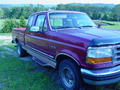
Fleet Owner


Joined: Aug 2005
Posts: 23,668
Likes: 301
From: Easton,Ks
After reading the text for the 1996 5.8L engine it does say that the IAT sensor is located at the top center front of engine, near intake runner #6.
It looks like only the 5.0L had it in the air box.
Also in 1996 only the 5.0L, 5.8L Under 8500 GVW and California trucks had the OBD-II system. Yours would have the OBD-I system. The 1997 F53 and other trucks with the 460 and non California also had OBD-I system.
The last two digit code trucks was the 1995 4.9L with a standard transmission.
Some trucks as early as 1989 with the E4OD transmission had three digit codes.
All the F53 chassis with the 460 and the E4OD had three digit codes in 1989.
So your truck should be OBD-I with three digit codes.
It looks like only the 5.0L had it in the air box.
Also in 1996 only the 5.0L, 5.8L Under 8500 GVW and California trucks had the OBD-II system. Yours would have the OBD-I system. The 1997 F53 and other trucks with the 460 and non California also had OBD-I system.
The last two digit code trucks was the 1995 4.9L with a standard transmission.
Some trucks as early as 1989 with the E4OD transmission had three digit codes.
All the F53 chassis with the 460 and the E4OD had three digit codes in 1989.
So your truck should be OBD-I with three digit codes.
Freshman User
Joined: Jan 2003
Posts: 40
Likes: 0
DeathRanger. My buddy was telling me that today; But, I don't see how that would be true seeing that the dizzy is run off the cam and the timing marks are on the balancer. The dizzy fires the timing light according to the number one spark and if the timing chain slipped then the timing marks would not line up on the balancer when the timing light flashes because the dizzy and the crank would be out of sync.
I don't know if I'm wrong here but that does seem to be logical in a mechanical sense to me.
Subford,
I'm glad you found that about the IAT because I was starting to get really worried about that. I know nobody has messed with the wiring harness so it kinna had me baffled as to why my harness had the plug in the proper place for the intake mounted one.
Maybe I'm wrong on those codes but I could swear I counted the flashes right. The obd1 code reader I have is old from back when I had my '89 BII and it only flashes or beeps and I hate it. I think I will go buy one of the new digital ones that stores the codes tomorrow. Sometimes when you look down to write down a number you can miss things and I have never been good with that reader anyhow.
I know this going back and forth is hectic and I really appreciate your help with your knowledge all through this! Computers in vehicles should be outlawed! That's why I have a one wire ignition system in my hot rod! Old school small block with points and a carb! (I hate to admit that it's a 350 chevy though!)LMAO!
I don't know if I'm wrong here but that does seem to be logical in a mechanical sense to me.
Subford,
I'm glad you found that about the IAT because I was starting to get really worried about that. I know nobody has messed with the wiring harness so it kinna had me baffled as to why my harness had the plug in the proper place for the intake mounted one.
Maybe I'm wrong on those codes but I could swear I counted the flashes right. The obd1 code reader I have is old from back when I had my '89 BII and it only flashes or beeps and I hate it. I think I will go buy one of the new digital ones that stores the codes tomorrow. Sometimes when you look down to write down a number you can miss things and I have never been good with that reader anyhow.
I know this going back and forth is hectic and I really appreciate your help with your knowledge all through this! Computers in vehicles should be outlawed! That's why I have a one wire ignition system in my hot rod! Old school small block with points and a carb! (I hate to admit that it's a 350 chevy though!)LMAO!
Senior User
Joined: Aug 2006
Posts: 377
Likes: 6
I'll agree that in theory, checking the timing SHOULD work, but in practice, it doesn't.
I think its got to do with how wide the edge is on the ignition rotor, and the fact that the comp doesn't care where the cam is (it doesn't know), the cam and distributor could be off by a couple teeth and the ignition would still have the ability to fire with the rotor close enough to the stand on the cap..
Of course, I'm not any sort of expert.
But at this point, it's the next most logical step. It seems you've run out of options.
I'd start with a compression test of all 8, then think about pulling the timing cover. Compression test is cheap, just takes some time.
I think its got to do with how wide the edge is on the ignition rotor, and the fact that the comp doesn't care where the cam is (it doesn't know), the cam and distributor could be off by a couple teeth and the ignition would still have the ability to fire with the rotor close enough to the stand on the cap..
Of course, I'm not any sort of expert.
But at this point, it's the next most logical step. It seems you've run out of options.
I'd start with a compression test of all 8, then think about pulling the timing cover. Compression test is cheap, just takes some time.
Freshman User
Joined: Jan 2003
Posts: 40
Likes: 0
Dang it DeathRanger! You have brought me to what I have been dreading and that's the almighty compression test! It's such a pain in the A** to pull the plugs on this truck that I have been dreading doing it!
Your explanation of the width of the outer blade on the rotor is making me think!
BUT! Wouldn't the PIP signal to the computer tell it where #1 was? Maybe it wouldn't because the whatever they call it "rotor disc thingy" in the dizzy has 8 slots in it to send the PIP signal 8 times per rotation and the comp would not know if the chain slipped a tooth. Usually they slip more though.
ALSO! That does not make up for the fact that the timing marks line up. How could that be if the cam and crank where not in sync? Then comes in your explanation of the rotor blade width. There is merit there! But! How far of a gap can the coil spark jump?
For example. I have a Tesla coil that I built from scratch and it has a Jacobs ladder attachment on it that makes an electrical arcs travel up the two wires until it gets far enough apart that the circuit breaks from distance. Then it starts again at the bottom and goes up. Kind of like the stuff you see in the old Frankenstein movies.
Now in order for this spark to continue up the rods to a gap of about 2" it takes almost 75k volts. So how much voltage does a coil put out and how far will it jump? AND! If it will jump farther than two inches then why doesn't the spark from a coil in a running engine jump all over the place and not just to that specific stand on the rotor cap?
Yeah; I know I'm weird but my friends and I also design and build turbine jet engines for fun from that actually run and have afterburners that produce 200 or more lbs of thrust! LOL! They are all manually controlled though!
I'm not trying to poke any fun here I am just trying to point out some physics that don't add up in my mind when it comes to this situation.
Your explanation of the width of the outer blade on the rotor is making me think!
BUT! Wouldn't the PIP signal to the computer tell it where #1 was? Maybe it wouldn't because the whatever they call it "rotor disc thingy" in the dizzy has 8 slots in it to send the PIP signal 8 times per rotation and the comp would not know if the chain slipped a tooth. Usually they slip more though.
ALSO! That does not make up for the fact that the timing marks line up. How could that be if the cam and crank where not in sync? Then comes in your explanation of the rotor blade width. There is merit there! But! How far of a gap can the coil spark jump?
For example. I have a Tesla coil that I built from scratch and it has a Jacobs ladder attachment on it that makes an electrical arcs travel up the two wires until it gets far enough apart that the circuit breaks from distance. Then it starts again at the bottom and goes up. Kind of like the stuff you see in the old Frankenstein movies.
Now in order for this spark to continue up the rods to a gap of about 2" it takes almost 75k volts. So how much voltage does a coil put out and how far will it jump? AND! If it will jump farther than two inches then why doesn't the spark from a coil in a running engine jump all over the place and not just to that specific stand on the rotor cap?
Yeah; I know I'm weird but my friends and I also design and build turbine jet engines for fun from that actually run and have afterburners that produce 200 or more lbs of thrust! LOL! They are all manually controlled though!
I'm not trying to poke any fun here I am just trying to point out some physics that don't add up in my mind when it comes to this situation.
Fleet Owner
Joined: Aug 2005
Posts: 23,668
Likes: 301
From: Easton,Ks
Check your slop in the chain. If you have no slop (under three degrees) then it is very doubtful that the chain has jumped.
Put a socket on the crankshaft and move it back and forth while watching the distributor pointer. Use the timing marks to see how much slop it has in degrees.
Put a socket on the crankshaft and move it back and forth while watching the distributor pointer. Use the timing marks to see how much slop it has in degrees.
FTE Stories
Ford Trucks for Ford Truck Enthusiasts

Top 10 Fords at 2026 Carlisle Ford Nationals
Joe Kucinski
3 Best / 3 Worst Parts of Modern Ford Ownership
Brett Foote
10 Amazing Upgrades That Solve Common Ford Truck Owner Headaches
Pouria Savadkouei
Every 2026 Ford Engine Explained
Brett Foote
10 Ugly Ford Trucks That We Still Kinda Love
Joe Kucinski
10 Things Every Truck Owner NEEDS (2026 Edition)
Michael S. Palmer
Rezvani's Latest Post-Apocalyptic Monster Is a Ford F-150 Raptor Underneath
Verdad Gallardo
Top 10 Most Expensive Ford Trucks Ever Sold on Bring a Trailer
Joe Kucinski
2027 Ford Super Duty Buyer's Guide (Every Model, Engine, & Package)
Brett Foote
Senior User
Joined: Aug 2006
Posts: 377
Likes: 6
Dang it DeathRanger! You have brought me to what I have been dreading and that's the almighty compression test! It's such a pain in the A** to pull the plugs on this truck that I have been dreading doing it!
Your explanation of the width of the outer blade on the rotor is making me think!
BUT! Wouldn't the PIP signal to the computer tell it where #1 was? Maybe it wouldn't because the whatever they call it "rotor disc thingy" in the dizzy has 8 slots in it to send the PIP signal 8 times per rotation and the comp would not know if the chain slipped a tooth. Usually they slip more though.
ALSO! That does not make up for the fact that the timing marks line up. How could that be if the cam and crank where not in sync? Then comes in your explanation of the rotor blade width. There is merit there! But! How far of a gap can the coil spark jump?
For example. I have a Tesla coil that I built from scratch and it has a Jacobs ladder attachment on it that makes an electrical arcs travel up the two wires until it gets far enough apart that the circuit breaks from distance. Then it starts again at the bottom and goes up. Kind of like the stuff you see in the old Frankenstein movies.
Now in order for this spark to continue up the rods to a gap of about 2" it takes almost 75k volts. So how much voltage does a coil put out and how far will it jump? AND! If it will jump farther than two inches then why doesn't the spark from a coil in a running engine jump all over the place and not just to that specific stand on the rotor cap?
Yeah; I know I'm weird but my friends and I also design and build turbine jet engines for fun from that actually run and have afterburners that produce 200 or more lbs of thrust! LOL! They are all manually controlled though!
I'm not trying to poke any fun here I am just trying to point out some physics that don't add up in my mind when it comes to this situation.
Your explanation of the width of the outer blade on the rotor is making me think!
BUT! Wouldn't the PIP signal to the computer tell it where #1 was? Maybe it wouldn't because the whatever they call it "rotor disc thingy" in the dizzy has 8 slots in it to send the PIP signal 8 times per rotation and the comp would not know if the chain slipped a tooth. Usually they slip more though.
ALSO! That does not make up for the fact that the timing marks line up. How could that be if the cam and crank where not in sync? Then comes in your explanation of the rotor blade width. There is merit there! But! How far of a gap can the coil spark jump?
For example. I have a Tesla coil that I built from scratch and it has a Jacobs ladder attachment on it that makes an electrical arcs travel up the two wires until it gets far enough apart that the circuit breaks from distance. Then it starts again at the bottom and goes up. Kind of like the stuff you see in the old Frankenstein movies.
Now in order for this spark to continue up the rods to a gap of about 2" it takes almost 75k volts. So how much voltage does a coil put out and how far will it jump? AND! If it will jump farther than two inches then why doesn't the spark from a coil in a running engine jump all over the place and not just to that specific stand on the rotor cap?
Yeah; I know I'm weird but my friends and I also design and build turbine jet engines for fun from that actually run and have afterburners that produce 200 or more lbs of thrust! LOL! They are all manually controlled though!
I'm not trying to poke any fun here I am just trying to point out some physics that don't add up in my mind when it comes to this situation.
LOL, dude, you've thought too much about it now! I'm more of a "dive in" kind of guy than the over thinker, I'd have already had the engine apart.
IMO, your problem is something easy. There isn't that much that will keep an engine from running. It SHOULD run with even a bunch of bad sensors, just poorly. Yours won't even do that, I bet it's something stupid simple being overlooked. Like a skipped chain or bad compression for one reason or another(think wiped cam or burned exhaust valves).
FWIW, coils are generally in the 30,000-40,000V range.
Freshman User
Joined: Jan 2003
Posts: 40
Likes: 0
Yeah I would have just dove into it but it was sitting in 2 1/2 foot of snow all piled up and we been having below zero temps. But it's getting warmer now so I have got to get it fixed.
Thanks for the tip on checking that slop too Subford. I will get some time in the next few days to do all that checking.
Thanks for the tip on checking that slop too Subford. I will get some time in the next few days to do all that checking.
Freshman User
Joined: Jan 2003
Posts: 40
Likes: 0
Well! With the help of another Ford guy who happens to own a mechanic shop I think we may have this thing figured out.
My girl is office manager at a fairly big lawn care service here and they have about 10 trucks, trailers and blah blah that they send to a guy for repairs. Well he came in the office today and my girl asked him if he might happen to have a mobile diagnostics computer and he did! He came over with his friend and we hooked it up!
Everything tested out to be okay so we pulled the plug on #1 and it was dripping wet. He says he thinks he knows what's wrong. Goes and pulls the dipstick and checks the oil and then has his buddy crank it over. Fuel was just flying out of the spark plug hole!
He says yup you got about 2 quarts of gas in your oil and fuel flying out like that; I'd say your fuel pressure regulator is stuck wide open! He said change the oil and filter, the plugs and the regulator and it should fire up. Said he had one in his shop about 2 weeks ago was doing the same thing.
We also ran #1 up to TDC on compression and took the dizzy cover off and the rotor was right on the #1 cap stand. I told him what you had suggested about seeing if there was slop in the chain and we did it and only got maybe 2 degrees before the dizzy started turning. (He said that was a new one on him and said thanks for that info!)
Also, I showed him the extra wire I was telling you about over by the solenoid and he knew right away that it had a car alarm/remote starter. MAN! This guy and his buddy stripped the alarm out and had it rewired back up in 15 minutes!
So! I pulled the fuel pressure regulator (GRRRRR!) went down to AZ got some oil, filter, plugs and a new regulator. Just got back and it's dark out so tomorrow I will do all that and we will see what is happening!
I will be back on tomorrow same bat time same bat channel with some results!
My girl is office manager at a fairly big lawn care service here and they have about 10 trucks, trailers and blah blah that they send to a guy for repairs. Well he came in the office today and my girl asked him if he might happen to have a mobile diagnostics computer and he did! He came over with his friend and we hooked it up!
Everything tested out to be okay so we pulled the plug on #1 and it was dripping wet. He says he thinks he knows what's wrong. Goes and pulls the dipstick and checks the oil and then has his buddy crank it over. Fuel was just flying out of the spark plug hole!
He says yup you got about 2 quarts of gas in your oil and fuel flying out like that; I'd say your fuel pressure regulator is stuck wide open! He said change the oil and filter, the plugs and the regulator and it should fire up. Said he had one in his shop about 2 weeks ago was doing the same thing.
We also ran #1 up to TDC on compression and took the dizzy cover off and the rotor was right on the #1 cap stand. I told him what you had suggested about seeing if there was slop in the chain and we did it and only got maybe 2 degrees before the dizzy started turning. (He said that was a new one on him and said thanks for that info!)
Also, I showed him the extra wire I was telling you about over by the solenoid and he knew right away that it had a car alarm/remote starter. MAN! This guy and his buddy stripped the alarm out and had it rewired back up in 15 minutes!
So! I pulled the fuel pressure regulator (GRRRRR!) went down to AZ got some oil, filter, plugs and a new regulator. Just got back and it's dark out so tomorrow I will do all that and we will see what is happening!
I will be back on tomorrow same bat time same bat channel with some results!
Freshman User
Joined: Jan 2003
Posts: 40
Likes: 0
 IT"S ALIVE!
 The fuel pressure regulator and new plugs did it! I am so happy I could poop a gold brick!
Thank you Subford
 for your patience and help and thank everyone else who put in their two cents too.
It would not have been such a big deal except my girl and I only have the two vehicles and seeing that she only works a little over a mile from the house she is the one driving the truck all the time. Now that all this is over I can get back to the important task at hand. Building my 1952 F3 hotrod!

New User
Joined: Jul 2011
Posts: 16
Likes: 0
Sorry to dig up an old thread,,
Having a problem with my 96 E150 econoline,, it started off that it was hard to start in the mornings ,and on occasion it would just cut out while driving, (only to start back up after 10 -15 min ) and so far ive replaced, the battery,, plugs, wires ,Distributor cap and put a new fuel pump and fuel filter on , so my son in law ( who is a mechanic) said to replace the Ignition control module..... now after going to the local parts store and picking up a grey icm, which pops up my "check engine light" with a p1351 code ,
i come to find out i have the Computer Controlled Dwell (CCD) SYSTEM H .
Should having the ICM replaced with the Black one from a dealership sort this issue out ?.. or can i just drive about with the grey one installed with my check engine light on.
Also when i called the dealership they said that i would been the motorcraft DY-1075 , but when i looked it up on rockauto it shows a grey one.
Having a problem with my 96 E150 econoline,, it started off that it was hard to start in the mornings ,and on occasion it would just cut out while driving, (only to start back up after 10 -15 min ) and so far ive replaced, the battery,, plugs, wires ,Distributor cap and put a new fuel pump and fuel filter on , so my son in law ( who is a mechanic) said to replace the Ignition control module..... now after going to the local parts store and picking up a grey icm, which pops up my "check engine light" with a p1351 code ,
i come to find out i have the Computer Controlled Dwell (CCD) SYSTEM H .
Should having the ICM replaced with the Black one from a dealership sort this issue out ?.. or can i just drive about with the grey one installed with my check engine light on.
Also when i called the dealership they said that i would been the motorcraft DY-1075 , but when i looked it up on rockauto it shows a grey one.
Last edited by jben04; Jul 6, 2016 at 09:48 AM. Reason: added info

Fleet Owner


Joined: Oct 2005
Posts: 20,789
Likes: 1,753
From: Kentucky
Most part manuals are wrong for this era truck/van even Ford's. You need a Motorcraft DY1077.
The remote count black CCD style ICMs rarely go bad. I would be surprised if it fixes your original problem. The most likely cause is a bad PIP sensor inside the distributor. It provides the pulses to trigger spark and fuel injector firing.
You do not want to keep that gray Push-Start ICM.
The remote count black CCD style ICMs rarely go bad. I would be surprised if it fixes your original problem. The most likely cause is a bad PIP sensor inside the distributor. It provides the pulses to trigger spark and fuel injector firing.
You do not want to keep that gray Push-Start ICM.
New User
Joined: Jul 2011
Posts: 16
Likes: 0
Most part manuals are wrong for this era truck/van even Ford's. You need a Motorcraft DY1077.
The remote count black CCD style ICMs rarely go bad. I would be surprised if it fixes your original problem. The most likely cause is a bad PIP sensor inside the distributor. It provides the pulses to trigger spark and fuel injector firing.
You do not want to keep that gray Push-Start ICM.
The remote count black CCD style ICMs rarely go bad. I would be surprised if it fixes your original problem. The most likely cause is a bad PIP sensor inside the distributor. It provides the pulses to trigger spark and fuel injector firing.
You do not want to keep that gray Push-Start ICM.
On another note i manged to pick up a ICM from ebay complete with the heatsink the parts number on the icm match also.