


Speed density engine build sucess

Thread Starter
|
Senior User
Joined: Nov 2001
Posts: 151
Likes: 0
Speed density engine build sucess
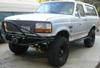
I've noticed alot of confusion here about speed density and performance modifications here. I think everyone is under the impression that mass air is needed before anything can be done. I recently swapped out my tired 5.0 for a 96 roller 351. I put a set of gt-40p heads on it that I did a little cleanup on and drilled the bolt holes out to use on the 351. The heads were milled 0.010 to clean up the surface. The block was bored 0.030 and I used a set of forged pistons that gave me about a 9.7:1 compression ratio. I don't think forged pistons were required for this application but I used the piston that gave me the compression I was after. I used the stock 351 intake, I cleaned up the upper as best I could but there isn't much you can do without cutting it open and rewelding it. The lower was it pretty good shape expect it choked down right were the port meets the heads. I opened the intake up to mate with the heads ports. I am using the stock throttle body. I am running a set of flowtech headers because they just happed to work the the gt40p heads, were some brands do not. The most important part about working with speed density is the camshaft. I used a comp NX264-HR14. This is supposed to be a nitrous grind, but works good to build torque because of its high lift and short duration. Check out 50tech.com those guys over there have tried several different cams for speed density and can recommend others. I had the get a pressure gauge and adjustable fuel pressure regulator to tune the engine in. I am running a lightning computer right now, but I think the stock 351 can be made to work. I used the lightning computer because it is programmed to run an engine thats more like mine, were the stock 5.0 computer is not. I can tell you that a 10* timing I can run 87 octane just fine. My truck is a 1991 F-250 regular cab that I have put one ton axles under, lifted, 35's, 4.10 gears. It's heavy but this engine pulls it around great. Interstate driving at 70 and above it does not bog down on a hill even in overdrive. I do not have to push the pedal down at all to keep the same speed. It has loads of bottom end torque - I don't have to run this engine hard at all to do what I used to have to flog on the 5.0 to do. It is however, done making power at 4500 rpm, which I believe is caused by the stock intake and throttle body choking it off. But to behonest theres no reason to rev over that, usless you want to run faster than 100 mph. At lower speeds if you want wheel speed like spinning in mud, just use the next higher gear. I am running stock fuel pumps, stock 19 lb injectors, I have no egr and no smog pump and the engine runs fine. I don't have any mileage numbers, but I don't think its one bit worse than the old 5.0 was. Overall, if you dove it you would swear it was a 460, and a good running one at that. I thought I would let everyone know about this combination because it is working great for me.

Moderator

Joined: Jun 2003
Posts: 3,549
Likes: 71
From: Calhoun GA

Glad to hear that ya got it working well, sounuds like ya got it dialed in nicely.
I've mentioned that SD can accept a wide variety of mods, and perform well with a good tune. If you really want to see how far speed density will go, just pick the minds of the GEN 1 Lightning guys.
I've been running 14psi/intercooled on my speed density equiped 94, with great success. Tuning it has been a bit more challenging, but if it wasn't for the wideband O2, then I wouldn't have been able to dial it in as well as I have it now. With the 42lb injectors, fuel pumps and a few keystrokes, I've been able to zero out the FMU. I'm headed to the track tomorrow to see what this overweight wind-barge will do.
I've mentioned that SD can accept a wide variety of mods, and perform well with a good tune. If you really want to see how far speed density will go, just pick the minds of the GEN 1 Lightning guys.
I've been running 14psi/intercooled on my speed density equiped 94, with great success. Tuning it has been a bit more challenging, but if it wasn't for the wideband O2, then I wouldn't have been able to dial it in as well as I have it now. With the 42lb injectors, fuel pumps and a few keystrokes, I've been able to zero out the FMU. I'm headed to the track tomorrow to see what this overweight wind-barge will do.
Hotshot

Joined: Jul 2002
Posts: 14,285
Likes: 12
From: Bend,OR
ive never heard of anyone running cast iron heads at that compression on pump gas. thats why i asked your elevation. 9.5 was max in my book and many others so for me this is a first. did you build this motor or did you have it built? are you sure about your comp ratio?
Thread Starter
|
Senior User
Joined: Nov 2001
Posts: 151
Likes: 0
I built it myself, the gt-40p's have a revised spark plug location and combustion chamber. They were used on late model explorers with the 5.0 They improved the burn so much that a smog pump was not required to meet emisions on these engines. If this were a 9.0:1 motor with e7 heads I would be running 12-14*
Hotshot
Joined: Jul 2002
Posts: 14,285
Likes: 12
From: Bend,OR
Trending Topics
Thread Starter
|
Senior User
Joined: Nov 2001
Posts: 151
Likes: 0
Well, the compression ratio is simply ratio of the volume of cylinder to the volume of the space you are compressing it into. This space would include the combustion chamber, valve reliefs, head gasket compressed vol, etc. I added up the volume of everything that the air will be compressed into when the piston is at TDC, and divide that into the swept volume the piston displaces. All you need to know to run the math yourself other than the info above is: Gt40p's combustion chambers run about 59cc's. I used a TRW piston # L2446F30 which have a 13.2 cc dish. I used a regular fel-pro permatorque head gasket, which I am told compress to about 0.040" thick when torqued down. I ran through the calculation a couple times, and was kind of worried because it was a hair higher than I had wanted. I have been told by engine builders in the past not to get to hung up on compression ratios, just get in the ballpark. One reason I chose the cam I did was the fact that it hangs the exhaust valve open a little longer, which bleeds some of that compression off. When you are adding up the volumes of everything you are figuring the "static" compression ratio. This number is by no means the actual compression your engine may see. The actual amount of air the engine compresses after taking into consideration the overlap of the valves and other valve events is the "dynamic" compression ratio, which is much harder to calculate. Thats way almost no one ever does it, even though its a much more true indicator of kind of compression demands the engine will have. Many of todays engines run near 10:1 static compression ratios and burn 87 octane. This is especially true of the small four cylinder cars. There are other factors that determine how much compression you can get away with like swirl, squish area, etc. These are things that for the most part a home engine builder can't change. The only thing you can do is look at what similar engines are getting away with running. Also remember you could get away with more compression if the engine was for a mustang, where the loads are lighter, and of shorter duration. It's a different story pulling a trailer up a mountain several miles. Keeping an engine cooler seems to help things out also, which a truck should always have more cooling system than it needs because it may have to operate under load with little airflow over the radiator. (boring around in a mudhole comes to mind)
FTE Stories
Ford Trucks for Ford Truck Enthusiasts

3 Best / 3 Worst Parts of Modern Ford Ownership
Brett Foote
10 Amazing Upgrades That Solve Common Ford Truck Owner Headaches
Pouria Savadkouei
Every 2026 Ford Engine Explained
Brett Foote
10 Ugly Ford Trucks That We Still Kinda Love
Joe Kucinski
10 Things Every Truck Owner NEEDS (2026 Edition)
Michael S. Palmer
Rezvani's Latest Post-Apocalyptic Monster Is a Ford F-150 Raptor Underneath
Verdad Gallardo
Top 10 Most Expensive Ford Trucks Ever Sold on Bring a Trailer
Joe Kucinski
2027 Ford Super Duty Buyer's Guide (Every Model, Engine, & Package)
Brett Foote
Top 10 Ford Truck Tragedies
Joe Kucinski
Thread Starter
|
Senior User
Joined: Nov 2001
Posts: 151
Likes: 0
I don't remember what the lobe speratation on it was, the specs are on comps site. As far as idle goes, you can tell it does not have a stock cam, but barely. It's probably the only speed density friendly cam that you can actually hear, which I assume is due to its valve events on the exhaust side. Even though it has a short duration, its lift numbers are pretty high (I think 0.512 with 1.6's?) Which means it lifts the valve open very fast, holds it open for the duration and slams it closed at the last second. This kind of aggressive ramp is not possible on non-roller cams. I'm happy with it because of the torque - I don't have to run this engine to get the power out of it, which should mean long engine life. I wish I had a little more rpm out of the engine before it quits pulling, but to be honest I haven't needed to spin it hard like I did with the 5.0
I have my guesses as to what kind of hp / torque this engine is making, but without a dyno its just a guess. A desktop dyno would make a little more trustable guess.
I have my guesses as to what kind of hp / torque this engine is making, but without a dyno its just a guess. A desktop dyno would make a little more trustable guess.

Freshman User
Joined: Mar 2005
Posts: 25
Likes: 0
From: Connecticut
Sounds like a nice combo you have there.I am looking into doing something similair with my truck.I do have a question which Lightning computer did you use and was a direct replacement?.What am asking is did you need to splice or switch wires to make it work.I new to the world of Ford EFI and I not have a have a lot experience with it yet.
Moderator
Joined: Jun 2003
Posts: 3,549
Likes: 71
From: Calhoun GA
Any one of the 4 Lightning PCM's should work most (if not all) speed density F-series pickup...plug-n-play. The only down fall is, if you have 4wd, 4-Low wont work with L PCM's.
The speed density GEN 1 L cal codes are C3P1, C3P2, C3P3 and ICY1.
The speed density GEN 1 L cal codes are C3P1, C3P2, C3P3 and ICY1.
Thread Starter
|
Senior User
Joined: Nov 2001
Posts: 151
Likes: 0
The computer bolts right in, Any lightning computer from 93-95 is basically the same. don't worry about the catch code. Don't try to find one at a parts store, even if they swear they are selling you a lightning computer, I'll bet they are not. I contacted a remanufacturer for several of the larger parts store trying to check the catch codes, the part number they gave cross referenced back to a plain old truck computer every time. I wound up finding one on car-part.com I am pretty sure that a stock 351 computer woudl run this engine, but I had to change out my 5.0 computer anyway so I got a good one. One advantage to the lightning computer is if you build something thats a little to much, it can be easily tuned. I have been told this is not so with the plain truck computer. Also you can push your luck a little more with stock 19 lb injectors with the lightning unit, it can double fire the injectors when needed. Considering the lower rpm a truck will operate at you should be able to get away with running more power on stock injectors than the typical 5.0 mustang might. If you wanted to, you could put a set of gt40 iron heads, gt40 intake, and lightning cam in the engine and the truck would never know its not a lightning. There many are first generation lightning guys doing strokers, superchargers, turbos, etc on speed density.
Freshman User
Joined: Mar 2005
Posts: 25
Likes: 0
From: Connecticut
Originally Posted by Blurry94
Any one of the 4 Lightning PCM's should work most (if not all) speed density F-series pickup...plug-n-play. The only down fall is, if you have 4wd, 4-Low wont work with L PCM's.
The speed density GEN 1 L cal codes are C3P1, C3P2, C3P3 and ICY1.
The speed density GEN 1 L cal codes are C3P1, C3P2, C3P3 and ICY1.
Thanks for the info now I have to see if I can find a computer.Why would the L PCM not work in 4 low?.The t-case it manually shifted with linkage , no electric shift on the truck.Is that why you are saying that?.I know some of the 150s are electric shift , but this truck is old school tech.
I have to think about what I want to do and how crazy I want to get with the motor.I still have to research possibly going with a Mass Air conversion. I have to keep myself form getting carried away though.
I bought this truck for towing and hauling not racing.

Mike
Thread Starter
|
Senior User
Joined: Nov 2001
Posts: 151
Likes: 0
Your manual tranfer case will work fine. I hate push-button's anyway. It all depends on what you want to do, but my opinion is any cam that's has enough duration to warrant a mass air conversion isn't going to make enough bottom end torque to suit someone with a heavy 4x4. Also when you go too big you must upgrade to bigger injectors, and fuel pumps, which is alot of money to spend to support an engine that is only a little more powerful than one than can run on stock stuff. The other cam requirement a speed density engine needs to have a cam with a 114* center line to keep the vacuum signal in the range the computer is expecting. I'd rather put the money used on a mass air conversion into something else. Everyone wants to over cam everything anyway, which in a fullsize truck, usually makes for a real gutless wonder, even if it does sound good at an idle. The main factor that we are trying to control with a cam is where in the rpm range the power is made, concentrate on a good set of heads to get your air flow. As far as changes I would make to my set up if I could: use a better intake and throttle body, upgrade to roller rockers, and run an electric fan instead of the water pump driven one. But all of that stuff is about $1000 and I don't see the benefit making up for the cost. Remember I don't have much more in this engine than a good complete rebuild.

Thread
Thread Starter
Forum
Replies
Last Post
Rusty_S
General Automotive Discussion
4
May 5, 2010 05:02 PM
brett_d
1987 - 1996 F150 & Larger F-Series Trucks
36
Jan 31, 2010 03:28 PM
Tdvjensen
1987 - 1996 F150 & Larger F-Series Trucks
29
Apr 10, 2007 12:25 PM
Show-N-Go LX
1987 - 1996 F150 & Larger F-Series Trucks
26
May 19, 2004 08:37 PM
Redneckerson
Lightning, Harley-Davidson F-150, Roush F-150 & Saleen F-150
9
Oct 30, 2002 12:28 PM
