


Patch panel welding


Thread Starter
|
Senior User
Joined: Oct 2003
Posts: 278
Likes: 0
From: Lewisville, NC
Patch panel welding
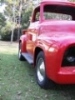
I'm doing a lot of path panels on my 53 F100 and have a question. I've got some long patches (length of bed) that are lap welds. I've tack welded everything at about 1" spacing on both sides of the lap joint, so nothing is going to move. See my gallery for example pic.
Questions: Is it really necessary to weld the entire length with a solid weld since I'm going to be fiberglassing this area to smooth the seam anyway? Is the complete weld to prevent moisture entry? I'm worried about warping the panels on the bed.
-Scott
Questions: Is it really necessary to weld the entire length with a solid weld since I'm going to be fiberglassing this area to smooth the seam anyway? Is the complete weld to prevent moisture entry? I'm worried about warping the panels on the bed.
-Scott
Posting Guru
Joined: May 2002
Posts: 1,495
Likes: 2
From: Northwest Fl
The complete weld will result in a much stronger repair and the paint will be much less likely to crack as the panel flexes and vibrates during the course of its life. If you take your time, welding no more than an inch at a time, skipping around the panel and allowing things to cool off, you should have good results. I would also recommend sealing the ‘lapped’ area with a good epoxy primer to seal moisture out of the area.

Freshman User
Joined: Apr 2004
Posts: 35
Likes: 0
welding the panel all along th seamwill result in a much stronger repair, and only welding about an inch or two at a time then skipping around letting the previous welds cool will keep the panle from warping, ( it doesnt take much heat to weldsheet metal ) also you didnt mention wether yo are using a product like rot out to go over the seams which is a special water proof epoxy fiberglass resin with chopped glass in it , which sticks well to sheet metal, unlike regular fibergass resin which will crack and lose its bond. hope this helps . ( oh they also have a wet clay in welding shops you can put close to the weld to absorb the heat to keep warping down on large flat panels.)

Thread
Thread Starter
Forum
Replies
Last Post
clintonvillian
1948 - 1956 F1, F100 & Larger F-Series Trucks
27
Apr 27, 2015 09:52 PM
turnrjr
1948 - 1956 F1, F100 & Larger F-Series Trucks
18
May 19, 2012 08:16 AM
cigarxtc
1973 - 1979 F-100 & Larger F-Series Trucks
9
Apr 7, 2011 03:32 PM


