When you click on links to various merchants on this site and make a purchase, this can result in this site earning a commission. Affiliate programs and affiliations include, but are not limited to, the eBay Partner Network.
What's the procedure for checking the filter?
I'll check it in the am, it had about 600 miles since the change.
Shine a flashlight up the side of the filter housing and look for the two stop tabs. They should be touching each other, but not past each other. You might have to feel around with a screwdriver or something similar to confirm that the tabs are touching rather than being a full turn short of touching.
I've read stories from others who were a full turn short of being tight, but the code didn't show up until hundreds of miles after changing the filters.
When I changed mine, I went about 1/8 turn too tight, and I could hear the LPFP sucking an air bubble here and there. Never got a code and it ran fine. When I backed it off to where the stops meet, the air bubbles stopped. Prior to my ownership, someone overtightened it and rounded off the stops enough to where they pass each other without stopping. I could still see the tabs, but couldn't feel anything when they went past each other.
Or as Overkill2 says, you could just unscrew the bowl, check the o ring, and put it back on, taking care to tighten it until the stops meet.
Shine a flashlight up the side of the filter housing and look for the two stop tabs. They should be touching each other, but not past each other. You might have to feel around with a screwdriver or something similar to confirm that the tabs are touching rather than being a full turn short of touching.
I've read stories from others who were a full turn short of being tight, but the code didn't show up until hundreds of miles after changing the filters.
When I changed mine, I went about 1/8 turn too tight, and I could hear the LPFP sucking an air bubble here and there. Never got a code and it ran fine. When I backed it off to where the stops meet, the air bubbles stopped. Prior to my ownership, someone overtightened it and rounded off the stops enough to where they pass each other without stopping. I could still see the tabs, but couldn't feel anything when they went past each other.
Or as Overkill2 says, you could just unscrew the bowl, check the o ring, and put it back on, taking care to tighten it until the stops meet.
And I run the 2 micron SNAPP return filter on my S&S DPK. My pressure actually went up when I installed the DPK. No problems since running the DPK since July 2023.
...
thats my point
2 micron return filter increases lift pump pressure...and it climbs fast as the 2 micron fills up. keep in mind that the 2 micron filter is functionally a by pass filter catching everything the other filters let pass.
2 micron return filter increases lift pump pressure...and it climbs fast as the 2 micron fills up. keep in mind that the 2 micron filter is functionally a by pass filter catching everything the other filters let pass.
I disagree... to me, when a filter fills up with debris and contaminants, it becomes restricted and hence, less pressure being pushed because of the restriction to flow. I have seen that with my truck and the low fuel pressure side, as the pressure drops as the primary fuel filter gets more mileage on it... and that was before the install of the DPK. The DPK is a return line, so IMO, I am not really too concerned about this. I could be wrong here, but this is just what I have observed personally with my own truck. I do have some 10-micron SNAPP filters, so I could swap one out when the next time I change out filters. I did go out beyond 22.5k miles with the original 2-micron SNAPP filter. I'll dig into my notes and get the exact number of miles... not defending what I did but that I did it with no effect on my truck.
I disagree... to me, when a filter fills up with debris and contaminants, it becomes restricted and hence, less pressure being pushed because of the restriction to flow. I have seen that with my truck and the low fuel pressure side, as the pressure drops as the primary fuel filter gets more mileage on it... and that was before the install of the DPK. The DPK is a return line, so IMO, I am not really too concerned about this. I could be wrong here, but this is just what I have observed personally with my own truck. I do have some 10-micron SNAPP filters, so I could swap one out when the next time I change out filters. I did go out beyond 22.5k miles with the original 2-micron SNAPP filter. I'll dig into my notes and get the exact number of miles... not defending what I did but that I did it with no effect on my truck.
yes..thats correct...as filters clog pressure is reduced after the filter........ but it increases going to the filter
It was the fuel filter, I had the dealer take care of it just in case it was more involved.
They also got the rear cam repaired under the recall.
thank you for all the replies.
It was the fuel filter, I had the dealer take care of it just in case it was more involved.
They also got the rear cam repaired under the recall.
thank you for all the replies.
It was the fuel filter, I had the dealer take care of it just in case it was more involved.
They also got the rear cam repaired under the recall.
thank you for all the replies.
What did they say was wrong for the DFCM filter?
Was it a Motorcraft filter?
Last edited by Overkill2; Mar 3, 2026 at 09:11 AM.
Reason: Add to post
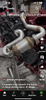
If you didn't know about those stops, here's a pic of the stop on the fuel cap that screws into the DFCM (pump). The pump itself has a stop that meets the at cap stop when the cap is all the way tight and where it should be...
This Hennessey Takes the Expedition Tremor's Off-Roading Capability to the Next Level
Slideshow: The VelociRaptor Expedition gains a lift, upgraded suspension, Brembo brakes, and trail-ready equipment while retaining the stock 440-horsepower EcoBoost V6.
Rezvani's Latest Post-Apocalyptic Monster Is a Ford F-150 Raptor Underneath
Slideshow: Called the Fortress, the 850-horsepower pickup combines Raptor underpinnings with military-inspired features, survival equipment, and a starting price of $285,000.