When you click on links to various merchants on this site and make a purchase, this can result in this site earning a commission. Affiliate programs and affiliations include, but are not limited to, the eBay Partner Network.
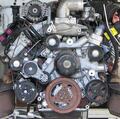
Does anyone know why the 6.0PSD fan shroud has the plastic wall on the back side of the fan and only allows air to pass around the OD part of this shroud? This shroud design has to limit air volume that the fan can pull thru the radiator.
Last edited by FishOnOne; Feb 17, 2026 at 08:00 PM.
Does anyone know why the 6.0PSD fan shroud has the plastic wall on the back side of the fan and only allows air to pass around the OD part of this shroud? This shroud design has to limit air volume that the fan can pull thru the radiator.
Do you mean the fan stator? Air passes through, it's not solid. Ford claims it's for "swirling air to cool the motor" or some BS, but it won't limit what the fan pushes.
I stopped watching the video when he said he was leaving the old lifters installed.
The risk of a lifter problem with these engines is far too great. I always replace them.
These are lifters from an engine with 156k miles / 250k km I pulled today.
There are clear signs of wear, but only once you've removed the lifters. What the guy is doing is half-hearted.
If I understood it correctly, he doesn't want to do much work on the block deck because dirt/abrasion could get into the engine. There's a solution for this too.
Do you mean the fan stator? Air passes through, it's not solid. Ford claims it's for "swirling air to cool the motor" or some BS, but it won't limit what the fan pushes.
I don't know what the technical term is so I call it the fan shroud??? I could see it creating a swirling effect but have never seen anything like it.
This has been quite the discussion on several forums for years. Technically, it's called the stator, not the shroud. The shroud is connected to the radiator, and this fits into it.
The leading ring fits closer to the fan blades, improving airflow when installed, compared to the shroud alone. An aspect I never considered, but a member of the ORG pointed this out recently. The fins spread the air around; some say they help with alternator cooling, working with the shroud.
The back panel blocks the flow against the engine, and at least mine has an insulator on the back of the surface. Therefore, I believe that part insulates the engine from heat or cold. I know that when I permanently removed mine, I saw a drop in coolant temperature of 2-3ºF during the winter. Since I don't tow heavy loads, I haven't seen any change during the summer. But there may be under heavy load, such as uphill towing during the summer. So for me, the back of the stator probably had an engineering place with emissions, keeping the winter engine temperature higher.
In the future, I may cut that front ring off and screw it into the shroud as the ORG member has.
I stopped watching the video when he said he was leaving the old lifters installed.
The risk of a lifter problem with these engines is far too great. I always replace them.
These are lifters from an engine with 156k miles / 250k km I pulled today.
There are clear signs of wear, but only once you've removed the lifters. What the guy is doing is half-hearted.
If I understood it correctly, he doesn't want to do much work on the block deck because dirt/abrasion could get into the engine. There's a solution for this too.
I agree 100%. Why not just change them when you're right there....pretty stupid IMO.
I changed mine out at 90K because I had it all apart.
Since he raised the cab instead of pulling the engine, wouldn't replacing all of the lifters require additionally pulling the trans to remove the back cover? That seems like a lot of extra work.
I agree but you're right there and for peace of mind, I'd take the extra time because I don't want to ever go back in there.
Originally Posted by 4Kids
Since he raised the cab instead of pulling the engine, wouldn't replacing all of the lifters require additionally pulling the trans to remove the back cover? That seems like a lot of extra work.
Are 6.0 lifter issues from poor OCI's or is this just a design flaw?
Living somewhat on the edge due to high cam loads, but vehicles have gone between 500k to 900k miles with good coolant and oil maintenance. IMO, need good, clean oil and not degraded by temperature.
There are a few engines in the last 5, maybe ten years, that are showing issues with cam/lifter failure.
Last edited by TooManyToys.; Feb 20, 2026 at 08:18 AM.
So he said he removed the front lifters and inspected them and they looked perfect. Having said that, by installing the new push rods with the correct length, is probably not a bad choice for longevity.
I say the young man did an outstanding job and didn't make this a career project and I'm sure this truck will last for many more thousands of miles.
Last edited by FishOnOne; Feb 20, 2026 at 03:23 PM.
Rezvani's Latest Post-Apocalytic Monster Is a Ford F-150 Raptor Underneath
Slideshow: Called the Fortress, the 850-horsepower pickup combines Raptor underpinnings with military-inspired features, survival equipment, and a starting price of $285,000.