When you click on links to various merchants on this site and make a purchase, this can result in this site earning a commission. Affiliate programs and affiliations include, but are not limited to, the eBay Partner Network.
Of course everyone can do what they want with there personal vehicles.... As a shop working on vehicles that are not mine I chose to go by what people that are smarting then me say.. Specifically, the engineers that Designed and built an engine.
When International came out in 2019 and said specifically 6.0l should only use 15w40 above 20 degrees and that 5w40 should/could be used in the common rail engines like there 6.4l that made it clear to me... However, I make a decent living off people ignoring manufacture recommendations.. (i.e. 6.7l fuel system because of aftermarket filter. Upper oil pan reseals because fleet mechanics dont realize some 6.7 have a CCV filter)
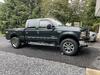
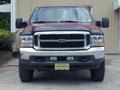
Even the 6.4 is fine to run 15w40....The 6.4l in the picture gets worked hard every day and goes way to long between oil changes (Against my recommendation) and has the original engine, turbos, most of the fuel system, trans, rear axle. Got a new HPP for the P0088, and 2 injectors for failure on the electrical side... It has never had anything but 15w40 in it... Same goes for the 7.3l in the picture. Original engine. Got a high pressure pump and injectors and a turbo rebuild about 100k miles ago. The 6.0l in the picture has had a rough life. Being worked hard and not maint like it should be.. Like 20k miles between oil changes many many times, but has the original engine.. Its had the normal 6.0l things done to it because of the abuse..
Most of my fleets have moved on from the International engines but these are a few examples I can think of, off hand of stuff that has only every had 15w40 in them to this day..
LOL. I'll repeat - 250k miles of ignoring that specific "advice". Running great on 5W40 in hot S. Texas. How could such an accident of reliability happen ........................ I know quite a few others too.
I think a horse has been beaten pretty badly. Things are getting repeated.
Anyway - International engineers made plenty of mistakes with the 6.0L. I wouldn't exactly have them at the top of my list of admiration.
Like I was saying to each there own....I work on Powerstrokes every day for 26 year 8-10 hours a day.... 5w40 I'm sure is fine. Just my personal experience....
Yep, the dead horse has been beaten pretty badly..
The International engineers warned that cranking boost from 16 to 26 ps and the max rpms from 2600 to 3400 was not a good idea.. Ford said we cant sell a 215 hp engine, so International corperate forced the international engineers to do it anyway .... And the rest is history... The VT365 never have the issues the 6.0l did ... Headgaskets, egr, oil cooler, turbo stuff is all rooted in twisting on them..... Pushing beyond there designed limits.. Costing Ford half a billion dollars or more total, in warranty calms, over the life of the engine warranty period.. Cost they tried to pass on 100% to international... According to our local International FSE there was a whole ton of litigation behind the scenes, not including the public Ford suing and counter suing of international..
Going down memory lane now
To me personally the 6.0l was the best thing that ever happened to me for a good while...For about 8 years 95% of my paycheck every week was 6.0l issues... Only thing that sucked was every time we would figure a way to beat warranty labor time on a 6.0l repair, some tech, somewhere in the US would open there big fat mouth and brag to Hotline about how fast they could do an operation and 2 weeks later they would cut labor time... Every shop had that guy that would do this..We had one that I personally heard bragging to hotline about 2 different times and each time, like clock work, they would cut labor time....
I still remember the First 6.0l that came around the corner of the building in 2002, driven by the PDI guy.. It sounded like a jet engine.... It was amazing......
Without question International should have understood what Ford needed. NO ONE really should have expected Ford to try to make a success out of a HIGHLY under-powered engine. If truly the disagreement over specifications was as we have been told, both sides equally share responsibility for stupidity!
Bed plate leaks (design issue), inadequate head bolt clamping (number of bolts not torque), block and head flatness and surface finish, wiring harness, sensor reliability, early HPOP design problems, injector spool valve issues, EGR valve electronics failures, same with IPRs, high pressure oil leaks, STC fitting, wiring issues - even oil coolers failed (leaked) without plugging up, and the late EGR coolers were an AWFUL design. Many over-boosts happened because of the turbo operation failure and instrumentation problems. It was NOT just from aftermarket tuning! It wasn't just a Ford thing. No doubt Ford did things to cause even more issues, but Navistar was certainly part of the problem. Lots and lots of discussions on School Bus Forums!
I think it is very clear that Navistar's "angle" was/is that 15W40 oil will experience fewer "crank-no-starts" because 15W at ambient temperatures is thicker than 5W or 0W. IMO that is a simple crutch for poor installation procedures or cheap o-rings in the high pressure oil system. A quality repair job with quality parts should not have issues with leaks in the high pressure oil system (even the late '04+ systems), at any ambient temperature with any viscosity diesel oil of proper certifications. I still believe that the Navistar design of the '04+ "high pressure oil system" was a very poor decision (part of why I am not that fond of them). Just too much potential for problems. A well engineered/designed system was possible and would have made a LOT of difference. They missed the boat - That said, I believe that enough improvements have been made (in parts and in procedures) to enable it to work well enough - but a lot of pain was experienced to get here! There is no data suggesting mechanical damage to the base engine occurs from 5W40 oil being used above 20 *F. None! In fact, most studies say that obtaining oil flow sooner (which 5W40 does over 15W40) does nothing but enhance reliability. There is plenty of film strength on these modern diesel oils to protect moving parts for the short duration of start-up and lubrication flow distribution!
Guys. We're dealing with old-school engines here. Yes, some use 5/40, others 15/40. It depends on the specification, not so much on the viscosity. Decades and countless improvements lie between the lubricants of yesterday and today.
What these engines need above all is extremely clean oil, especially the 6.0. The load on the lifters/cam is extremely high, too high in my opinion. I guarantee, if it were a two-valve engine, we wouldn't have any problems in this area.
Very clean oil is also important for the injectors.
I've been trying to understand for years why so many people have problems with the HPO system.
Yes, the early pumps sometimes fail, but I am not familiar with all the problems with the D-rings that I always read about. I have not had a single complaint so far (it is extremely important not to have high EOTs and to install carefully). I now install my screw-on standpipe version in all 6.0s to eliminate the risk with the small D-ring. Again, no problems whatsoever. Tonight, I'll be posting another short video about the test drive with screw-on standpipes. What I often see in posts are dirty engines being opened up. In most cases, dirt gets into the engine. An absolute no-go! Before opening the engines, I clean everything. The oil pump sucks the dirt into the system like a vacuum cleaner. The air filter should not be neglected either! All these so-called aftermarket “cold air intake” systems are actually hot air systems with inadequate filter performance. I regularly clean or replace the filter in my personal 6.0 trucks (S&B with the transparent cover). 99% of my customers drive with the original air filter, which of course does an excellent job.
The “problem” I see with a 15W-××× is that in cold temperatures, the bypass valve in the filter housing opens because the oil is too thick. You can see this for yourself by measuring the oil pressure during a cold start and the outside temperature is low. That's why I don't use 15W-xxx in these engines.
Thank you for the post Hartwig. I haven't seen the inside of a 6.0L in a long time now. I figured you had seen plenty of well-used ones recently.
That said, I just do not believe that there is evidence of excessive wear or component (mechanical) failure that could possibly be attributed to 5W or 0W oils. I was hoping to hear you comment on potential weak areas as they relate to oil. I am so strongly in agreement with you on clean oil, AND of course on oil flow! Using the correct API (or equivalent) service category oil goes without saying. Clean oil should go without saying also, but unfortunately I do not think it's importance is fully appreciated.
Unfortunately people think that a very viscous (slow flowing) oil is somehow stronger than an oil that flows easily. Not exactly true (oil strength is required at temperatures much higher than ambient where the oil flows rapidly), and oil flow is critical to fill the voids that separate moving parts ....................... AND then of course the criticality of the removal of heat! Clearly an oil needs to maintain its film and physical strength at engine operating temperatures, but this is primarily the other number in a multi-viscosity oil.
Denying warranty (in any area of engine repair) because of using a 5W40 diesel oil in ambient temperatures over 20*F is absolutely crazy. Engine components are quickly lubricated, turbo components as well, and of course the high pressure oil system (including injectors). Not only is filter bypassing minimized, but the proper flow rate is more quickly established. The only (somewhat common) weak area mechanically that I am aware of is the lifter/cam area. Here we are MUCH better served worrying about keeping the oil clean and maintaining the engine oil operating temperatures in the safe zone (and limiting horsepower)! It isn't going to damage lifters/cams by running a 5W40 oil!
I remain at an absolute loss for any technical or experience based reason to believe that a 5W40 oil will lead to premature failures at ambient temperatures above 20 degrees.
Thus the importance of quickly established lubrication flow. Even so, what could possibly be in someone's thinking that a 5W40 at 20*F could specifically be a problem?
You won't have any problems with 5W-40, Mark. I used 5W-30 and 5W-40 for a long time, but now I use 10W-40 (I´m not driving my truck in the winter time)
I made this comparison a few years ago to illustrate the differences in viscosity.
The only thing that might have a minor amount of applicability is in regards to cold starts on hot ambient days. Should a small issue exist in the HPO system, an extended crank could be experienced with the 5W and 0W multi-viscosity oils. Extended cranks on cold starts could perhaps increase the potential for some slight increase in lubrication related issues. That said, the answer is to get a healthy HPO system! A healthy HPO system is PLENTY capable of providing a very quick "cold-start" at high ambient temps with 5W oils (and even 0W oils I would imagine).
On the subject of oil viscosity.... I'm happy that Ford as of 2026 is still recommending 5w30 in there heavy and light duty gas engines down to -20 degrees in most everything while others are using 0w20 or 0w40, like toyota with there 3.4l, or Gm with there 5.3l and 6.2l seam to be coming apart at larger then acceptable rates.. Gm's fix for the 6.2 is switching to 0w40.... Toyota says it was metal shaving left over from the manufacturing process, but some are on there 3rd engine. GM seams to have no desire to fix the 5.3l or 6.2l, and just wait for there next gen engine to come out next year I think.. Yes the Ford manual does allow 0w30 but Ford at least still puts 5w30 on the oil caps..
This Hennessey Takes the Expedition Tremor's Off-Roading Capability to the Next Level
Slideshow: The VelociRaptor Expedition gains a lift, upgraded suspension, Brembo brakes, and trail-ready equipment while retaining the stock 440-horsepower EcoBoost V6.
Rezvani's Latest Post-Apocalyptic Monster Is a Ford F-150 Raptor Underneath
Slideshow: Called the Fortress, the 850-horsepower pickup combines Raptor underpinnings with military-inspired features, survival equipment, and a starting price of $285,000.