When you click on links to various merchants on this site and make a purchase, this can result in this site earning a commission. Affiliate programs and affiliations include, but are not limited to, the eBay Partner Network.
The best coolant heating solution I can think of is to move to South Texas.
My plan was to winter down there for now on, but with your current administration doing what they're doing there's no way in hell I'd ever set foot on USA soil.
They're doing what needs to be done to get this $h*t back in order.
I sure hope so cause aside from wintering down there I'd also like to start buying USA trucks and campers and bringing them back up here to fix and sell.
The batteries are less strained than when turning on the lights. In a 6.0, 20 minutes of running time is sufficient to heat the coolant to 60⁰C/140⁰F.
These heaters are very common in our country and are also installed in many smaller cars with smaller batteries.
Thanks to the preheated engine, the starter motor also requires significantly less power to start the engine, which naturally puts less strain on the batteries.
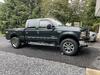
this is my daily driver before and after
I’m sorry fellas. I was thinking this was an electric heater not a diesel heater. Most of the diesel heaters I’ve seen are forced hot air. Now that I have researched what you’re talking about a little more it’s a great option. Not much draw for a circulation pump, high pressure pump, and ignitor. Great thread.
The batteries are less strained than when turning on the lights. In a 6.0, 20 minutes of running time is sufficient to heat the coolant to 60⁰C/140⁰F.
These heaters are very common in our country and are also installed in many smaller cars with smaller batteries.
Thanks to the preheated engine, the starter motor also requires significantly less power to start the engine, which naturally puts less strain on the batteries.
this is my daily driver before and after
You drive a CUCV in Germany? Not gonna lie, thats pretty cool.
I’m sorry fellas. I was thinking this was an electric heater not a diesel heater. Most of the diesel heaters I’ve seen are forced hot air. Now that I have researched what you’re talking about a little more it’s a great option. Not much draw for a circulation pump, high pressure pump, and ignitor. Great thread.
The unit I'm talking about circulates coolant. It's basically a forced air diesel heater except it heats coolant instead of air.
The bonus is I can vent the hot exhaust to an inch in front of the oil pan and help warm it up a bit.
I installed one in my van. Chinesium knockoff, but it seems to work pretty well.
Mine is mainly for cabin heat and hot water, but it's plumbed in a way that it can also pre-heat the engine if needed.
I'm with @bismic and usually try to avoid camping anywhere that I need to pre-heat, so I haven't tested it in that capacity.
I plumbed mine directly to the fuel tank. Just makes sense. On my van, there was already a 'spare' pickup line on the fuel hanger assy. No drilling required, just hooked a line to it and good to go.
It only extended about 2/3 of the way to the bottom of the tank, so I added a bit of an extension to get 7/8 of the fuel.
The unit I'm talking about circulates coolant. It's basically a forced air diesel heater except it heats coolant instead of air.
The bonus is I can vent the hot exhaust to an inch in front of the oil pan and help warm it up a bit.
Clever.
In my original installation, I had the exhaust dumping under the van. My wife had an incredible sense of smell and couldn't stand the smell when the heater was running if there was no wind. I couldn't smell anything.
I extended the exhaust to dump out the side and now all is good.
The unit I'm talking about circulates coolant. It's basically a forced air diesel heater except it heats coolant instead of air.
The bonus is I can vent the hot exhaust to an inch in front of the oil pan and help warm it up a bit.
The idea is good, but from a technical point of view it doesn't make sense for the heater. In the past, the exhaust hose was also routed through the battery box on some semi trucks and Unimogs to preheat the batteries in winter.
I also planned to direct the exhaust hose to the oil pan on my Defender, but didn't do it because air would be blown into the exhaust pipe while driving (causing issues when running the diesel heater while driving). So you would have to lay the exhaust pipe all the way to the front and then point it backwards towards the oil pan. That's a lot of effort and achieves almost nothing, as the heater only runs for about 20 minutes to preheat. (However, I sometimes leave the heater running while driving if the engine doesn't warm up in winter).
On the subject of power consumption: the 5 kW diesel coolant heater only runs for about 20 minutes (depending on the temperature), which is not a problem for the batteries. In my Defender, I have also installed a 2 kW diesel air heater for the interior. This switches on and off sporadically throughout the night, as I do not have an insulated roof. I have installed an additional battery, which has no problems with the heating duration.
I also planned to direct the exhaust hose to the oil pan on my Defender, but didn't do it because air would be blown into the exhaust pipe while driving (causing issues when running the diesel heater while driving). So you would have to lay the exhaust pipe all the way to the front and then point it backwards towards the oil pan. That's a lot of effort and achieves almost nothing, as the heater only runs for about 20 minutes to preheat. (However, I sometimes leave the heater running while driving if the engine doesn't warm up in winter).
I was planning on installing the heater on the passenger side fender wall right behind the battery and that way the exhaust hose could run down to the front of the oil pan, but after watching a few more install videos I see most people place the units underneath on the frame rail somewhere so it's below the engine which I'd imagine helps relieve air from the system? I'm not sure what winter temps are where you live, but here it can be -35c for weeks at a time and -40c is not unheard of so from other videos I've watched it looks like it will take 30-45 minutes to get engine to operating temps and 30-45 minutes of 200f+ exhaust pointed at the front of the oil pan couldn't hurt lol.
There's also quite a few videos of people installing these units inside the engine bay at or above engine height and all seem to be working just fine still so I'm not sure where I want to place it, but in the engine bay would be ideal for me.
One more thing I'm wondering is the plumbing to get full circulation through the engine block and if I tap into the heater core lines does that get full engine circulation or is there a better way to route the heater lines? I'm not entirely clear on how the coolant lines are run so I'll look that up here right now.
In my opinion best way is to install coolant hoses is after the heater valve (between heater valve and heater core).
i don't think there is enough room on the PS side fender to install unit there.
You need space under the heater for intake and exhaust hose. Exhaust hose is getting very hot!
In my opinion best way is to install coolant hoses is after the heater valve (between heater valve and heater core).
i don't think there is enough room on the PS side fender to install unit there.
You need space under the heater for intake and exhaust hose. Exhaust hose is getting very hot!
My truck isn't mint so I'd do some metal work to the inner fender to get the heater situated in there nicely and I have several diesel air heaters and I know just how hot the exhaust gets lol(ouch)so I wrap them in that fire retardant fibreglass wrap stuff and works very good. Do you by chance have a diagram of the coolant flow @Hartwig , I can't seem to find a good picture showing the coolant path.
Rezvani's Latest Post-Apocalytic Monster Is a Ford F-150 Raptor Underneath
Slideshow: Called the Fortress, the 850-horsepower pickup combines Raptor underpinnings with military-inspired features, survival equipment, and a starting price of $285,000.