When you click on links to various merchants on this site and make a purchase, this can result in this site earning a commission. Affiliate programs and affiliations include, but are not limited to, the eBay Partner Network.
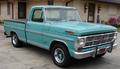
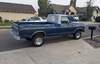
1972 F-100 302, bored .060 over, 1500 miles later, I am experiencing stumbling because of a lean mixture at medium throttle.(aftermarket O2 sensor shows 14.2 until stumbling starts) runs fine up to approximately 1500 RPM. Holley street avenger 750, power valve 3.5 and 4.5 used with same result. fuel filters on fuel pump, and in carb changed. fuel pressure 7PSI stable. timing 6 degrees BTDC. points .016. Plugs .032. float level as specified. When smoke testing, small bit of smoke escaped through secondary venturies. spare intake ports capped. Problem began because of water in the gas. incidentally, i use gas only-no alcohol.
Float level. Accelerator pump. Secondary linkage adjustment. I don't have great skills with a carb so I would end up taking it to Mopac and paying their carb guy for a dyno tune and diagnostic. Is it idling 12.6 ish or is the idle rich or lean? And if anyone who has one of these carbs had the same issue maybe tell us what you did.
You may still have some water in the fuel and it hasn't worked it's way out of the carb. Did you pull the bowls and clean the water out of them? Have you emptied the tank and cleaned it? You can add some additive to the tank to help get the water out. You can also add a water separator before the filter to catch any that may be left.
You can make a jet change to richen it up a tad, primary side only. Increase the jet size by 4 and retest.
Thanks for replying; yes as stated, float level is good, accelerator pump is functional.
But did you pull the bowls off the carb as they may still have water and rust in them that made it pass the filters.
Did you treat the water in the tank as you cant get it all out, dump in a few bottles of dry gas.
How much have you driven the truck since you removed the water? Was it just around town or say 30 miles at highway speed to really pull any water still in the system out.
I also have issue with the point gap, .016 is a good starting place but I always set it by dwell with a meter.
One better replace them with a electronic kit and dont look back.
Oh bump the timing up to 10* BTDC as long as you dont get pinging or starter kick back on hot start.
Is vacuum advance working?
On the power valves what is your vacuum at idle in gear? With the 2 you listed you would have 6 to 8 HG at idle.
Rebuild kits come with a 6.5 PV. As a starting place for PV's it is half of vacuum at idle and move up / down 1 HG
Dave ----
The PV (as a starting point) should be half what idle vacuum is. Say 18 inches at idle, 9 would be half, I would start with an 8.5 PV. The general idea being when manifold vacuum drops by half (under load, cruising with throttle plates only partially open) the PV opens adding more fuel. Don't recall exactly but I think the PV adds the equivalent amount of fuel as increasing 4-6 jet sizes.
With a 3.5 PV it won't open until you're at almost zero manifold vacuum which is at WOT in most cases. During cruise when you still have decent vacuum (likely higher than 3.5-4.5" in your case unless you have some radical cam) the PV isn't open and will cause a lean condition while cruising.
Before making changes to jet sizes I would confirm what vacuum you have at an idle, and adjust idle fuel screws to get the highest reading possible. Once you have that you can better determine what PV to start with.
I would also bump base timing to 10*BTDC. Typically base timing will be somewhere between 10-14 BTDC at idle and total timing (base + mechanical) should be somewhere in the 32-36 range, all-in somewhere around 3000 RPM.
After getting a decent baseline set, if you hear no detonation under light load, add a degree or two to base timing, re-adjust idle speed & idle mixture screws, as-needed, take for a drive and listen for detonation. General idea is add as much base timing as the engine can tolerate without detonation. Once you find the detonation point back off a degree or two. After your timing is dialed in you can then use your AFR to fine tune idle, cruise and WOT making various changes to primary carb circuit first, then secondary circuit. If timing isn't set correctly that will throw off everything else.
Another consideration, a 750 CFM is way too much carb for a 302 (310ci w/.060" overbore). You can try all the adjustments mentioned by various posters above, but in the long run, you'll likely find it much easier to tune with a properly sized carb for your application.
Given this is a truck application and you didn't mention anything about racing, I doubt you will exceed 5000 RPM very often, if ever.
2Xs on the carburetor size. If the engine has an open single plane manifold that is also a cause for a stumble due to air reversion especially if the cam is slightly radical.
Thanks for your response, I have checked these items, and the one item I missed, I used the wrong power valve, I will install an 8.5 when time permits.
Rezvani's Latest Post-Apocalyptic Monster Is a Ford F-150 Raptor Underneath
Slideshow: Called the Fortress, the 850-horsepower pickup combines Raptor underpinnings with military-inspired features, survival equipment, and a starting price of $285,000.