




Losing power on acceleration.

Thread Starter
|
New User
Joined: Jul 2020
Posts: 4
Likes: 0
Losing power on acceleration.
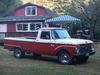
1965 F100 FE352 Manual Tran, Manual Choke
I recently had a couple situations where my engine died; once upon acceleration up hill, once upon starting from a slight downhill stoplight.
Later, after smelling gas in the garage, I noticed a large amount of gas pooled on the manifold from a severely leaking carburetor. So I got a Wagner kit for a C5TF-Y and rebuilt the carb (Autoline C816). I set the fuel mix screws at 1.5 turns out from closed.
The truck started right up and idled fantastic (as usual), but while driving it I noticed severe lack of power upon any uphill load (ps. I live up a hill). I figured that it could be that it is running too lean rather than too rich as there was no significant smell of gasoline. I backed the screws out another half turn, but although it might be a little better it is still having the same problem.
Is this a fuel mixture problem, a blown power valve, gasket leak, or something entirely different?
I'd appreciate any help you might have.
I recently had a couple situations where my engine died; once upon acceleration up hill, once upon starting from a slight downhill stoplight.
Later, after smelling gas in the garage, I noticed a large amount of gas pooled on the manifold from a severely leaking carburetor. So I got a Wagner kit for a C5TF-Y and rebuilt the carb (Autoline C816). I set the fuel mix screws at 1.5 turns out from closed.
The truck started right up and idled fantastic (as usual), but while driving it I noticed severe lack of power upon any uphill load (ps. I live up a hill). I figured that it could be that it is running too lean rather than too rich as there was no significant smell of gasoline. I backed the screws out another half turn, but although it might be a little better it is still having the same problem.
Is this a fuel mixture problem, a blown power valve, gasket leak, or something entirely different?
I'd appreciate any help you might have.

Post Fiend
Joined: Apr 2002
Posts: 19,311
Likes: 97
From: Waterloo, Iowa
1.5 out on the mixture screws is just a bench setting so the engine will start, and idle, so they can be fine tuned after the engine is good and warmed up. Turn the screws in from that point to lean it out for a proper idle mixture setting. Even 1.5 turns out will likely be way too rich and will tend to foul plugs badly.
I'd back up your tuning a bit though, first make sure the fuel pump output pressure is within spec.
Everything in the carb, every setting and adjustment, is based on neither too little nor too much fuel being delivered. A mechanic's vacuum gauge will measure fuel pump pressure quickly and easily. It is also a great aid to engine diagnostics, and carb adjustment. About 5 psi is plenty. Then re-set the float height as required to achieve the proper fuel height in the carb bowl. Aka "wet height". This is another important adjustment that affects everything else downstream.
I'd back up your tuning a bit though, first make sure the fuel pump output pressure is within spec.
Everything in the carb, every setting and adjustment, is based on neither too little nor too much fuel being delivered. A mechanic's vacuum gauge will measure fuel pump pressure quickly and easily. It is also a great aid to engine diagnostics, and carb adjustment. About 5 psi is plenty. Then re-set the float height as required to achieve the proper fuel height in the carb bowl. Aka "wet height". This is another important adjustment that affects everything else downstream.

Lead Driver


Joined: Aug 2003
Posts: 6,305
Likes: 18
From: Boulder Creek, Ca

Agree w/ both members comments. Similar situation with my 65 with 1964 352/390. I set what I thought was the correct timing then took the truck for a trial run and barely made it up my steep driveway, I reset the timing at around 10-12 degrees and much improved. I had installed the Dura-Spark ll ignition set-up many years ago however the timing, whether point or electronic ignition, would the same; plug gap would be different.
Mountain Pass
Joined: Jul 2019
Posts: 126
Likes: 9
The engine is likely fuel starved.
1) ensure the carb float is set correctly.
2) ensure no blockage from the fuel pump to the carburetor. Remove it and run a wire through it, then blow air through it, then soak in solvent for 24 hours, then more air. Or replace it
3) check fuel pressure and otherwise make sure the fuel pump is operating correctly without weak diaphragms, which can at first give intermittent problems
4) make sure the fuel line between the fuel pump to the gas tank is not blocked using same procedure as 2) above.
5) make sure the fuel pickup tube is clear and that no debris is on the bottom of the tank. Seal coatings like POR come loose and cause lots of problems. Clean and boil tank or replace.
Hope this helps.
1) ensure the carb float is set correctly.
2) ensure no blockage from the fuel pump to the carburetor. Remove it and run a wire through it, then blow air through it, then soak in solvent for 24 hours, then more air. Or replace it
3) check fuel pressure and otherwise make sure the fuel pump is operating correctly without weak diaphragms, which can at first give intermittent problems
4) make sure the fuel line between the fuel pump to the gas tank is not blocked using same procedure as 2) above.
5) make sure the fuel pickup tube is clear and that no debris is on the bottom of the tank. Seal coatings like POR come loose and cause lots of problems. Clean and boil tank or replace.
Hope this helps.

Logistics Pro


Joined: May 2015
Posts: 4,468
Likes: 962
From: Tri Cities, TN

Have you replaced the canister fuel filter on the fuel pump lately? I ask because a lot of people don't realize there is a filter in there and end up putting a second filter between the pump and carb.
Trending Topics
Thread Starter
|
New User
Joined: Jul 2020
Posts: 4
Likes: 0
FTE Stories
Ford Trucks for Ford Truck Enthusiasts

Top 10 Most Expensive Ford Trucks Ever Sold on Bring a Trailer
Joe Kucinski
2027 Ford Super Duty Buyer's Guide (Every Model, Engine, & Package)
Brett Foote
Top 10 Ford Truck Tragedies
Joe Kucinski
AEV FXL Super Duty - the Super Duty Raptor Ford Doesn't Make
Brett Foote
Lobo Vs Lobo: Proof the F-150 Lobo Should Be Even Lower!
Michael S. Palmer
Ford's 2001 Explorer Sportsman Concept Looks For a New Home
Verdad Gallardo
10 Best Ford Truck Engines We Miss the Most!
Joe Kucinski
2026 Shelby F-150 Off-Road: Better Than a Raptor R?
Brett Foote
2027 Super Duty Carhartt Package First Look: 12 Things You NEED to Know!
Michael S. Palmer
Post Fiend
Joined: Apr 2002
Posts: 19,311
Likes: 97
From: Waterloo, Iowa
No, but the correct timing - initial ignition timing especially, will directly affect the manifold vacuum the engine will pull.
More ignition advance = more engine vacuum, generally speaking. Up to a point. Virtually every factory stock engine ever made pulls 19" to 21" at sea level. If it won't, find out why, the engine will not run right and can't be made to run right. This is one reason why the old saw "90 per cent of carb problems are ignition related." Vacuum leaks also cause lots of problems.
An engine actually moves hardly any air through it at idle or just off idle (where much driving is done) so a separate carb idle circuit is employed that utilizes engine manifold vacuum to achieve the high velocity necessary to finely atomise the air/fuel mixture.
While it's called the "idle circuit", its adjustment is critical to bog-free acceleration and also contributes a fair amount of juice up to around 35 mph or so, when the cruise jets take over.
More ignition advance = more engine vacuum, generally speaking. Up to a point. Virtually every factory stock engine ever made pulls 19" to 21" at sea level. If it won't, find out why, the engine will not run right and can't be made to run right. This is one reason why the old saw "90 per cent of carb problems are ignition related." Vacuum leaks also cause lots of problems.
An engine actually moves hardly any air through it at idle or just off idle (where much driving is done) so a separate carb idle circuit is employed that utilizes engine manifold vacuum to achieve the high velocity necessary to finely atomise the air/fuel mixture.
While it's called the "idle circuit", its adjustment is critical to bog-free acceleration and also contributes a fair amount of juice up to around 35 mph or so, when the cruise jets take over.
Thread Starter
|
New User
Joined: Jul 2020
Posts: 4
Likes: 0
Ok. Quite a list of possible things wrong here. Sounds like I should probably change the fuel filters and start looking for a vacuum leak first. If no leak, I'll move to timing, then possibly some other things y'all suggested. It's not my main means of transportation so might be a while before I get to it but I'll update y'all once get to it.
Thanks guys!
Thanks guys!
Senior User
Joined: Oct 2019
Posts: 224
Likes: 0
From: Highlands Ranch, CO
On my most recent road trip I ended up having to redo the timing halfway through and that caused the motor to do all sorts of funny things, but that just makes you appreciate a well running engine all the more.

Thread
Thread Starter
Forum
Replies
Last Post
michea
1967 - 1972 F-100 & Larger F-Series Trucks
5
Oct 9, 2012 11:04 AM
mward69
1980 - 1986 Bullnose F100, F150 & Larger F-Series Trucks
3
Sep 21, 2008 02:41 PM
Scott Fraser
Ford Inline Six, 200, 250, 4.9L / 300
7
Nov 24, 2004 10:25 PM