


starting issues.

Thread Starter
|
5th Wheeling
Joined: Apr 2023
Posts: 34
Likes: 1
Thanks so much! Im going to do the cables tomorrow but it's sounding great! Fires right up so far. Took it around the block. It did great! I hope it starts tomorrow to go to the parts store 🎉 🎉
Thread Starter
|
5th Wheeling
Joined: Apr 2023
Posts: 34
Likes: 1
Im going to post a picture tomorrow of the new harmonic balancer. I tried to get the timing right but close. The timing marks are way off. Engine running great but I can only adjust through the distributer.
Thread Starter
|
5th Wheeling
Joined: Apr 2023
Posts: 34
Likes: 1
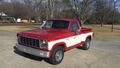
This is the harmonic balancer I have. I read the rubber insert will slip overtime. I'm reading 0 degree on the balancer but it's not right. I'm in ohio, it was a Colorado high altitude truck. I should be at 10 degrees advance. I can only time it by ear, sounds great but once it warms up it won't start again
FTE Legend


Joined: Nov 2015
Posts: 30,935
Likes: 4,124
From: Angier, NC

Ok if you can only time it by ear how do you know the timing is off?
Unless you are 70 years old and been working on cars / trucks every day your whole life I would not trust setting timing or carb by ear you need a light and vacuum gauge.
When you say "can only adjust timing by the distributor" how else would you do it? You turn the distributor to adjust timing is how you do it.
When you were looking for ported vacuum on the carb you need to check each port, motor up to temp, at idle and then raise the RPM to say 2500 RPM and check for vacuum again on that port.
The port will not have vacuum at idle but should have vacuum at 2500 RPM.
Dave ----
Unless you are 70 years old and been working on cars / trucks every day your whole life I would not trust setting timing or carb by ear you need a light and vacuum gauge.
When you say "can only adjust timing by the distributor" how else would you do it? You turn the distributor to adjust timing is how you do it.
When you were looking for ported vacuum on the carb you need to check each port, motor up to temp, at idle and then raise the RPM to say 2500 RPM and check for vacuum again on that port.
The port will not have vacuum at idle but should have vacuum at 2500 RPM.
Dave ----
FTE Stories
Ford Trucks for Ford Truck Enthusiasts

3 Best / 3 Worst Parts of Modern Ford Ownership
Brett Foote
10 Amazing Upgrades That Solve Common Ford Truck Owner Headaches
Pouria Savadkouei
Every 2026 Ford Engine Explained
Brett Foote
10 Ugly Ford Trucks That We Still Kinda Love
Joe Kucinski
10 Things Every Truck Owner NEEDS (2026 Edition)
Michael S. Palmer
Rezvani's Latest Post-Apocalyptic Monster Is a Ford F-150 Raptor Underneath
Verdad Gallardo
Top 10 Most Expensive Ford Trucks Ever Sold on Bring a Trailer
Joe Kucinski
2027 Ford Super Duty Buyer's Guide (Every Model, Engine, & Package)
Brett Foote
Top 10 Ford Truck Tragedies
Joe Kucinski
Lead Driver


Joined: Nov 2013
Posts: 7,178
Likes: 1,174
The answer is not clear cut.
Do you have a money tree in your backyard, successfully yielding a crop of fresh bills on a regular basis? If so, definitely replace the positive cables.
Or are you like me, with a Scotsman’s wallet? That’s the type with a velcro closure which screams when opened. If so, continue your troubleshooting to pinpoint the fault before replacing everything in sight.
You mentioned a voltage drop of 0.7V on the positive leg. Yep, that’s too high. However, the fault could be anywhere between the battery (+) post and the starter. You’ve got a new starter relay and for all we know it is defective and can’t carry the full current. With the voltage drop test, you can place your test leads on the two big terminals, engage the starter, and read the voltage drop across the starter relay.
Not trying to pick on you, but resist the temptation to simply replace everything “just because”. You run the very real risk of introducing new faults. For example, some new cables are inadequate to carry the massive current flow required. Might be fine for a little KIA, but not a big chunk of American iron. Meanwhile, you fall into the trap of thinking a component must be good because it’s new.
Back to your test results. Still no mention of battery voltage UNDER LOAD. This value is an important part of the test. So far you’ve only identified one fault, excessive voltage drop between two distant points. Let’s say you fix that with a new starter relay, or wherever you pinpoint the fault. That now increases the current carrying ability of the cable runs. Previously, the restriction was reducing the load on the battery. With this restriction removed, the load on the battery will go back up to normal levels. If the battery was marginal for any reason, the output will now decrease under the increased (actually normal) demand.
So do not be surprised if more than one fault is present. Sometimes, the second fault is not apparent until the first one is fixed.
Lead Driver
Joined: Nov 2013
Posts: 7,178
Likes: 1,174

Thread
Thread Starter
Forum
Replies
Last Post
chiefross
1967 - 1972 F-100 & Larger F-Series Trucks
15
Jan 12, 2023 06:33 PM
GoCamping
1999 - 2003 7.3L Power Stroke Diesel
7
Jul 10, 2018 10:34 AM
Steel Ghost 50
1980 - 1986 Bullnose F100, F150 & Larger F-Series Trucks
9
Jun 25, 2012 10:57 AM
supercab blue
1987 - 1996 F150 & Larger F-Series Trucks
8
Dec 14, 2007 11:36 PM