


Unique (maybe?) np435 issue

Thread Starter
|
8th Gear
Joined: Jan 2025
Posts: 8
Likes: 1
Unique (maybe?) np435 issue
Hello yall, I've been fighting issues with my np435 for a month now, I'm on my second trans with the same issues and I'm honestly lost.
I'm having pretty severe grinding issues in 1st and 2nd but is not the normal clutch issue where it grinds going in. When you shift into second is feels like it goes in but when let out the clutch it gets no power to the wheels and just grinds, this happens about 80% of the time so it's not just an "old truck trans thing," it's un drivable. Double clutching doesn't help nor dose shifter wiggling or putting in any other gear first. The only thing that fixes it is going into reverse, backing up and then back to 2nd, works everytime.
It's had this exact issue across both transmissions with only slight variation in how it feels and how often, I've tried all the basic swapping of the plastic fork feet and checking if bent or loose. I've ruled out the transfer case with a stethoscope, it is grinding in the trans. My only thought is top cover but from my knowledge everything seems right however anyone else's knowledge here on what to look for would be appreciated. Both were also checked for preload and were in spec.
I know people complaining about 435 issues is pretty standard and I've tried all the common fixes across both transmissions and had no success.
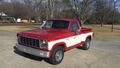
The vehicle as been swaped to a roller 351w out of an automatic 94 but I'm not sure if that would be related to this issue. Any ideas would be appreciated as I'm dead In the water on this one.
I'm having pretty severe grinding issues in 1st and 2nd but is not the normal clutch issue where it grinds going in. When you shift into second is feels like it goes in but when let out the clutch it gets no power to the wheels and just grinds, this happens about 80% of the time so it's not just an "old truck trans thing," it's un drivable. Double clutching doesn't help nor dose shifter wiggling or putting in any other gear first. The only thing that fixes it is going into reverse, backing up and then back to 2nd, works everytime.
It's had this exact issue across both transmissions with only slight variation in how it feels and how often, I've tried all the basic swapping of the plastic fork feet and checking if bent or loose. I've ruled out the transfer case with a stethoscope, it is grinding in the trans. My only thought is top cover but from my knowledge everything seems right however anyone else's knowledge here on what to look for would be appreciated. Both were also checked for preload and were in spec.
I know people complaining about 435 issues is pretty standard and I've tried all the common fixes across both transmissions and had no success.
The vehicle as been swaped to a roller 351w out of an automatic 94 but I'm not sure if that would be related to this issue. Any ideas would be appreciated as I'm dead In the water on this one.
FTE Legend


Joined: Nov 2015
Posts: 30,861
Likes: 4,106
From: Angier, NC

Well my first thought was the pads and bent forks not getting it all the way into gear.
As a guess did you use the same top cover & forks on both transmissions?
You did not tell us what year truck this is and if it has a hydraulic clutch or not?
Firewall moving when you push in the clutch?
Was the first NP435 also behind this same 351 auto motor?
Did you install a pilot bushing / bearing in that 351-auto motor? If not the input shaft can be moving all over the place and causing the problems.
All I got right now
Dave ----
As a guess did you use the same top cover & forks on both transmissions?
You did not tell us what year truck this is and if it has a hydraulic clutch or not?
Firewall moving when you push in the clutch?
Was the first NP435 also behind this same 351 auto motor?
Did you install a pilot bushing / bearing in that 351-auto motor? If not the input shaft can be moving all over the place and causing the problems.
All I got right now
Dave ----
Thread Starter
|
8th Gear
Joined: Jan 2025
Posts: 8
Likes: 1
Well my first thought was the pads and bent forks not getting it all the way into gear.
As a guess did you use the same top cover & forks on both transmissions?
You did not tell us what year truck this is and if it has a hydraulic clutch or not?
Firewall moving when you push in the clutch?
Was the first NP435 also behind this same 351 auto motor?
Did you install a pilot bushing / bearing in that 351-auto motor? If not the input shaft can be moving all over the place and causing the problems.
All I got right now
Dave ----
As a guess did you use the same top cover & forks on both transmissions?
You did not tell us what year truck this is and if it has a hydraulic clutch or not?
Firewall moving when you push in the clutch?
Was the first NP435 also behind this same 351 auto motor?
Did you install a pilot bushing / bearing in that 351-auto motor? If not the input shaft can be moving all over the place and causing the problems.
All I got right now
Dave ----
I did check the firewall and it's sturdy, luckily a middle georgia truck it's whole life so no rust or weakening
Any chance the crank isn't recessed enough on the roller blocks for the input shaft?
Since there is a chance both my top covers have bent forks (however unlikely) any diagrams or photos of know correct forks?
I'm really starting to think Im just extremely unlucky and have 2 bent forks. I bought the truck recently and pretty much did the swap immediately after purchasing it and didn't put more than maybe 10 miles on the original setup. Unsure if it was a mild issue before but it was definitely an issue immediately after the swap.
FTE Legend
Joined: Nov 2015
Posts: 30,861
Likes: 4,106
From: Angier, NC
If the transmission when all the way in and not pulled in with bolts the crank is deep enough, and I have never heard of one not being deep enough.
I know you car not to do this but think you have to to see what is going on.
Next time it happens pull the top cover but do not shift it into neutral so the shifting rings stay where they are when this happens.
You should then see if the rings are pushed all the way into gear or not. You can also try and move the truck when the grinding happens and see what is going on inside the trans.
I know when going into 2nd on a down shift my NP435 is a little hard to get into gear and the throw dose not feel right, kind of short, but never any grinding.
Now going into 3rd, up or down, I can feel some grinding, gear teeth hitting, even when I double clutch it as I do all the time going into 3rd.
Mine was used so dont know what shape it was in before I got it and just live with it for now.
I cant think of anything else at this time on yours.
Dave ----
I know you car not to do this but think you have to to see what is going on.
Next time it happens pull the top cover but do not shift it into neutral so the shifting rings stay where they are when this happens.
You should then see if the rings are pushed all the way into gear or not. You can also try and move the truck when the grinding happens and see what is going on inside the trans.
I know when going into 2nd on a down shift my NP435 is a little hard to get into gear and the throw dose not feel right, kind of short, but never any grinding.
Now going into 3rd, up or down, I can feel some grinding, gear teeth hitting, even when I double clutch it as I do all the time going into 3rd.
Mine was used so dont know what shape it was in before I got it and just live with it for now.
I cant think of anything else at this time on yours.
Dave ----

Lead Driver


Joined: Nov 2013
Posts: 7,159
Likes: 1,167
What about the bolts securing the shift cover to the main housing?
A few years ago, I had some weird shifting problems with my T-18. Finally found the cover had worked loose. Some of the bolts had rattled out and and rest were very loose.
You mentioned recently swapping covers, so it’s highly unlikely the bolts have had time to work loose. But maybe the bolts are too long? They could bottom out and feel tight, but still let the cover move.
Just a thought.
A few years ago, I had some weird shifting problems with my T-18. Finally found the cover had worked loose. Some of the bolts had rattled out and and rest were very loose.
You mentioned recently swapping covers, so it’s highly unlikely the bolts have had time to work loose. But maybe the bolts are too long? They could bottom out and feel tight, but still let the cover move.
Just a thought.

Moderator


Joined: Jan 2001
Posts: 56,966
Likes: 2,728
From: Virginia
Why are you shifting from 1st to 2nd? I would consider 1st a special gear that is rarely used in normal driving. 1st is too low in that transmission to be shifting to 2nd on the fly. The synchronizers will have a hard time matching the speeds. If you had to do it, I would rev the engine really high in first and get the truck going, and then push in on the clutch, pull it out of 1st and wait a little bit before trying 2nd. Normally you should be starting out in 2nd gear. 1st is only used for off-roading and special circumstances.
FTE Legend
Joined: Nov 2015
Posts: 30,861
Likes: 4,106
From: Angier, NC
Why are you shifting from 1st to 2nd? I would consider 1st a special gear that is rarely used in normal driving. 1st is too low in that transmission to be shifting to 2nd on the fly. The synchronizers will have a hard time matching the speeds. If you had to do it, I would rev the engine really high in first and get the truck going, and then push in on the clutch, pull it out of 1st and wait a little bit before trying 2nd. Normally you should be starting out in 2nd gear. 1st is only used for off-roading and special circumstances.
I find I use granny when in parking lots to start off so I dont need to slip, read wear out, the clutch because of the rear ratio.
Now on the road unless pulling the trailer I start off in 2nd and because it is a truck transmission there is no "speed shifting" it ever!
But he still should not have any problems if he wanted to use granny on the street, other than a PITA to shift, as 2nd should work all the time.
What lube are you using in the transmission?
I run Red Line MT90 as it is for older transmissions GL-4
Dave ----
Trending Topics
Thread Starter
|
8th Gear
Joined: Jan 2025
Posts: 8
Likes: 1
Why are you shifting from 1st to 2nd? I would consider 1st a special gear that is rarely used in normal driving. 1st is too low in that transmission to be shifting to 2nd on the fly. The synchronizers will have a hard time matching the speeds. If you had to do it, I would rev the engine really high in first and get the truck going, and then push in on the clutch, pull it out of 1st and wait a little bit before trying 2nd. Normally you should be starting out in 2nd gear. 1st is only used for off-roading and special circumstances.
FTE Stories
Ford Trucks for Ford Truck Enthusiasts

AEV FXL Super Duty - the Super Duty Raptor Ford Doesn't Make
Brett Foote
Lobo Vs Lobo: Proof the F-150 Lobo Should Be Even Lower!
Michael S. Palmer
Ford's 2001 Explorer Sportsman Concept Looks For a New Home
Verdad Gallardo
10 Best Ford Truck Engines We Miss the Most!
Joe Kucinski
2026 Shelby F-150 Off-Road: Better Than a Raptor R?
Brett Foote
2027 Super Duty Carhartt Package First Look: 12 Things You NEED to Know!
Michael S. Palmer
10 Most Surprising 2026 Ford Truck Features!
Joe Kucinski
Top 10 Ford Trucks Coming to Mecum Indy 2026
Brett Foote
5 Best / 5 Worst Ford Truck Wheels of All Time
Joe Kucinski
Thread Starter
|
8th Gear
Joined: Jan 2025
Posts: 8
Likes: 1
Heavy loads like pulling a 20ft enclosed trailer and having a 2.75 rear gear.
I find I use granny when in parking lots to start off so I dont need to slip, read wear out, the clutch because of the rear ratio.
Now on the road unless pulling the trailer I start off in 2nd and because it is a truck transmission there is no "speed shifting" it ever!
But he still should not have any problems if he wanted to use granny on the street, other than a PITA to shift, as 2nd should work all the time.
What lube are you using in the transmission?
I run Red Line MT90 as it is for older transmissions GL-4
Dave ----
I find I use granny when in parking lots to start off so I dont need to slip, read wear out, the clutch because of the rear ratio.
Now on the road unless pulling the trailer I start off in 2nd and because it is a truck transmission there is no "speed shifting" it ever!
But he still should not have any problems if he wanted to use granny on the street, other than a PITA to shift, as 2nd should work all the time.
What lube are you using in the transmission?
I run Red Line MT90 as it is for older transmissions GL-4
Dave ----
Thread Starter
|
8th Gear
Joined: Jan 2025
Posts: 8
Likes: 1
What about the bolts securing the shift cover to the main housing?
A few years ago, I had some weird shifting problems with my T-18. Finally found the cover had worked loose. Some of the bolts had rattled out and and rest were very loose.
You mentioned recently swapping covers, so it’s highly unlikely the bolts have had time to work loose. But maybe the bolts are too long? They could bottom out and feel tight, but still let the cover move.
Just a thought.
A few years ago, I had some weird shifting problems with my T-18. Finally found the cover had worked loose. Some of the bolts had rattled out and and rest were very loose.
You mentioned recently swapping covers, so it’s highly unlikely the bolts have had time to work loose. But maybe the bolts are too long? They could bottom out and feel tight, but still let the cover move.
Just a thought.
Lead Driver
Joined: Nov 2013
Posts: 7,159
Likes: 1,167
Thanks for checking. Maybe double check the bolts aren't bottomed out. This could happen if the main casting has blind holes for the cover, or the wrong bolts were used. The bolts will feel tight when turned with a wrench, but aren't actually clamping down properly.
One more thought: Are the shift forks secured with roll pins? If so, it's possible for a roll pin to shear but the short pieces remain in place. Find a drill bit or piece of stout wire close to the inner diameter of the roll pin. See if it will pass all the way through. If not, the pin is sheared.

Thread
Thread Starter
Forum
Replies
Last Post
Memphis_Sean
Clutch, Transmission, Differential, Axle & Transfer Case
3
Nov 13, 2014 11:15 AM
9.ford.5
1987 - 1996 F150 & Larger F-Series Trucks
5
Nov 4, 2008 10:22 PM
heavytruck
Clutch, Transmission, Differential, Axle & Transfer Case
2
Feb 20, 2003 12:33 PM
BPCarter
Clutch, Transmission, Differential, Axle & Transfer Case
2
Dec 22, 2001 06:24 AM