





Complete battery cable replacement

Lead Driver


Joined: Jul 2017
Posts: 6,860
Likes: 2,335
From: WV

Back in 1998(?) when relocating the battery to the trunk of the Falcon, “welding cable” is what word of mouth said to use. Didn’t have the internet to pull large amounts of info from.
I’m not sure what we used but was called “welding cable” (and likely came off a source my dad found cheap).
Not saying it’s the best product, just saying it’s worked without issue all these years. However: it’s not a daily driver, has a low amount of electrical load, and has a safety shutoff switch.
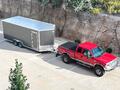
Josht, I’ve used a plastic marine style battery box for different projects over the years. It helps contain any leaked acid and has a removal lid. The battery in the trunk is inside such a box, as is the battery inside the car hauler which is under the cabinets. I think they work very well.
I’m not sure what we used but was called “welding cable” (and likely came off a source my dad found cheap).
Not saying it’s the best product, just saying it’s worked without issue all these years. However: it’s not a daily driver, has a low amount of electrical load, and has a safety shutoff switch.
Josht, I’ve used a plastic marine style battery box for different projects over the years. It helps contain any leaked acid and has a removal lid. The battery in the trunk is inside such a box, as is the battery inside the car hauler which is under the cabinets. I think they work very well.

Super Moderator


Joined: Dec 2011
Posts: 13,323
Likes: 6,098

"Translucent Red" and "Translucent Black" says nothing about
- the SAE Specification that the battery cable meets
- the material identification code of the jacket insulator material
- any verbal description of the material that the jacket is made with
- the maximum temperature range the jacket is rated for
- the minimum temperature the jacket can tolerate
- the water resistance / permeability / submergibility of the jacket
- the abrasion resistance of the jacket
- the petrochemical (oil, fuel, gas) resistance of the jacket
- the flame resistance of the jacket
- the oxidation resistance of the jacket
- the flexibility of the jacket within a range of temperatures
This is why I use swamp as a metaphor for the aftermarket. The water is placid on the surface, with glowing descriptions of some factors (the wire stranding, the oxygen free copper, the tinning), and at the same time is murky, entirely ignoring a major factor (jacket insulation material properties) that distinguishes the appropriateness of one industry classification of wire from another.
The wire jacket material specification is in fact the qualifying factor that Ford, GM, Paccar, International, and other OEM's in my limited experience actually set forth in writing as minimum requirements to be adhered to in following best practices for vehicle integration. No OEM has ever specified strand count when calling out what type of battery cable to use. All OEMs specify the material properties of the wire insulating jacket, by SAE Specification, by verbal description of the material, and by industry acronyms identifying the material.
Since the voices these competing OEMs all sing the same tune in harmonic unison when it comes to what type of battery cables to use, their song presents a very convincing argument to follow their instruction. Yet there are quite a few battery cable vendors in the aftermarket that tout stranding, and ignore the jacket material.
That is the conversation, and minimum standard to be demanded by the consumer, that I hope will eventually emerge from threads about replacement battery cables.
Originally Posted by Ford
All added under hood and under body wiring must be cross linked polyethylene, high temperature (minimum 125°C) insulated wire. SAE Specification J1128 SXL, GXL, or TXL wire or equivalent is acceptable. Use SAE J1127 SGX or STX or equivalent for 12v battery cables.

Mountain Pass
Joined: Dec 2022
Posts: 152
Likes: 56
Y2K
I hear where you are coming from, it's interesting that they don't list the wire type. Reading their description, sounds like class m marine cable (strand count and tinned). I know that SAE J1127 is for ground surface vehicles only, does not pertain the marine vessels, they leave that to USCG and ABYC. USCG and ABYC standards greatly exceed SAE J1127.
The company I get my wire from is required to include the certifications (SAE, UL etc)
I also find it interesting that they show professional type cable terminals (FTZ/ Burndy/T&B), the type that you crimp with calibrated crimpers, crimps are inspected and are certified, but don't offer them for sale.
Never used their products, just looked at the pictures and descriptions.
I hear where you are coming from, it's interesting that they don't list the wire type. Reading their description, sounds like class m marine cable (strand count and tinned). I know that SAE J1127 is for ground surface vehicles only, does not pertain the marine vessels, they leave that to USCG and ABYC. USCG and ABYC standards greatly exceed SAE J1127.
The company I get my wire from is required to include the certifications (SAE, UL etc)
I also find it interesting that they show professional type cable terminals (FTZ/ Burndy/T&B), the type that you crimp with calibrated crimpers, crimps are inspected and are certified, but don't offer them for sale.
Never used their products, just looked at the pictures and descriptions.
Super Moderator
Joined: Dec 2011
Posts: 13,323
Likes: 6,098


... as well as the Department of Defense

BATTERY CABLE:

WELDING CABLE:

What company do you get your wire from?
Mountain Pass
Joined: Dec 2022
Posts: 152
Likes: 56
Y2K.
Interesting question, But I'm always willing to support good companies: Marine unique stuff- Bay State Marine supply, For Quality wire cable and tools - Dell City, all misc stuff or if I absolutely need it tomorrow McMaster Carr. All excellent companies with outstanding customer service.
Interesting question, But I'm always willing to support good companies: Marine unique stuff- Bay State Marine supply, For Quality wire cable and tools - Dell City, all misc stuff or if I absolutely need it tomorrow McMaster Carr. All excellent companies with outstanding customer service.

More Turbo

Joined: Sep 2015
Posts: 640
Likes: 282
From: Texas
Mountain Pass
Joined: Dec 2022
Posts: 152
Likes: 56
Y2K
Ok, you have me going down the rabbit hole again
went out to the sho to look at the wire out there
Welding wire is made by Temco Industrial, printed on the cable is SAE J1127 and ATSM B172.
The marine cable is MFG by Anchor, has UL 1426 and USCG printed.on it, so I looked all the specs up on Dell City site: certs include: UL 1426, BC,5w2, USCG (CFF Section 46), ABYC, and CSA TEW.
But...no J1127. I suspect that there are a couple of reasons for this, it's not being marketed for automotive use, and they probably just list the highest certification in each category... Kinda like having a PhD, in engineering. You don't generally list Associate, Bachelor, Masters degrees.. or running load range E tires, you automatically know you meet load range C specs.just the highest certification. But I can email Anchor to see if it will meet J1127
In reality, J1127 is a pretty low spec, probably why Walmart and AutoZone can sell Chinese premade battery cable for a few bucks.
Respectfully
Mike
Ok, you have me going down the rabbit hole again
went out to the sho to look at the wire out there
Welding wire is made by Temco Industrial, printed on the cable is SAE J1127 and ATSM B172.
The marine cable is MFG by Anchor, has UL 1426 and USCG printed.on it, so I looked all the specs up on Dell City site: certs include: UL 1426, BC,5w2, USCG (CFF Section 46), ABYC, and CSA TEW.
But...no J1127. I suspect that there are a couple of reasons for this, it's not being marketed for automotive use, and they probably just list the highest certification in each category... Kinda like having a PhD, in engineering. You don't generally list Associate, Bachelor, Masters degrees.. or running load range E tires, you automatically know you meet load range C specs.just the highest certification. But I can email Anchor to see if it will meet J1127
In reality, J1127 is a pretty low spec, probably why Walmart and AutoZone can sell Chinese premade battery cable for a few bucks.
Respectfully
Mike
Lead Driver


Joined: Aug 2022
Posts: 5,088
Likes: 1,420
From: Oologah, OK
This stuff is my new favorite.
https://www.batterycablesusa.com/000...le-red-4-0-awg
https://www.batterycablesusa.com/000...le-red-4-0-awg
as I have a Hydraulic Crimper, I'm good to go with them.
FTE Stories
Ford Trucks for Ford Truck Enthusiasts

3 Best / 3 Worst Parts of Modern Ford Ownership
Brett Foote
10 Amazing Upgrades That Solve Common Ford Truck Owner Headaches
Pouria Savadkouei
Every 2026 Ford Engine Explained
Brett Foote
10 Ugly Ford Trucks That We Still Kinda Love
Joe Kucinski
10 Things Every Truck Owner NEEDS (2026 Edition)
Michael S. Palmer
Rezvani's Latest Post-Apocalyptic Monster Is a Ford F-150 Raptor Underneath
Verdad Gallardo
Top 10 Most Expensive Ford Trucks Ever Sold on Bring a Trailer
Joe Kucinski
2027 Ford Super Duty Buyer's Guide (Every Model, Engine, & Package)
Brett Foote
Top 10 Ford Truck Tragedies
Joe Kucinski
Banned
Joined: Dec 2018
Posts: 3,541
Likes: 458
I always thought the custom battery cables website made a pretty nice looking kit.
My B+ setup was trashed so I had a local dealership source an NOS OEM replacement and it’s fine if you’re careful not to over-tighten the terminals.
The negatives are original and getting a little bad, and I’d probably switch those to a pre-made kit at some point with the replaceable military style terminals since negatives get tightened and removed more often. IMO not worth a DIY for most guys unless you have the tools already.
My B+ setup was trashed so I had a local dealership source an NOS OEM replacement and it’s fine if you’re careful not to over-tighten the terminals.
The negatives are original and getting a little bad, and I’d probably switch those to a pre-made kit at some point with the replaceable military style terminals since negatives get tightened and removed more often. IMO not worth a DIY for most guys unless you have the tools already.



CNCFAB
Joined: Apr 2020
Posts: 4,874
Likes: 2,006
There was a cable company at the 7.3 Summit but I can’t remember their name. I also don’t remember if they did full cable kits or just custom stuff. Maybe @ESwift will remember.
That was Performance Custom Cables (PCC). Their cables are very nice. They have complete kits.

Cargo Master
Joined: Apr 2012
Posts: 2,029
Likes: 530
From: Bottom Of Pikes Peak
I've seen a good majority (obviously not here) use a premium welding cable for power/ ground cables without issue. I don't believe pure copper cable really differs that much, it's mostly in the insulation ratings which welding cable should succeed in as they are actually put though more than an automotive cable will ever see.
I do not use welding cable myself. I do use pure tinned copper cable thought. I use tinned lugs and heatshrink with adhesive. The cable I use has way more strands than any welding cable...been using similar cable since I was 16 (close to 4 decades ago) without any corrosion issues but I also live in Colorado and not the rust belt.
I would guess that a quality welding cable is still far superior to the OEM cables. The Ford OEM cables are known to rot/ corrode from the inside out.
Looks like there are 3 good battery kits listed here and the OP chose one of them I believe. The reason why I chose DIY was because I already had to run big cables for my stereo and I wanted to upgrade every cable under the hood (power and ground). I even made a quick disconnect 2/0 jumper cable hook up using a HD Anderson connector
sorry, just felt like sharing my experience and what i've run across from a different hobby.
I do not use welding cable myself. I do use pure tinned copper cable thought. I use tinned lugs and heatshrink with adhesive. The cable I use has way more strands than any welding cable...been using similar cable since I was 16 (close to 4 decades ago) without any corrosion issues but I also live in Colorado and not the rust belt.
I would guess that a quality welding cable is still far superior to the OEM cables. The Ford OEM cables are known to rot/ corrode from the inside out.
Looks like there are 3 good battery kits listed here and the OP chose one of them I believe. The reason why I chose DIY was because I already had to run big cables for my stereo and I wanted to upgrade every cable under the hood (power and ground). I even made a quick disconnect 2/0 jumper cable hook up using a HD Anderson connector
sorry, just felt like sharing my experience and what i've run across from a different hobby.

Laughing Gas
Joined: Apr 2006
Posts: 1,121
Likes: 267
From: Middle Georgia
I've seen a good majority (obviously not here) use a premium welding cable for power/ ground cables without issue. I don't believe pure copper cable really differs that much, it's mostly in the insulation ratings which welding cable should succeed in as they are actually put though more than an automotive cable will ever see.
I don't question what has been said previously about Ford's (or other OEM's) battery cable specifications. I won;t question anyone wanting to adhere to those specifications, it's a decision that every individual is going to have to make for themselves. I also don;t care to debate the importance of that decision.
I would say that those OEM specifications seem to specify the type and quality of insulation on the cable, not the conductor itself. I do not see where welding cable, or other similarly substituted cables, can not exceed the oem conductor quality while not meeting the OEM insulation specification.
For me... I'm not suggesting anyone else follow my ideas or thoughts, and not interested in debating them... For me, that insulation rating is all fine and dandy, but it doesn't mean diddly if the truck is on fire. The increased conductor size and quality means that the cable itself is less likely to be the cause of a fire (less heat generated from current through the wire). Ok, it might get cut and start arcing in event of a wreck, but that's just as likely to happen with the specification insulation. Once other oils fluids and materials ignite the truck is burning regardless of the insulation rating. The welding cable insulation may not be rated to survive a fire, but if the truck is burning I've got other things that I'm more worried about that if the wiring is going to survive. IMO at that point the truck is a writeoff, and I don't expect for insurance to give me anything for it anyway.
I'll go back to my previous statement (I think), I don't intend to make anything for the F-250 myself. I'm going to buy a cable kit from one of the available companies (probably CEAE) and be happy with what ever they use. Well, I might make and add the alternator to battery upgrades like others have done, but that's the extent of it. I'd most likely buy the cable and materials for that at the same time and place as the cable kit.
Lead Driver
Joined: Aug 2022
Posts: 5,088
Likes: 1,420
From: Oologah, OK
I agree.
I'll go back to my previous statement (I think), I don't intend to make anything for the F-250 myself. I'm going to buy a cable kit from one of the available companies (probably CEAE) and be happy with what ever they use. Well, I might make and add the alternator to battery upgrades like others have done, but that's the extent of it. I'd most likely buy the cable and materials for that at the same time and place as the cable kit.
I'll go back to my previous statement (I think), I don't intend to make anything for the F-250 myself. I'm going to buy a cable kit from one of the available companies (probably CEAE) and be happy with what ever they use. Well, I might make and add the alternator to battery upgrades like others have done, but that's the extent of it. I'd most likely buy the cable and materials for that at the same time and place as the cable kit.
the underhood temps will not hurt most cable insulation today.
I have used THHN many times... never an issue.
Mountain Pass
Joined: Dec 2022
Posts: 152
Likes: 56
If you read the applications for the welding wire that YK2 posted, you will see battery cable as an option.
I have never seen a post incident investigation of a auto, generally fire out...tow truck takes away.
Boats or aircraft are a different story, death occurs in either, USCG, NTSB, faa etc will investigate.
I have never seen a post incident investigation of a auto, generally fire out...tow truck takes away.
Boats or aircraft are a different story, death occurs in either, USCG, NTSB, faa etc will investigate.