



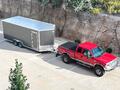

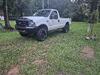
Ripped off mud flap, again!?
Thread Starter
|
Logistics Pro


Joined: Jan 2021
Posts: 4,077
Likes: 1,143
From: Fairhope Alabama

Thread Starter
|
Logistics Pro
Joined: Jan 2021
Posts: 4,077
Likes: 1,143
From: Fairhope Alabama
9 inches. And some more text scince just "9 inches" is to short (that's what she said) to let me post.
Thread Starter
|
Logistics Pro
Joined: Jan 2021
Posts: 4,077
Likes: 1,143
From: Fairhope Alabama


Lead Driver

Joined: Feb 2000
Posts: 5,374
Likes: 46
From: Palm Bay, Florida

Look into Husky brand molded flaps.
They are nice and molded to fit your truck and are not 1 size fits all.
I have them on my Dually and no problems so far.
They are nice and molded to fit your truck and are not 1 size fits all.
I have them on my Dually and no problems so far.
FTE Stories
Ford Trucks for Ford Truck Enthusiasts

10 Things Every Truck Owner NEEDS (2026 Edition)
Michael S. Palmer
Rezvani's Latest Post-Apocalyptic Monster Is a Ford F-150 Raptor Underneath
Verdad Gallardo
Top 10 Most Expensive Ford Trucks Ever Sold on Bring a Trailer
Joe Kucinski
2027 Ford Super Duty Buyer's Guide (Every Model, Engine, & Package)
Brett Foote
Top 10 Ford Truck Tragedies
Joe Kucinski
AEV FXL Super Duty - the Super Duty Raptor Ford Doesn't Make
Brett Foote
Lobo Vs Lobo: Proof the F-150 Lobo Should Be Even Lower!
Michael S. Palmer
Ford's 2001 Explorer Sportsman Concept Looks For a New Home
Verdad Gallardo
10 Best Ford Truck Engines We Miss the Most!
Joe Kucinski


Super Moderator


Joined: Dec 2011
Posts: 13,308
Likes: 6,081

Yet is is rich with clues.
The wheel is rolling (rotational motion) without slipping (has traction as it moves, which rules out spinning in place) along a horizontal road, from left to right (linear motion).
The question, like any test question, is a trick question (and like any trick question, conceals or omits substance in the attempt to trick)... that seems to ask what forces (centripetal, tangential, gravitational, et al) would exert the most influence on the initial direction of the path followed by the particle at the moment and point of separation from a body that is moving rotationally and linearly in an established direction... and not the magnitude of the vector. I'm just guessing that is why no numerical values were incorporated into the question.
The answer, like anything else, can be found on YouTube.
In the bedless Chevy squarebody video above, the far (passenger side) drive tire nearly always exhibits "E" (indicating the prevailing centripetal force).
The slipping (driver's side) tire, while spinning in place, appears to indicate tangential forces at first, however recognize that the water debris being thrust aft is released at Point P, not Point M, as defined in the test question.
Once the driver's side tire hooks up at the bottom of the mud pit and moves linearly as well as rotationally, the lugs on the tire carry the debris higher to release point M, where the driver's side tire mimics the rooster tail forward throw of the passenger side tire as the truck crawls out of the pit.
In other words, as long as Tristan's truck has traction on the highway, a mud flap that is 12" from the ground will be sufficient to prevent rocks released from his meaty tires from being hurled at a high enough trajectory to hit a windshield of a following motorist, at any speed, before being stopped by said mudflap.
If Tristan is doing burnouts, spinning in place, on a gravel field, where debris is jettisoned backwards at Point P, the contact patch, instead of Point M, that would be different. However, the tangential direction in that case would be clocked low enough that the rocks would hit the ground before hitting the windshield, and any motorist who tailgates Tristan doing burnouts in gravel field probably deserves a few rock chips for being in Tristan's way of a good time.
Stiffening the rear mudflaps (to prevent them swinging forward towards the tires, or being pushed forward when backing into piles of dirt) might also help. But reducing the length of the mudflap (cutting them off to raise the bottoms to 12" from the ground") will simultaneously reduce the swing arc radius, so stiffening might not be necessary if shortening.
The wheel is rolling (rotational motion) without slipping (has traction as it moves, which rules out spinning in place) along a horizontal road, from left to right (linear motion).
The question, like any test question, is a trick question (and like any trick question, conceals or omits substance in the attempt to trick)... that seems to ask what forces (centripetal, tangential, gravitational, et al) would exert the most influence on the initial direction of the path followed by the particle at the moment and point of separation from a body that is moving rotationally and linearly in an established direction... and not the magnitude of the vector. I'm just guessing that is why no numerical values were incorporated into the question.
The answer, like anything else, can be found on YouTube.
In the bedless Chevy squarebody video above, the far (passenger side) drive tire nearly always exhibits "E" (indicating the prevailing centripetal force).
The slipping (driver's side) tire, while spinning in place, appears to indicate tangential forces at first, however recognize that the water debris being thrust aft is released at Point P, not Point M, as defined in the test question.
Once the driver's side tire hooks up at the bottom of the mud pit and moves linearly as well as rotationally, the lugs on the tire carry the debris higher to release point M, where the driver's side tire mimics the rooster tail forward throw of the passenger side tire as the truck crawls out of the pit.
In other words, as long as Tristan's truck has traction on the highway, a mud flap that is 12" from the ground will be sufficient to prevent rocks released from his meaty tires from being hurled at a high enough trajectory to hit a windshield of a following motorist, at any speed, before being stopped by said mudflap.
If Tristan is doing burnouts, spinning in place, on a gravel field, where debris is jettisoned backwards at Point P, the contact patch, instead of Point M, that would be different. However, the tangential direction in that case would be clocked low enough that the rocks would hit the ground before hitting the windshield, and any motorist who tailgates Tristan doing burnouts in gravel field probably deserves a few rock chips for being in Tristan's way of a good time.
Stiffening the rear mudflaps (to prevent them swinging forward towards the tires, or being pushed forward when backing into piles of dirt) might also help. But reducing the length of the mudflap (cutting them off to raise the bottoms to 12" from the ground") will simultaneously reduce the swing arc radius, so stiffening might not be necessary if shortening.

Cargo Master

Joined: Apr 2012
Posts: 2,024
Likes: 525
From: Bottom Of Pikes Peak
I'll have to go back through the thread but in your OP I was looking specifically for if you backed up...ding ding ding, backing up is what always rips off mud flaps. You have to be extremely careful, not sure of a good solution. that's how big truck mudflaps get ripped off too. You have to have an eye on them. one little bump of dirt, curb or whatever will ****** them right up

Tuned
Joined: Oct 2013
Posts: 293
Likes: 119
I'll have to go back through the thread but in your OP I was looking specifically for if you backed up...ding ding ding, backing up is what always rips off mud flaps. You have to be extremely careful, not sure of a good solution. that's how big truck mudflaps get ripped off too. You have to have an eye on them. one little bump of dirt, curb or whatever will ****** them right up

Thread
Thread Starter
Forum
Replies
Last Post
montana_highboy
1973 - 1979 F-100 & Larger F-Series Trucks
34
Dec 14, 2019 09:22 PM
portsample
1999 - 2016 Super Duty
9
Dec 25, 2010 11:22 PM
7866ford
1973 - 1979 F-100 & Larger F-Series Trucks
2
Apr 13, 2008 08:59 PM