


ZF-666 truck from hell.


Super Moderator


Joined: Dec 2011
Posts: 13,303
Likes: 6,079

I hate to ask about driving habits....
The only time there's relative motion between the input shaft and pilot bearing is when the clutch is depressed. Do you sit at stoplights with the clutch down/transmission in gear?
Do you downshift at high speeds using the clutch? When downshifting, the input shaft will spin way faster than the flywheel during the downshift process.
The only time there's relative motion between the input shaft and pilot bearing is when the clutch is depressed. Do you sit at stoplights with the clutch down/transmission in gear?
Do you downshift at high speeds using the clutch? When downshifting, the input shaft will spin way faster than the flywheel during the downshift process.
Usual driving habits are low rpm shift points when empty unless getting on the interstate. Then I'll run it up to 2500 rpm. Otherwise I'm in 5th gear by 40 mph. 4.88 rear axle. I don't need to wind it up at all to get going.
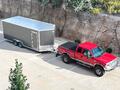
Towing. I will push it to 2800 sometimes 3000 rpm when accelorating. At that engine speed it's better to shift because the engine out put is dropping off and it makes best power below 2800. When pulling a big hill that requires downshift, I'll use the clutch, but the rpm for the downshift usually waits until the engine will be turning 2500 in the lower gear. OD to 4th is quite a jump so I have to wait on that until below 55 mph or so. Again 4.88 rear axle. Only on the steepest mountain passes do I have to drop into 3rd.
Running a Power Hungry Performance chip set on the 25hp tune. Any hotter than that, the EGT will go into the red. When there's a hill that is just steep enough to make the engine go WOT and maybe lose 1 mph, the EGT will push 1250 and the boost will be 21.5. 4" downpipe, 5" straight pipe exhaust with an AFE Big Boost air filter. Everything about the engine is stock, injectors, HPOP, etc.
Clutch engagement. No throttle given until the clutch is fully engaged, then I give enough to get it rolling with full throttle only applied in 3rd gear and up. Again, 4.88 axle. By the time I'm in third gear, the rig might be rolling 25 mph.
I'm at a loss for words on what the solution might be for this. I'm skilled enough to get an old school transmission into non-syncro granny low without crashing the gears together with the truck still rolling. Know better than to treat the truck like a race car and do all I can to avoid driveline shock. One of my goals when driving is to make the shift feel as smooth as possible and grimace when I miss a shift. Again, no throttle given when starting out from a stop until my foot is off the clutch. When towing, I use Low to get rolling, then into 1st gear, 2 gear and so on.
Towing. I will push it to 2800 sometimes 3000 rpm when accelorating. At that engine speed it's better to shift because the engine out put is dropping off and it makes best power below 2800. When pulling a big hill that requires downshift, I'll use the clutch, but the rpm for the downshift usually waits until the engine will be turning 2500 in the lower gear. OD to 4th is quite a jump so I have to wait on that until below 55 mph or so. Again 4.88 rear axle. Only on the steepest mountain passes do I have to drop into 3rd.
Running a Power Hungry Performance chip set on the 25hp tune. Any hotter than that, the EGT will go into the red. When there's a hill that is just steep enough to make the engine go WOT and maybe lose 1 mph, the EGT will push 1250 and the boost will be 21.5. 4" downpipe, 5" straight pipe exhaust with an AFE Big Boost air filter. Everything about the engine is stock, injectors, HPOP, etc.
Clutch engagement. No throttle given until the clutch is fully engaged, then I give enough to get it rolling with full throttle only applied in 3rd gear and up. Again, 4.88 axle. By the time I'm in third gear, the rig might be rolling 25 mph.
I'm at a loss for words on what the solution might be for this. I'm skilled enough to get an old school transmission into non-syncro granny low without crashing the gears together with the truck still rolling. Know better than to treat the truck like a race car and do all I can to avoid driveline shock. One of my goals when driving is to make the shift feel as smooth as possible and grimace when I miss a shift. Again, no throttle given when starting out from a stop until my foot is off the clutch. When towing, I use Low to get rolling, then into 1st gear, 2 gear and so on.
After reading the responding paragraph twice, I couldn't seem to find were either question was answered.
The two questions were interesting and informative.... and the answers may differ depending on circumstances... but to any extent that one way of doing either of the two things Cody mentioned may accelerate or postpone the type of clutch issues you are encountering... we might all learn something useful if you can recall how you drive in the two narrowly defined scenarios Cleatus12r asked about.
On another note, you described running at 25K to 26K GCWR, which the F-550 is rated for.
A not very well known option in late 1999 was a high capacity trailer tow option for the F-550, that increased the GCWR by a couple of tons.. to 30K lbs.
This package was only available with the automatic transmission.
FTE Chapter Leader


Joined: Jan 2005
Posts: 13,111
Likes: 4,716
From: Henderson, NV
How’s this for a compromise?
https://www.iratediesel.com/product/...road-use-only/
 I'm too die hard of a stick shift driver.
https://www.iratediesel.com/product/...road-use-only/


Tuned
Joined: Oct 2020
Posts: 418
Likes: 178
From: Piedmont of N.C.
The only other situation I can come up with is if the input shaft is not in the best of condition.

Thread Starter
|
Fleet Owner


Joined: Jun 2004
Posts: 25,090
Likes: 1,112
From: Rio Rico, AZ.
I am curious about the two very specific questions that Cleatus12r asked also.
After reading the responding paragraph twice, I couldn't seem to find were either question was answered.
The two questions were interesting and informative.... and the answers may differ depending on circumstances... but to any extent that one way of doing either of the two things Cody mentioned may accelerate or postpone the type of clutch issues you are encountering... we might all learn something useful if you can recall how you drive in the two narrowly defined scenarios Cleatus12r asked about.
On another note, you described running at 25K to 26K GCWR, which the F-550 is rated for.
A not very well known option in late 1999 was a high capacity trailer tow option for the F-550, that increased the GCWR by a couple of tons.. to 30K lbs.
This package was only available with the automatic transmission.
After reading the responding paragraph twice, I couldn't seem to find were either question was answered.
The two questions were interesting and informative.... and the answers may differ depending on circumstances... but to any extent that one way of doing either of the two things Cody mentioned may accelerate or postpone the type of clutch issues you are encountering... we might all learn something useful if you can recall how you drive in the two narrowly defined scenarios Cleatus12r asked about.
On another note, you described running at 25K to 26K GCWR, which the F-550 is rated for.
A not very well known option in late 1999 was a high capacity trailer tow option for the F-550, that increased the GCWR by a couple of tons.. to 30K lbs.
This package was only available with the automatic transmission.

Lead Driver


Joined: Jun 2013
Posts: 5,647
Likes: 891
From: north of Minneapolis, MN
If you have a way to measure the size and the taper of the input shaft, I'll gladly make you a new bushing. I do know that the new ZF6 Bushing kits are going to address the shaft wear issue....up to a certain amount.

Thread Starter
|
Fleet Owner
Joined: Jun 2004
Posts: 25,090
Likes: 1,112
From: Rio Rico, AZ.


Tuned
Joined: Oct 2020
Posts: 418
Likes: 178
From: Piedmont of N.C.
How can you ensure that a bushing will even be concentric with the shaft after it has been worn like he is saying?
Thread Starter
|
Fleet Owner
Joined: Jun 2004
Posts: 25,090
Likes: 1,112
From: Rio Rico, AZ.

No spacer plate on the stick shift flywheel. Just a big old hunk of spinning iron with a shoulder on one side for balancing purposes in concert with the engine rotating assembly.

FTE Leadership Emeritus

Joined: May 2014
Posts: 27,352
Likes: 5,946
From: Lake Hartwell, GA
Dan, would you mind sharing with us which "stage II" clutch you purchased and installed?
Cargo Master

Joined: May 2018
Posts: 2,442
Likes: 993
Yeah, I'm rolling the dice this time. Shaft not PERFECTLY straight, but close enough to make me hope it will still work. Last time I had a Ford pilot bearing in there, it dried up and siezed onto the shaft and did some serious surface damage. This time around I'm redneck hoping that the additional "clearance" will be enough to put off this repair for a long time. This is clutch number 6. SIX.
No spacer plate on the stick shift flywheel. Just a big old hunk of spinning iron with a shoulder on one side for balancing purposes in concert with the engine rotating assembly.
No spacer plate on the stick shift flywheel. Just a big old hunk of spinning iron with a shoulder on one side for balancing purposes in concert with the engine rotating assembly.
Thread Starter
|
Fleet Owner
Joined: Jun 2004
Posts: 25,090
Likes: 1,112
From: Rio Rico, AZ.
FTE Leadership Emeritus
Joined: May 2014
Posts: 27,352
Likes: 5,946
From: Lake Hartwell, GA

Lead Driver
Joined: Jun 2013
Posts: 5,647
Likes: 891
From: north of Minneapolis, MN
You can't make the assumption that ANY of these worn input shafts have been worn concentric....but how would they non-concentric?
Tuned
Joined: Oct 2020
Posts: 418
Likes: 178
From: Piedmont of N.C.
I guess if the shaft stayed centered, there would be no need for a pilot bearing is my way of thinking. Once the clutch plate is released, the only two points that keep it centered between the pressure plate and the flywheel is the pilot bearing and the front of the transmission. Just a few thousands here, a few thousands there, from the clutch plate not being centered in the assembly and I believe things could go kind of wonky. I do realize that all this wear would occur when the clutch is released, which should be less than the time that it's engaged, but I can see this happening. If it was mine, I'd replace all known components that could be contributing to this problem at the same time just to make sure. I don't like pulling transmissions, especially at the frequency this one has been pulled!