When you click on links to various merchants on this site and make a purchase, this can result in this site earning a commission. Affiliate programs and affiliations include, but are not limited to, the eBay Partner Network.
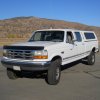
It was a balmy -26 when I woke up this morning. Truck started up fine but as I headed to town the temperature gauge indicated it was overheating. I parked it and let it sit. Temperature gauge never went down, but when I started it up a couple of hours later, the gauge immediately went down to cold, but then as I drove it, it showed it was overheating again. 1995 F-150 351W
Happens a lot here because of the huge influx of out-of-state imports that just use water in places like commiefornia. Mornings like this one (-25 here too) bring them all to a screeching halt.
This is an upper radiator hose at the radiator end on a 2014 F150 Ecoboost. This was December 20th on a -30F morning. He drove it about 3 miles and it overheated. It was then towed in about an hour later. Two hours under the heater in the shop and a water drain/coolant refill later it was on the road again. The guy just lucked-out that it had protection down to +15 and it didn't freeze solid!
Thanks for the responses. That would make sense about the coolant. I checked it and it doesn't look frozen, but I suppose somewhere in there it could be blocked. Is it ok to just wait until the temperature warms up?
Sounds like your coolant is freezing in your radiator and preventing the coolant from circulating. Its happened to me.
this. i had it happen many years ago too. even though there was plenty of coolant in the system, there was not enough water in it and the coolant turned to slush and would not pass through the radiator.
Thanks for the responses. That would make sense about the coolant. I checked it and it doesn't look frozen, but I suppose somewhere in there it could be blocked. Is it ok to just wait until the temperature warms up?
depends on how bad the coolant is. it may be ok, or it may freeze solid and pop a freeze out plug, or worse crack the block and radiator.
i would rather heat it up and drain some out to adjust coolant to get protection down to at least -50
this. i had it happen many years ago too. even though there was plenty of coolant in the system, there was not enough water in it and the coolant turned to slush and would not pass through the radiator.
Antifreeze/coolant is a lot like diesel fuel antigel treatment. A bottle/jug of the stuff straight will solidify sitting in the bed of your pickup. Mix it with water or fuel and it stays in a liquid form to a lower temperature.
Antifreeze/coolant is a lot like diesel fuel antigel treatment. A bottle/jug of the stuff straight will solidify sitting in the bed of your pickup. Mix it with water or fuel and it stays in a liquid form to a lower temperature.
yup. A lesson I learned the hard way back in 1972, 5 miles from home when it slushed up in the radiator.
This Hennessey Takes the Expedition Tremor's Off-Roading Capability to the Next Level
Slideshow: The VelociRaptor Expedition gains a lift, upgraded suspension, Brembo brakes, and trail-ready equipment while retaining the stock 440-horsepower EcoBoost V6.