When you click on links to various merchants on this site and make a purchase, this can result in this site earning a commission. Affiliate programs and affiliations include, but are not limited to, the eBay Partner Network.
From a financial perspective a vehicle shouldn’t cost no more than 15% of your gross income. How can the average family afford an EV?
No more miles than I drive an EV truck would be great for my use, however the cost to own would be out of my targeted budget.
Seems like in order for the EV transition to be successful, there should be an incentive to promote the purchase of them. If a consumer could purchase a truck for less than an ICE F150 XL, I would think consumers would be excited to own one.
From a financial perspective a vehicle shouldn’t cost no more than 15% of your gross income. How can the average family afford an EV?
No more miles than I drive an EV truck would be great for my use, however the cost to own would be out of my targeted budget.
Seems like in order for the EV transition to be successful, there should be an incentive to promote the purchase of them. If a consumer could purchase a truck for less than an ICE F150 XL, I would think consumers would be excited to own one.
I don't know if I'd call another or larger govt. handout (govt debt=inflation) would be success, it would be another waste of tax money. If they are so great, the market will find ways to make them cheaper, and more available (i.e., on the lot to buy). Believe it or Not, at one time (Napoleon was the Emperor of France) Aluminum as worth more than Gold. If EVs continue to need a tax credit in order to "stimulate sales", maybe they aren't quite as popular as some would have you believe. From my perspective, Hybrid makes more sense, a lot more, in short maybe your kid should learn to crawl, before he is entered into his first marathon.
From a financial perspective a vehicle shouldn’t cost no more than 15% of your gross income. How can the average family afford an EV?
No more miles than I drive an EV truck would be great for my use, however the cost to own would be out of my targeted budget.
Seems like in order for the EV transition to be successful, there should be an incentive to promote the purchase of them. If a consumer could purchase a truck for less than an ICE F150 XL, I would think consumers would be excited to own one.
I disagree with your statement, "...cost no more than 15% of your gross income". That statement alone without any restriction(s) is nonsense. In short without giving a range of income, how can this be true? The 15% may be true for someone making a low or lower income, but in reality, not so much for a guy making seven figures/year. Not as critical for a single guy, not paying child support or a check every month to an ex-wife or two, etc., etc. I don't think you can make such an all-encompassing statement and have it hold up. Remember, we in the US now have a lot of girly men, grown men that live with mom, often in their mom's basement, they may be 25-40 years old! They have zero rent, no utilities, no food cost-heck mom still does their laundry! These boy/men have a crappy job, but can spend quite a bit of their income on a car, as they never plan to move, so why not? Sad times.
I don't know about the expert, but in Turbo Tax the credit is taken from Schedule 3, brought over to line 20 of Form 1040 and is then subtracted from your total tax liability not the tax you actually owe which is on Line 37. I believe that, like any credit, if you don't have a big enough tax liability in a given year, the credit can be caried over..
No so.
Again, in layman’s terms, an electric vehicle tax credit does not carry over for individual buyers. Because the tax credit is given to people who buy an electric vehicle, the tax credit is only available during the same tax year as the car was purchased.
I disagree with your statement, "...cost no more than 15% of your gross income". That statement alone without any restriction(s) is nonsense. In short without giving a range of income, how can this be true? The 15% may be true for someone making a low or lower income, but in reality, not so much for a guy making seven figures/year. Not as critical for a single guy, not paying child support or a check every month to an ex-wife or two, etc., etc. I don't think you can make such an all-encompassing statement and have it hold up. Remember, we in the US now have a lot of girly men, grown men that live with mom, often in their mom's basement, they may be 25-40 years old! They have zero rent, no utilities, no food cost-heck mom still does their laundry! These boy/men have a crappy job, but can spend quite a bit of their income on a car, as they never plan to move, so why not? Sad times.
No worries! I was just stating an general rule in finance that doesn’t apply to everyone. Just simply a target to help folks manage their finances. Appreciate the feedback!
I don't know if I'd call another or larger govt. handout (govt debt=inflation) would be success, it would be another waste of tax money. If they are so great, the market will find ways to make them cheaper, and more available (i.e., on the lot to buy). Believe it or Not, at one time (Napoleon was the Emperor of France) Aluminum as worth more than Gold. If EVs continue to need a tax credit in order to "stimulate sales", maybe they aren't quite as popular as some would have you believe. From my perspective, Hybrid makes more sense, a lot more, in short maybe your kid should learn to crawl, before he is entered into his first marathon.
My apologies for not being more clear! By incentive I was referring to auto manufacturers targeting their EV’s to be a better value than their current ICE vehicle. Appreciate the feedback!
From a financial perspective a vehicle shouldn’t cost no more than 15% of your gross income. How can the average family afford an EV?
No more miles than I drive an EV truck would be great for my use, however the cost to own would be out of my targeted budget.
Seems like in order for the EV transition to be successful, there should be an incentive to promote the purchase of them. If a consumer could purchase a truck for less than an ICE F150 XL, I would think consumers would be excited to own one.
David,
That’s a good rule of thumb that works for some if you consider monthly loan payment vs gross income. So a person with $60k annual income ($5k/mo) should not exceed a car expense of $750/month. Can I assume that includes monthly payment, insurance and all fixed and variable expenses?
As a numbers guy, a typical EV costs 3-4 cents/mile, so 1500 miles/mo would cost $45-$60 in electricity. A car/truck getting 20 mpg would burn 75 gallons of gas/fuel. 75 gallons of gas today runs about. $243/mo or about $200/month more than an electric vehicle.
On a 5 yr 4.5% car loan $200/month can get you a $10,000 more expensive vehicle.
My EVs were driven 75,000 miles in 7 years. My average cost per kW was 10 cents. The recorded EV efficiency over 7 years was 4 miles/kWH. So every 10 cents in electric took me 4 miles so cost/mile was 2-1/2 cents. Electricity cost went up 18% due to fuel surcharge increase in the last year, so cost/mile is now 3 cents.
You can see from the graph below that I charged on Monday the day to the left. I used $5.41 more electricity that day to replenish 180 miles driven in the EV
On Monday I used 99 kWh $11.61, On Tuesday I used 64 kWh $6.47. The $5.47 difference was charging the car overnight.
This would be.a good a Lean Six Sigma Black Belt project.
Again, in layman’s terms, an electric vehicle tax credit does not carry over for individual buyers. Because the tax credit is given to people who buy an electric vehicle, the tax credit is only available during the same tax year as the car was purchased.
Wasn't sure. I thought it might be like other tax credits. I stand corrected.
That’s a good rule of thumb that works for some if you consider monthly loan payment vs gross income. So a person with $60k annual income ($5k/mo) should not exceed a car expense of $750/month. Can I assume that includes monthly payment, insurance and all fixed and variable expenses?
As a numbers guy, a typical EV costs 3-4 cents/mile, so 1500 miles/mo would cost $45-$60 in electricity. A car/truck getting 20 mpg would burn 75 gallons of gas/fuel. 75 gallons of gas today runs about. $243/mo or about $200/month more than an electric vehicle.
On a 5 yr 4.5% car loan $200/month can get you a $10,000 more expensive vehicle.
My EVs were driven 75,000 miles in 7 years. My average cost per kW was 10 cents. The recorded EV efficiency over 7 years was 4 miles/kWH. So every 10 cents in electric took me 4 miles so cost/mile was 2-1/2 cents. Electricity cost went up 18% due to fuel surcharge increase in the last year, so cost/mile is now 3 cents.
You can see from the graph below that I charged on Monday the day to the left. I used $5.41 more electricity that day to replenish 180 miles driven in the EV
On Monday I used 99 kWh $11.61, On Tuesday I used 64 kWh $6.47. The $5.47 difference was charging the car overnight.
This would be.a good a Lean Six Sigma Black Belt project.
We call this “ Analysis paralysis”
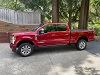
I hear you on that. After Ordering my 2022 F350 in Feb 22' I had a stroke in April. I left the order alone because I had no idea how I would recover. I didn't get it until September and used it in my seasonal business for two weeks before the season was over. Taking stock of my condition I decided to close this business at the end of the year. Now this vehicle was supposed to be my daily driver (replacing a Prius) and function as my business vehicle while allowing my wife to get out of driving a pickup and into a car as she would like.
Now without the business need for this pickup I question spending $7,500 annually on fuel when I could order an E Transit Chassis cab and upfit a flatbed and get most of the functionality of a daily driver and a pickup to haul stuff in one vehicle. I would lose 4WD but I could rent a couple times a year to cover that need.
I really like the Super Duty, and it's been a long-term goal of mine but at the same time what's left of the logical side of my brain is asking if it's worth the cost. I can get Time of use pricing from my utility and charge an EV for .0412 per KWH.
Government has tilted the tables so far in favor of EV it's simply hard to ignore the financial benefit. $0.02 per mile vs. $0.32 per mile is a massive difference.
That’s a good rule of thumb that works for some if you consider monthly loan payment vs gross income. So a person with $60k annual income ($5k/mo) should not exceed a car expense of $750/month. Can I assume that includes monthly payment, insurance and all fixed and variable expenses?
As a numbers guy, a typical EV costs 3-4 cents/mile, so 1500 miles/mo would cost $45-$60 in electricity. A car/truck getting 20 mpg would burn 75 gallons of gas/fuel. 75 gallons of gas today runs about. $243/mo or about $200/month more than an electric vehicle.
On a 5 yr 4.5% car loan $200/month can get you a $10,000 more expensive vehicle.
My EVs were driven 75,000 miles in 7 years. My average cost per kW was 10 cents. The recorded EV efficiency over 7 years was 4 miles/kWH. So every 10 cents in electric took me 4 miles so cost/mile was 2-1/2 cents. Electricity cost went up 18% due to fuel surcharge increase in the last year, so cost/mile is now 3 cents.
You can see from the graph below that I charged on Monday the day to the left. I used $5.41 more electricity that day to replenish 180 miles driven in the EV
On Monday I used 99 kWh $11.61, On Tuesday I used 64 kWh $6.47. The $5.47 difference was charging the car overnight.
This would be.a good a Lean Six Sigma Black Belt project.
Rezvani's Latest Post-Apocalyptic Monster Is a Ford F-150 Raptor Underneath
Slideshow: Called the Fortress, the 850-horsepower pickup combines Raptor underpinnings with military-inspired features, survival equipment, and a starting price of $285,000.