When you click on links to various merchants on this site and make a purchase, this can result in this site earning a commission. Affiliate programs and affiliations include, but are not limited to, the eBay Partner Network.
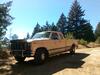
Okay boys I got a weird one for you... Last night I was driving home from the other side of the county and I noticed my wheel making a weird sound. Naturally, I pulled over to take a look. That’s when I noticed the wheel slanted, obviously the source of the noise. I popped the hub cap off to find the lug nuts nearly falling off the studs along with a thick pile of metal shavings in the cap. The threads were fine; the rim itself was the source of the metal flakes.
In accordance with my luck, my spare tire was back at home. So I had to bust out my 1/2 inch ratchet and thread all the nuts back on, move the truck to reposition the wheel, then tighten some more. I spent about 20 minutes repeating that process before I opted to try my luck driving home again. Obviously it wasn’t perfect seeing as though their were sizable pieces missing. I pulled over every few miles to take the hub cap off and retighten the nuts to ensure my tire remained on the truck. What was suppose to be a 45 minute drive turned into a 2.5 hour trip.
Once I returned home I swapped the tire with my spare and went to bed. But on my way to work this morning I noticed the passenger’s side making the same noise all of a sudden. I checked it out and found the same thing, a broken rim. The crazy part is I checked the night before and it was in a perfectly good condition.
Luckily the local junk yard had a pair of the same rims off an 80s Ford van. I’m currently waiting on the tire shop to swap my tires onto the new-old rims. But I wish I knew what caused this.
I just changed all the brake components in the front end along with the wheel bearings. My working theory is that the lip of the new rotor is slightly bigger than the original, preventing the OEM rims from seating properly. The force from the lug nuts along with the tires bouncing around while slightly loose (not enough to noice by hand) is what over stressed the metal and cause it to break. The rear rims are perfectly fine so that’s what leads me to believe it has something to do with the front rotors. In the photos you can see that the very inside of the rim has a couple notches. That’s what I think was sticking. The new-to-me rims do not have those notches and are completely smooth so I will see how those line up tonight. This is the backside of the driver’s side tire. Missing chunk from the passenger’s side.
I’ve changed tires more than a few times before but never had this happen. The only thing I did differently was use some Anti-seize on the threads. I’ve had two people recommend that to me. 1. My boss who does that for his work truck, daily driver, and all the off road/rock crawlers he builds. 2. My buddy who uses anti-seize on the studs of the big rigs at his work. Neither of them mentioned that this might happen or that it’s happened to them.
Do you think that the anti-seize caused the lug nuts to wiggle off? Maybe I just over tightened them?
I have had stuff like this happen before. But I noticed each time it happened, when I am tightening the lug nuts, they tighten, and tighten and tighten. When everything is fitting properly, you tighten the lug nuts and then turn maybe 1/2 to 3/4 of a turn and then they start to tighten without really turning much more.
If it seems like you are turning and turning to get the wheel tight on the rotor or brake hub, beware and take it off and have a look.
I have had stuff like this happen before. But I noticed each time it happened, when I am tightening the lug nuts, they tighten, and tighten and tighten. When everything is fitting properly, you tighten the lug nuts and then turn maybe 1/2 to 3/4 of a turn and then they start to tighten without really turning much more.
If it seems like you are turning and turning to get the wheel tight on the rotor or brake hub, beware and take it off and have a look.
Thank you for your input sir! But I have to be real with you, I have no clue what you’re trying to tell me. What am I looking for? Are you suggesting that the stud might be spinning?
Decided to size up the rims with the old rotors. Notice the lack of the lip around the bearing. No wonder why the OEM rims never got caught on the original rotor and this issue only arose after changing the rotors. The new rotors have a defined lip and the notches on the rim were sitting on top of it.
The original rotor, notice the lack of a lip around the bearing hole. The new rim sized up to the old rotor. Old rim on old rotor.
It looks like these new rims fit over the lip of the rotors. And the lack of the notch on the rims definitely helps. I clearly wore a grove into the rotors while I was driving around with the old rims on there. That must be where all the metal shavings came from.
What I am saying is normally you put the rim on the car, put the lug nuts on by hand, and snug the lug nuts to the rim. Then you start cranking down on them hard to tighten them. If everything is correct, when you tighten them they may turn 1/2-1 turn and then they are tight. Try to tighten them anymore, they do not turn hardly at all.
When you have a problem and you put the nuts on by hand and then snug them up, when you go to crank down on them they turn, and turn and turn, turning more than the 1 turn they would normally rotate. And you go to all the others and they do the same thing. Why do they do this? Because you are bending the rim till it finally hits something solid to stop the lug nuts.
The studs in the new rotors may not have been seated all the way. You got the lugs tight & started driving. The forces on the studs pull them the rest of the way in, but that caused the lugs to go loose & destroy the wheels. Leave the hubcaps off & torque the lugs to specs after 5, 10, 25, 100, & 200 miles of driving. Check the lugs regularly for a couple of weeks.
Unfortunately I had a big road trip scheduled a few days after this rim debacle. I did what you recommended, checking the lugs periodically, not at any regular intervals though. Whenever we stopped, along with the end of the day, before sleeping, I'd pop the hubcaps off and check with a torque wrench. I kept the hubcaps on incase the lug nuts did pop off. That way they wouldn't get lost along the highway. Thankfully I didn't have any issues the whole trip, the nut stayed as tight as the last time I torqued them.
Rezvani's Latest Post-Apocalytic Monster Is a Ford F-150 Raptor Underneath
Slideshow: Called the Fortress, the 850-horsepower pickup combines Raptor underpinnings with military-inspired features, survival equipment, and a starting price of $285,000.