When you click on links to various merchants on this site and make a purchase, this can result in this site earning a commission. Affiliate programs and affiliations include, but are not limited to, the eBay Partner Network.
Up until last week my 04 6.0 with 250K miles on it was running strong. Over the last 8 months I have replaced the main wiring harness, glow plug harness along with the plugs and the module, Oil cooler, IPR, CMP, CKP, and all injectors. It also has an EGR delete and the turbo was replaced at about 180K. A couple of days ago as I took my foot off of the accelerator at an intersection I felt the engine stutter a bit then come back to life when I accelerated again and cruised at a steady speed. This happened one more time after that. I checked codes and found P0299 and P2284. I cleared those codes and neither the stuttering of the codes have returned. Since then I have been monitoring the Battery voltage, FVP, FLP and FP. At Key on engine off position the readings are 11.6, 11.5, 11.5 and 47.5 respectively. That has always been typical with the glow plugs on. After starting the engine and running for two minutes, the numbers are 13.5, 13.1,13 and fluctuates between 47 and 48. However, every so often the FLP will spike to 212 volts for a split second then return. With this issue, I question weather those codes stand on there own or are they caused by whatever is causing the logic power fluctuation? Any thoughts?? What could cause the fluctuation??
Looks like your correct. I tested the batteries this morning with the Fluke before I engaged the glow plugs and found them right at 12 V. While cranking it dropped to about 10V immediately. Once it started the output at the alternator started out at 12V and took about 3 minutes to reach 12.6V. All my grounds are good and all my positive connections are good. I have had this truck for about 12 years and this will be the 4th alternator replacement (mostly Motorcraft). Is this typical for this truck or are the replacement parts just that bad?? Any suggestions on who makes a better alternator?
When you post voltages without a decimal, the information is pretty useless. Pick your voltage reading with the channel that reads varying in decimals, not in block of decimals where the resolution is poor.
This chart is a good indicator to show the state of charge. If your voltage prior to key on was actually 12.0v, you've got an issue.
Alternator rebuilders have poor choices of components to use when rebuilding an alternator. You should be able to get 5 to 10 years out of an alternator, depending on overall mileage and how hard they are used. My original 110a alternator worked for about 7 years, and still does when it's on the engine. But rebuild alternators usually don't have that record.
Here is how my original 110a Motorcraft alternator responds during a cold start. Two minutes from key-on/wait to start, it's up at 14.4v. All grounds and connections are good, and those ground connections are more than just at the top of the battery.
The optional 140a alternator during the later production years has more headroom during the initial cold start idle, but ends at the same after 2 minutes. The major change in voltage is during the glow plugs on time. Until the engine is running on it's own power, voltage is determined by the battery capacity, and nothing else. These older batteries will still drop the operating voltage down to around 10v due to the starter draw.
This is the 140a alternator with a smaller diameter pulley to rotate the alternator faster so it has more output during the lower rpm of the engine. Again, voltage before the engine is rotating and the after the glow plugs are off are not affected by alternator size.
Some people are willing to spend a lot of money on high-output aftermarket alternators, mostly for the amp output at idle speeds. And I do have one despite no longer needing it. If you are looking for a reasonably priced NEW alternator, I often have recommended getting the Bosch 135/140a alternator from RockAuto or Amazon. Initially they did not warranty these for the 250-350 class trucks, only the 450-550, despite the same engine and other operation similarities. However, that's changed, thankfully. Not that they are perfect, but they are new and have a better operational return than the rebuilt alternators from Ford and the parts stores. As long as you get NEW.
A 140a alternator requires no additional wiring for the output. People have run up to 180a alternators without ever adding more cables.
Thanks for all the good information, It will take me a little time to get my rooky head around it but I will. Before reading this I put a load tester on the fully charged batteries (individually) and they both tested good. They are 7 month old 750CCA interstate batteries. I also used it to check the alternator with the engine fully wormed up. The gauge is analog (Red-Bad Green-Good) and it stayed at the top end of bad. I had my Fluke on it as well and it never made it past 13.90V.
It depends on the underhood or alternator temperature. While cool, the voltage can be in the 14.2 to 14.4 volts.
However, when temps are warm to hot, the thermistor in most voltage regulators will drop the voltage output to 13.8v to prevent the batteries from being cooked. So there is a variable to be aware of.
Jack thank you for the wealth of information. I never realized the battery "state of charge" voltage was also temperature dependent. Also I incorrectly thought 12.8V mean 100% on a normal flooded cell battery and always wondered why my brand new batteries only get about 12.6V. Good stuff!
What is your thought on using the over-drive pulley vs alternator life? That will obviously spin it faster than stock, creating more bearing/brush wear which could reduce the life of the alternator? I've got the 140A on my truck but haven't gotten around to buying the over-drive pulley. My truck gets a lot of starts each day so probably a good idea for battery health long term using the over-drive, which would probably outweigh the additional expense of additional alternator wear due to higher rpm.
Still don't quite understand why Ford programmed the glow plugs to come on after EVERY start, even if the engine is still hot.
BTW, my truck performs almost identically to the chart you posted with a 140A/stock pulley. Right around 12.4V, flat until the glow plugs shut off.
State of charge and the ability of it to release amps change with temp. It's a double whammy of why cold starts see a big dip in voltage.
The glow plug function also is related to emissions. My truck will run fine once it lights off in cold temps when the 230a L-N alternator kicks up to 14.5v and the glow plug controller shuts down. It still runs fine, but I'm sure the emissions are high. If you read the BERU glow plug and controller information, they mention the controller has emissions duties.
The temperature also affect the readings of the lower cost battery testers. The testers do show the actual values, but you may think the batteries are bad due to a low reading, where in actuality, they are reading correctly, but the batteries had diminished output due to being cold. The battery testers that cost a few hundred can have a temperature compensating circuit.
In one of my alternator videos I had set up a test with battery blankets during a ~25ºF spell. The voltage drop was not as low, the engine started easier. The battery chemical process to release energy, and to reabsorb charge was more active. Working on a basic video for the testing.
Checking an 850cca (0ºF rating) battery at normal room temp will show a higher than spec amp capacity, even than that battery's 32ºF rating of 1,000 amps.
Driving an alternator at a higher rpm will reduce the life, mostly at the brushes. I don't think there is any way around that. But a lot of that will be dependent on the grade of carbon used in the brushes. OE is usually a good carton, but aftermarket, which is used during the rebuild process, may and probably isn't.
The Bosch 140a AL7606N new is around $175 today. In the scheme of truck repair parts, it wouldn't bother me to replace it every 5 years if I had to. The small pulley depends on how hyper you want to be about cold idle voltage. Personally, I'm more worried about the dip at starter engagement.
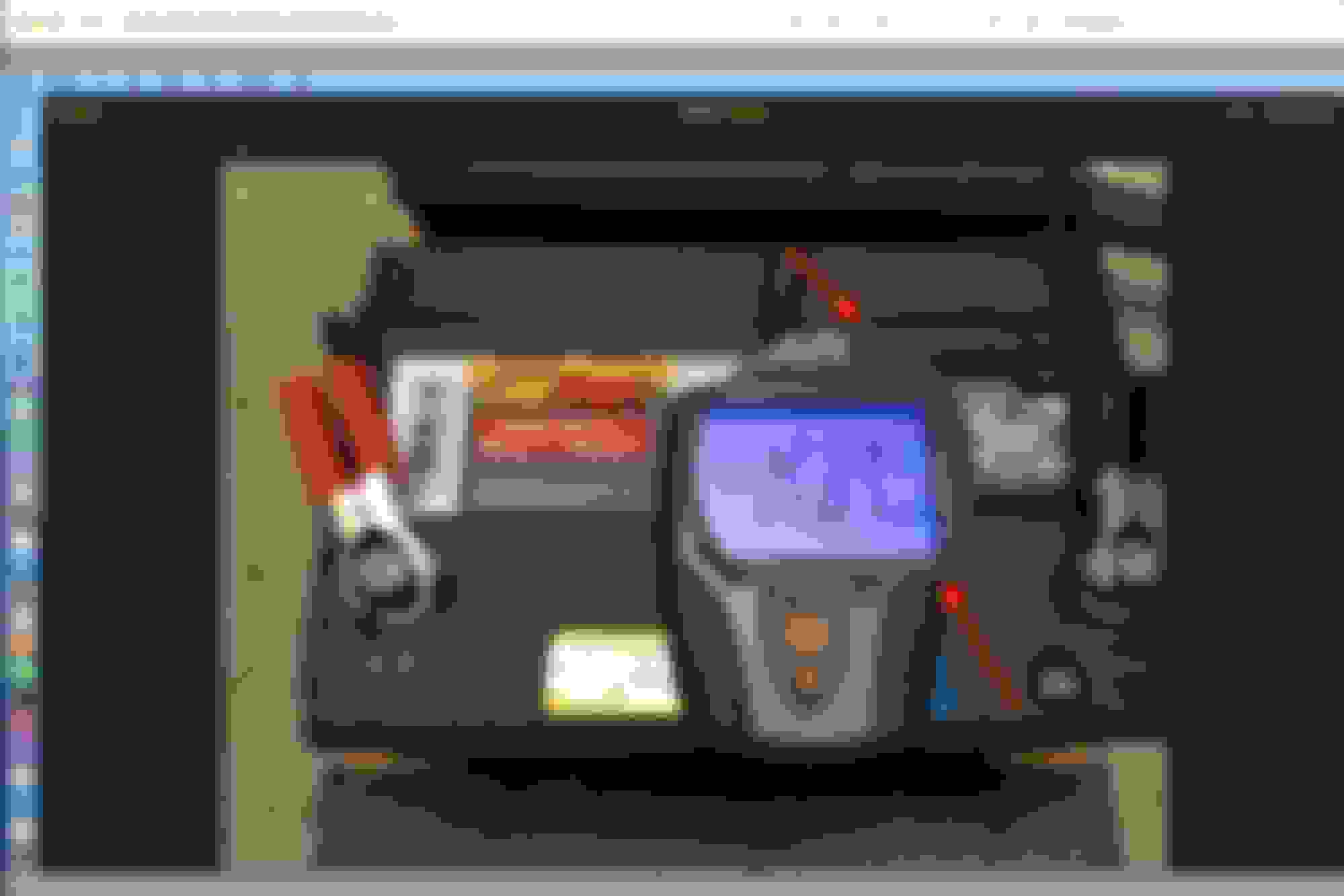
I purchased one of those $50 CCA testers (I believe similar to what you've got in the photo) and am tracking the battery CCA capacity frequently. We'll see how it diminishes. Batteries are 8-months old and thus far very little change in the CCA. It's also hotter being summer so that is probably helping. We'll see how it does this winter.
I've had battery discussions on this site for almost a decade. I usually promote the Walmart batteries not because Think they are so much better than other store bought batteries, but they charge less than retail stores. And I'm fine with trading them in for new ones ever 3 years even on my own dime.
But what I haven't talked abut much is I've been using a recharge cycle on all my dozen batteries for a while, using a changer that has a reconditioning mode. I don't the brand matters that much, but the processor every 4 to 6 months putting the charger on each battery for 24 hours and let it do it's thing.
So the presentation I'm working on starts early on with this slide.
My May 2016 battery that often is in my 2003 6.0. I say often as it was in the garage for some of the down time, but also used in the rotation at the farm. So this show back in 2020 it was a little low in capacity and high in resistance, so it got charged.
So one day of charging and a day. of rest. So at the same temperature, the capacity has increased and the resistance, the ability to release a charge, has improved. In 2020.
So we compare 2016 to 2022. Battery -082 then was in my truck, which I can tell by the passenger battery cables. And at that time it was discharged a little and lower in CCA. At that time I didn't realize that resistance was a s important. So with doing the routine of charging, I've kept the capacity and resistance to a reasonable amount in 6 years. Whereas back in 2014-2015, I was willing to change these out if deminished after 3 years.
Checking out brand new batteries manufactured the same month in 2017 for a post on the forum.
We never fully recharge automotive batteries with the normal several hour driving per day. It helps the batteries life if we do a full capacity and restoration charge every 4 to 6 months. A good virgin lead battery may not need this, but these recycled lead batteries $175 and lower can be helped. It doesn't take that much work.
I like the "magnification" circle you have incorporated into your photos now. How'd you do that? Mac? PC? Andorid? Software?
I'm not sure that most members here on FTE realize this, but Jack has innovated in visual communication on forums for a solid 22 years. He was certainly one of the first to post lucid and clear photo essays back in 1999 or 2000. I still remember his write up using a Ford Taurus switch in the door of a Super Duty to power a feature to what was at that time fairly featureless mirrors. And long before Bob Riley came up with a coolant filter system (by first copying another member's bracket over the rad support), Jack had already installed a coolant filter in a place no one else had thought of... the front wheel well, forward in the bumper. Easy drain. But the point is, he photographed his installation, and made a memorable write up of it.
And probably about the time that Clay was still in high school, long before Riff Raff, long before Kwikordead noticed the bleed orifice diameter in the OBS PSD fuel system, long before the FRX... it was Jack who was experimenting with BB's, ball bearings, and different springs to adjust fuel pressure at the fuel bowl... again, about 22 years ago... and again, done with very clear and educational photos. I don't have Facebook, and never will, but Jack was the first forum member I observed who dedicated his Facebook page, back when Facebook was brand new around 2004, to write ups of all things PSD related. Sort of like how his You Tube channel is now. Keep in mind, a lot of forums didn't host photos back then, forcing members to use independent photo hosting services, many of which bit the dust in the dot bomb era, resulting the loss of many people's photos in their demise. That is one reason why Jack kept a step ahead, moving on to the next platform.
Ok Jack, is that enough butter?
Now can you please tell me how you made the magnifying glass feature in your photos? I'd like to do that in my photos too.
The Facebook page was dismantled and recreated in 2011 as I transited from FMTRVT to TooManyToys. A few years ago, I removed some of the photo albums as I intended to get out of Facebook. Someone noticed I was starting to do away with the page and asked me not to, so I stopped. Facebook has changed "Pages" so much that I have a hard time managing that Page to the point I don't anymore. It's still there, but some pictorials like the coolant filter installation for both the 7.3L and 6.0L are gone. The heated mirror timed switch pictorial is still there, as are others. I figured out how to make the 6-disc radios become speed volume adjusted, a feature that was not present in the Superdutys of the time but was available in the radios.
Anyway, Y2K, it's a feature of the iOS platform and can easily be done on any of their products within the Photos app. I added links below for how to do it on Android and a link for Windows, but I've never used those and have no idea how to.
For these past images, I use iOS Keynote to make a composite, a PowerPoint alternative. I do many things in Keynote, as I used to do with Powerpoint, that is not in the ordinary "Presentation" realm. So in the theme of a pictorial:
Before inserting the photos into Keynote or making an image of the Keynote slide, I use the Photos app to insert the magnifying glass within the edit function.
Using the two dot "handles," I can change the area of magnification and the amount of magnification.
A Google or app search may find some third-party software to do the same. My abandonment of Microsoft for Apple had to do with the usefulness of the iOS platform in modifying pictures and making videos, although I still use Photoshop for some manipulations.
This Hennessey Takes the Expedition Tremor's Off-Roading Capability to the Next Level
Slideshow: The VelociRaptor Expedition gains a lift, upgraded suspension, Brembo brakes, and trail-ready equipment while retaining the stock 440-horsepower EcoBoost V6.
Rezvani's Latest Post-Apocalyptic Monster Is a Ford F-150 Raptor Underneath
Slideshow: Called the Fortress, the 850-horsepower pickup combines Raptor underpinnings with military-inspired features, survival equipment, and a starting price of $285,000.