


Next, brakes
Thread Starter
|
Fleet Mechanic


Joined: Jun 2020
Posts: 1,906
Likes: 763
From: Hillsborough NJ
Next, brakes
I feel like I’m playing 20 questions, but since everyone is so helpful and no one seems to mind, I’ll keep going.
My carb is at Charlie NYs for rebuilding, the generator is going to a repair shop next week, so I figured I’d tackle the brakes. (In fact I have 3 vehicles than need brakes so I’ll be in brake job hell for awhile).
I pulled my rear wheels and drums to see what I have…the verdict is…not much braking power there. The shoes are so glazed over I could use them as a mirror, as are the drums, cylinders look old and rubber is cracked. Tomorrow I’ll take the drums to a local brake shop and see if they can turn them, if not I’ll replace them, and to NAPA for new shoes, I’ve already replaced the cylinders and have flex lines ready to install. The hard lines were installed by the PO.
Im starting to rethink the need to have disks up front. If the fronts are as bad as the rears, just a simple brake job will give me plenty of braking power for my needs.
But…I’m not happy about a single circuit brake system. One leak and I’ve got nothing, and I’ve been there. I’ve read that some folks have used Mustang drum/drum masters but I’m missing a few pieces of info.
1) Will the Mustang master bolt right up, or do I need an adapter?
2) Does the Mustang master have a pressure switch for brake lights?
3) Are there better choices, I.E. a conversion kit?
thx in advance for the help.
My carb is at Charlie NYs for rebuilding, the generator is going to a repair shop next week, so I figured I’d tackle the brakes. (In fact I have 3 vehicles than need brakes so I’ll be in brake job hell for awhile).
I pulled my rear wheels and drums to see what I have…the verdict is…not much braking power there. The shoes are so glazed over I could use them as a mirror, as are the drums, cylinders look old and rubber is cracked. Tomorrow I’ll take the drums to a local brake shop and see if they can turn them, if not I’ll replace them, and to NAPA for new shoes, I’ve already replaced the cylinders and have flex lines ready to install. The hard lines were installed by the PO.
Im starting to rethink the need to have disks up front. If the fronts are as bad as the rears, just a simple brake job will give me plenty of braking power for my needs.
But…I’m not happy about a single circuit brake system. One leak and I’ve got nothing, and I’ve been there. I’ve read that some folks have used Mustang drum/drum masters but I’m missing a few pieces of info.
1) Will the Mustang master bolt right up, or do I need an adapter?
2) Does the Mustang master have a pressure switch for brake lights?
3) Are there better choices, I.E. a conversion kit?
thx in advance for the help.
Thread Starter
|
Fleet Mechanic
Joined: Jun 2020
Posts: 1,906
Likes: 763
From: Hillsborough NJ
Sorry, it's a 48 F1. I hadn't thought of a simple fix like that. Duh.

More Turbo

Joined: Nov 2004
Posts: 555
Likes: 5
From: Marysville, WA
They sell them if you are so inclined, 3/16 on each end and pipe fitting for the pressure switch.
On my 65 comet I switched to a dual drum drum master but it has the brake switch on the pedal. Might be harder that way with floor pedals.
On my 65 comet I switched to a dual drum drum master but it has the brake switch on the pedal. Might be harder that way with floor pedals.
Logistics Pro


Joined: Oct 2014
Posts: 3,911
Likes: 1,192
From: Deerbrook, WI
I used a duel master cylinder purchased from Mid-Fifty. It was installed in the stock location without too much drama. The access hole in the floor doesn't quite match up, however, so adding and checking brake fluid level is a bit inconvenient. I do it from underneath the truck when it's up on a lift for an oil change. Good luck.
Jim
Jim
Thread Starter
|
Fleet Mechanic
Joined: Jun 2020
Posts: 1,906
Likes: 763
From: Hillsborough NJ
I used a duel master cylinder purchased from Mid-Fifty. It was installed in the stock location without too much drama. The access hole in the floor doesn't quite match up, however, so adding and checking brake fluid level is a bit inconvenient. I do it from underneath the truck when it's up on a lift for an oil change. Good luck.
Jim
Jim

Hotshot


Joined: Oct 2009
Posts: 16,168
Likes: 4,767
From: Burbank, WA
That looks like a 67 Mustang master cylinder. I'm not sure where that picture or ad is from, but since you know what you need, shop for the part at the regular stores instead of the specialty vendors and you'll likely find it cheaper.
https://www.napaonline.com/en/p/NMCM...pressionRank=1
https://www.rockauto.com/en/catalog/...+cylinder,1836
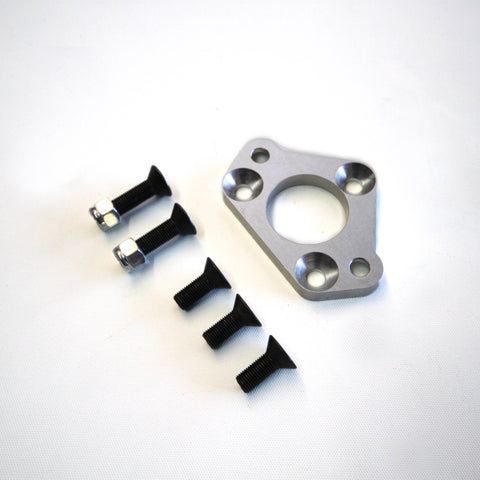
Here's the adapter to make it work in your truck. https://nespeedshop.com/products/48-...linder-adapter
https://www.napaonline.com/en/p/NMCM...pressionRank=1
https://www.rockauto.com/en/catalog/...+cylinder,1836
Here's the adapter to make it work in your truck. https://nespeedshop.com/products/48-...linder-adapter
Trending Topics
Thread Starter
|
Fleet Mechanic
Joined: Jun 2020
Posts: 1,906
Likes: 763
From: Hillsborough NJ
That looks like a 67 Mustang master cylinder. I'm not sure where that picture or ad is from, but since you know what you need, shop for the part at the regular stores instead of the specialty vendors and you'll likely find it cheaper.
https://www.napaonline.com/en/p/NMCM...pressionRank=1
https://www.rockauto.com/en/catalog/...+cylinder,1836
Here's the adapter to make it work in your truck. https://nespeedshop.com/products/48-...linder-adapter
https://www.napaonline.com/en/p/NMCM...pressionRank=1
https://www.rockauto.com/en/catalog/...+cylinder,1836
Here's the adapter to make it work in your truck. https://nespeedshop.com/products/48-...linder-adapter

FTE Stories
Ford Trucks for Ford Truck Enthusiasts

2027 Ford Super Duty Buyer's Guide (Every Model, Engine, & Package)
Brett Foote
Top 10 Ford Truck Tragedies
Joe Kucinski
AEV FXL Super Duty - the Super Duty Raptor Ford Doesn't Make
Brett Foote
Lobo Vs Lobo: Proof the F-150 Lobo Should Be Even Lower!
Michael S. Palmer
Ford's 2001 Explorer Sportsman Concept Looks For a New Home
Verdad Gallardo
10 Best Ford Truck Engines We Miss the Most!
Joe Kucinski
2026 Shelby F-150 Off-Road: Better Than a Raptor R?
Brett Foote
2027 Super Duty Carhartt Package First Look: 12 Things You NEED to Know!
Michael S. Palmer
10 Most Surprising 2026 Ford Truck Features!
Joe Kucinski
Thread Starter
|
Fleet Mechanic
Joined: Jun 2020
Posts: 1,906
Likes: 763
From: Hillsborough NJ
My local shop said the drums don’t need to be resurfaced, just sand the glaze off, same for the shoes.
I replaced the rear wheel cylinders, sanded the drums and shoes and put it all back together. I just need to bleed and adjust, but I’ll do that as the final step.
I replaced the rear wheel cylinders, sanded the drums and shoes and put it all back together. I just need to bleed and adjust, but I’ll do that as the final step.
Hotshot
Joined: Oct 2009
Posts: 16,168
Likes: 4,767
From: Burbank, WA
Logistics Pro
Joined: Oct 2014
Posts: 3,911
Likes: 1,192
From: Deerbrook, WI
Hi Bob. I've been away from the computer for awhile. My master cylinder looks like the one in your picture. I couldn't turn up the original invoice, but I think the one I ordered is on page 110 of the 2018 Mid-Fifty catalog, order no. 5914. My mechanic friend made an adaptor plate out of some scrap metal.
Jim
Jim

Fleet Owner
Joined: Jul 2004
Posts: 27,290
Likes: 1,055
From: NM
Check your backing plates carefully, and check the fit of the new shoes to the backing plates. I just recently discovered that a pull to the right on my truck was because the NAPA shoes I installed in '04 were made incorrectly, or made to fit "something close enough" (later F-100's?). There are little bents on the sides of the shoes that are supposed to fall on the backing plate wear pads. The shoes slide back and forth across the pads. The bents on my shoes did not, they were mostly off the pad, causing rapid wear and grooving of the pads. When I did the work in '04, I had welded up the grooves in the pads but used a relatively soft welding rod. The shoes were falling into the grooves and cocking the shoe, also restricting return of the shoes when the brakes were released. I re-welded and ground them, problem solved. See below


This is the groove worn in the backing plate


Welded and ground wear pad -- before final shaping
Thread Starter
|
Fleet Mechanic
Joined: Jun 2020
Posts: 1,906
Likes: 763
From: Hillsborough NJ
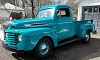
I decided to go with the dual master and all new brake lines. Parts are ordered, now it’s just my labor.
Thread Starter
|
Fleet Mechanic
Joined: Jun 2020
Posts: 1,906
Likes: 763
From: Hillsborough NJ
I’m hard at work on this dual master conversion. The instructions for the adapter are a bit odd. They say to install the adapter, then install the master. Problem is, if the adapter is installed on the frame rail, you can’t get the Allen wrench on the head of the bolts and they just spin.
I also didn’t expect to use the stock pushrod. Mine is just a piece of rust with some metal somewhere, so I ordered a new one from DC.
The brake lines have been fun. First off, the harbor freight flaring tool is a waste, so I bought a better one. I can now do decent double flares quickly. The HF tool wasted a few feet of my 25’ roll so I ran short.
The pressure switch was no issue, thx Jim. I just bought a 3 way splitter at NAPA and it’s done. Second 3 way for he front brakes.
So I’m stalled waiting from more brake line and the pushrod and eyelet. No biggie, I’m still waiting on the carb and generator.
I also didn’t expect to use the stock pushrod. Mine is just a piece of rust with some metal somewhere, so I ordered a new one from DC.
The brake lines have been fun. First off, the harbor freight flaring tool is a waste, so I bought a better one. I can now do decent double flares quickly. The HF tool wasted a few feet of my 25’ roll so I ran short.
The pressure switch was no issue, thx Jim. I just bought a 3 way splitter at NAPA and it’s done. Second 3 way for he front brakes.
So I’m stalled waiting from more brake line and the pushrod and eyelet. No biggie, I’m still waiting on the carb and generator.

Cargo Master
Joined: Sep 2004
Posts: 2,757
Likes: 138
From: Alberta Canada
Nice progress on the build. I am curious as you whether you used 3/16" line throughout the install? I am ay the stage where brake plumbing is next. I am toying with using 1/4" for the main lines front and back, then dropping down to 3/16" at the "T"s. I've decided to use NiCopp lines.
Enjoying your project build.
Enjoying your project build.