When you click on links to various merchants on this site and make a purchase, this can result in this site earning a commission. Affiliate programs and affiliations include, but are not limited to, the eBay Partner Network.
Greetings and Salutations! This is my first post here as a new member, and I'm glad to be a part of the community!
So, I recently became the proud owner of my grandfather's '69 F250 (running), and I've taken the mantle of restoring the legend to its former glory. In a twisted turn of events however, I've come to learn that the motor is not the 390fe as everyone believed (Grandpa included), but is in fact the 360!
Now, I understand that functionally, there isn't to much that will need changing with regards to servicing parts and generally fixing it up. I would however like to reach out and ask some of the more seasoned gearheads if there is anything I should adjust in my approach to fixing the engine now? Or even any bits I should be aware of now that the engine is different? The old beater means a lot to the family and I don't want to let them down. Thanks, all.
No real significant difference other than the 30 cubes and the accompanying difference in power. Only reason for the difference in cubes is the rotating assembly. Either engine can be rebuilt as is or either can be stroked. Parts like flywheel, water pump, starter, ignition, fuel, etc will fit and work the same on either.
Nothing wrong or bad about a 360 other than being weird that Ford made it when there's a nearly identical 390 available.
Watch your local Craigslist, Marketplace, etc. You may find a rotating assembly for a 390 or at least crank and rods. You could also look for a running 390 (after you confirm it is a 390). You could use that as a builder and run the 360 while working on the truck. Given the restrictive exhaust and 2 barrel carb you probably won't feel a big difference between the two. If you have to rebuild the engine, however, I would make it a 390. I sold the good running 390 out of my truck for $500. Just like there are a lot more Z-28's on the road today than were ever built, there are a lot of 390 trucks that were never 390's. Visually you can't tell the difference.
You need the Crank, Rods and Pistons from the 390 if you are making a 360 into a 390. Now the big difference between the two is: the 360 was a work horse not a race horse, it was designed to pull all day. The 390 was designed to go fast in the big ford cars. It does pull well and gets there faster.
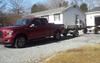
If you are happy with how the truck runs and does what you want it to, don't mess with it. Just do regular maintenance. One place to upgrade is to change to electronic ignition, another is to upgrade the alternator to a 3G out of a 90s Taurus. Post some pictured of your truck when you get a chance.
No real significant difference other than the 30 cubes and the accompanying difference in power.
Nothing wrong or bad about a 360 other than being weird that Ford made it when there's a nearly identical 390 available.
Main thing to keep in mind is the 360 had the same story through out the '68-'76 cycle, generally low compression , average fuel economy, average performance used only in pickups. IMO, Ford should have pushed the sales of more 390's in pickups back in the day ( especially in camper specials), since they got about the same gas mileage as a 360, but with better performance. The 390 had a different story throughout its life time. Most came out in cars, less came out in pickups. The car version of the 390 came out in the early 60's in many various compression ratios and hp ratings. Higher compression ratios mean higher octane fuel is necessary. Trucks are heavier and were expected to pull more than cars, so a high compression 390 car engine in a heavy pickup carrying a camper or pulling a boat is not necessarily a good thing. Bottom line, a lower compression pickup truck 390, about the same gas mileage as a 360, but with better performance.
Up to the early to mid 70's Ford pickups, speed and performance was not a top priority, durability and longevity was. Better dyno figures seen for other brand "higher performance" engines from back in the day, do not record durability and longevity. Magazine article from '77 written to experiment with better performance. Generally there was a gain with bolt on equipment, but mainly, the bigger gains were in the high rpm area. Again, why Ford didn't push the selling of 390's in more pre '77 vehicles remains a mystery.
Up to the early to mid 70's Ford pickups, speed and performance was not a top priority, durability and longevity was. Better dyno figures seen for other brand "higher performance" engines from back in the day, do not record durability and longevity. Magazine article from '77 written to experiment with better performance. Generally there was a gain with bolt on equipment, but mainly, the bigger gains were in the high rpm area. Again, why Ford didn't push the selling of 390's in more pre '77 vehicles remains a mystery.
That article is awesome! I like the fact that it's from 1977, and like you mentioned there wasn't 'Power Nation' or other dyno tune shows hyping up all of the aftermarket performance parts. This was just straight forward information. Headers and new exhaust in the future for my 360.
That article is awesome! I like the fact that it's from 1977, and like you mentioned there wasn't 'Power Nation' or other dyno tune shows hyping up all of the aftermarket performance parts. This was just straight forward information. Headers and new exhaust in the future for my 360.
More stuff from the early 70's. Too bad the Ford dealers don't have these Cobra Jet manifolds in stock anymore.
I wonder if those Cobra jet Manifolds are similar to the Kugel Komponents FE manifolds... I have a Camper Special and will have to go with the Sanderson FF427CS for my headers.