When you click on links to various merchants on this site and make a purchase, this can result in this site earning a commission. Affiliate programs and affiliations include, but are not limited to, the eBay Partner Network.
Dino - 3000 - 5000miles depending on who you listen to or what thread you read.
Synthetic - 5000 - 8000.
Last year I made the switch from Dino to Rotella T6 5-40. I paid for the spa treatment at Mr. Lube instead of doing it myself.
They give me the windshield reminder sticker that I put in the upper corner. 201k or Dec 18. Whichever comes first.
Last year was a low travel > 2000km due to Covid. This year is no better with our provincial travel restrictions being lifted in late May, transition directly into our record breaking heat wave and ensuing provincial firestorm.
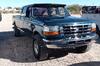
No cross border travel allowed so the truck has just sat.
6000 km left on the odometer before I need to dump the oil, but 8 months overdue.
Look at the trip meter, that is the total mileage so far for 2021.
Now to the point of all the rambling.
Does oil actually break down just sitting in the pan waiting to be used? I’m no scientist but I find that hard to believe.
Conventional oil starts to break down at about 250° and synthetic is about 450°. As you stated, a mileage consideration is in there as well.
Other than that, oil that is just sitting in the pan or in a jug like Z31Freakify had, is fine to run as long as there is no contamination. That could be water, coolant, rodent waste, etc...
Oil threads are OK with us! If someone is creating one, they have a question that they were unable to find the answer for and that is what these forums are all about. Helping others when they have a question or need a hand.
I think one consideration is drawing moisture over time. But I can’t see it doing enough of that to matter, or that wouldn’t burn out almost immediately when running.
I’ve never considered time when deciding when to change. Only mileage for me.
I’ve even went a couple seasons on the race car on years I didn’t get to race much.
Besides, many “newer” cars never get the ATF changed out 🙋♂️ We have 07 & 08 Toyota’s with the original (hope I don’t eat these words soon). The wife’s Honda van gets ATF changed every 40-60k due to some issues with their trans.
I think it's not ideal in general to let a vehicle sit for long periods unused but I would guess that oil is fine. I don't like letting strange hands do that job though. They will do something stupid like overtighten the oil filter or drain plug or overfill the pan. Plus the only way to know your expensive oil went in there is to dump it in yourself.
I think it's not ideal in general to let a vehicle sit for long periods unused but I would guess that oil is fine. I don't like letting strange hands do that job though. They will do something stupid like overtighten the oil filter or drain plug or overfill the pan. Plus the only way to know your expensive oil went in there is to dump it in yourself.
Edit: MinimumMaximum between fire up times is about 2 weeks. Circulate the oil and drive the dogs crazy ( woot- woot ) we’re going camping.
I would have changed it myself but oil disposal facilities here is getting hard to find.
Nice thing about the Rotella T-6 is they don’t have it on tap so I got to watch him pour it from the jugs.
Not a diesel, but the oil in my wife's 2003 VW Beetle doesn't get changed but every 2.5 - 3 years. It is full synthetic (used to be Mobil 1, but now we use Motul) and it runs like a top. Like Jason above, I don't go off the calendar to change oil, I go by mileage or possible contamination from the elements or other fluids.
I think one consideration is drawing moisture over time. But I can’t see it doing enough of that to matter, or that wouldn’t burn out almost immediately when running.
I’ve never considered time when deciding when to change. Only mileage for me.
I’ve even went a couple seasons on the race car on years I didn’t get to race much.
Besides, many “newer” cars never get the ATF changed out 🙋♂️ We have 07 & 08 Toyota’s with the original (hope I don’t eat these words soon). The wife’s Honda van gets ATF changed every 40-60k due to some issues with their trans.
yeah. That is BS marketing on their part. They say that because they started making them without a dipstick and made them hard to fill. You can easily do it with some long clear 3/8 tubing, funnel, and your monitoring dongle to check trans temps so you know when to pull plug to get proper fill level. Have done my wife’s 2012 sienna and my 2007 Tacoma in last couple of months. My truck was slipping (I’ll treated and 200k miles) and wife’s has brown tinge to fluid at only 100k miles.
yeah. That is BS marketing on their part. They say that because they started making them without a dipstick and made them hard to fill. You can easily do it with some long clear 3/8 tubing, funnel, and your monitoring dongle to check trans temps so you know when to pull plug to get proper fill level. Have done my wife’s 2012 sienna and my 2007 Tacoma in last couple of months. My truck was slipping (I’ll treated and 200k miles) and wife’s has brown tinge to fluid at only 100k miles.
I believe the dipstick was “removed” for a couple reasons.
1- to keep Joe Blow from adding his favorite “transmission additive” or wrong fluid type.
2- people rarely check the trans level anyhow so how many people actually miss it?
Well actually our Toyotas still have the dipstick.
I’m well versed in the Toyota fluid setting method for newer cars (Sienna is one) but still choose to leave it. At least if it has surpassed the 100k mark without ever being changed as I feel the cleaners in the new fluid could potentially unsettle some of the debris that’s sitting somewhere harmless at the moment. I’m glad it worked out on your truck contrary to my ideas though!
You’d be surprised how long one can run on the brownish fluid with no ill effects.
I believe the dipstick was “removed” for a couple reasons.
1- to keep Joe Blow from adding his favorite “transmission additive” or wrong fluid type.
2- people rarely check the trans level anyhow so how many people actually miss it?
Well actually our Toyotas still have the dipstick.
I’m well versed in the Toyota fluid setting method for newer cars (Sienna is one) but still choose to leave it. At least if it has surpassed the 100k mark without ever being changed as I feel the cleaners in the new fluid could potentially unsettle some of the debris that’s sitting somewhere harmless at the moment. I’m glad it worked out on your truck contrary to my ideas though!
You’d be surprised how long one can run on the brownish fluid with no ill effects.
yeah. My understanding is that besides the random additive was actual contamination through the dipstick was a significant factor too. “I” just don’t like it .. ☺️. Heck I still drive a scag lawnmower with greaseable spindles cause I don’t like the sealed even though their major failure reason was people not doing proper maintenance...
the sienna manual actually says 100k change on severe conditions, so that is why I changed.
for the Tacoma I flushed it too. It was slipping only in OD and I found it didn’t when in 4.. so it had to be the TC. Flushed and filled with maxlife and added some friction modifier...and it took about 100 miles and running fine now. I fully expect it will go in next 30-50k but trying to get as much as I can out of it cause either way would be a rebuild.
I assume your truck is a 5 speed? No slip in 4th but OD (5th) slips/slipped?
This should not be related to the TC as it is completely separate from the clutches for the gears. The TC does have a LU clutch but it won’t cause slipping as it could only ‘slip’ as much as the impeller/turbine would allow within the fluid coupling. LU just takes the fluid coupling out of the equation to provide a direct 1:1 of engine speed going to the Input shaft of the trans. If the TC itself was going out I doubt anything you would do could help at all.
I’m not familiar with that particular transmission but sounds like it’s having an issue with whatever clutch engages OD. Most likely causes would be solenoid or valve sticking preventing full engagement. Or piston lip/oring/seal ring not sealing correctly. You may get lucky on this being a real fix if the fluid flush cleared out whatever was causing the incomplete engagement. I’m not a fan of fluid flushes but in this case you had nothing to lose.
This Hennessey Takes the Expedition Tremor's Off-Roading Capability to the Next Level
Slideshow: The VelociRaptor Expedition gains a lift, upgraded suspension, Brembo brakes, and trail-ready equipment while retaining the stock 440-horsepower EcoBoost V6.
Rezvani's Latest Post-Apocalyptic Monster Is a Ford F-150 Raptor Underneath
Slideshow: Called the Fortress, the 850-horsepower pickup combines Raptor underpinnings with military-inspired features, survival equipment, and a starting price of $285,000.