When you click on links to various merchants on this site and make a purchase, this can result in this site earning a commission. Affiliate programs and affiliations include, but are not limited to, the eBay Partner Network.
Late to your thread but I'd say you're doing pretty well. You did pick probably the most difficult large panel on the truck to get right. I did the same thing on a '98 Chevy I had. It turned out ok, but I would do some things differently the next time. Auto body guys I talk to say that it's easier to keep things from warping by using epoxy to put the panels together...........and while I believe them, it just didn't seem like the right way to me at the time. Although with one of these trucks, the metal is thicker and less prone to warping from heat. If it's not going to be a show truck, I'd probably go that way the next time.
Any advice I could have given has already been given, so just thought I'd chime in with my 2 cents worth........carry on!
Oh.......I have already warped it some. It's not a show truck. Just want it one color and no more rust holes......
So far from what I am seeing with your pics there's nothing a body hammer and some filler isn't going to fix... I agree you are doing a really good job, especially for your first go around!
Get it all welded up, put some seam sealer on the back side and use some decent body filler and sand her down. Try to get any high spots knocked down before the filler with the body hammer, Nobody wants to be tapping an egg down after filler, but heyy anybody who has taken on an endeavor like that has done it at some point. You're kickin but man..
You're doing an amazing job for someone without experience with body work. I'm in the same boat, currently doing floors but will be doing the exact stuff you are. Did you find the Tabco or other panels fit better? Tabco gets a lot of respect here but the pieces I've seen had considerably worse stamping than the offbrand ones. I'll be following this thread. But a few observations:
-Welding with flux core OR .035 wire on thin sheetmetal is nearly impossible, so managing to do anything at all with both is impressive. But still, using .023 with gas is the only way to do this reliably. I literally had never used a MIG welder before this month and blowouts weren't an issue with 023 (or 025 in my case) and c75 gas.
-I actually I had to crank up the power to get good enough penetration. You need to be able to see the weld bead from both sides to have any strength when you grind it down. Generally with sheetmal this means using enough power it would blow out if you tried to run a bead more than a second.
-Pinholes need to be welded over again. No shortcuts.
-Like you found, your gaps are too large in many of those photos. A workaround I've seen (but haven't tried) is welding in a length of coathanger to bridge larger gaps.
-If you use an acid it needs to be neutralized before you keep going. Phosphoric acid like Klean Prep or Naval Jelly is much easier on the metal and in some cases you can leave it on there, but something like vinegar will keep eating unless you've gotten rid of all the acidity. That's why phosphoric is the most common solution.
-The black paint those panels come prepped with is garbage. Mine came off with the masking tape.
I appreciate all the kind words. I feel a little bit better about it now that its all sanded down ....when it was multiple colors and spot welds all over it looked hideous....I just kept wondering why did I attempt this. I jumped in with both feet and thought oooops this was the deep end...lol. That is funny you mentioned the coat hanger trick.....I pondered if that would work, and did actually use it for a few of the bigger gaps. I did end up picking up some .023 wire but I have no gas. You are right about the settings though. I had to go up a few notches to get it to actually weld rather than ball up. There were many ***** of weld that shot off when I went to grind due to zero penetration. I cut the wheelhouse out of the other side today. The other side is not near as bad as the passenger side was. Still debating on if I am going to replace the wheel houses. I did read some posts where some guys didnt bother. Still up in the air though. It just looked like I had made a huge mistake and bitten off more than I could chew when it looked like this. This way it doesn't look so daunting....maybe I shoulda sanded it all down first...lol I backed into a tree a few years ago and crushed it in. I have a salvage piece to tack in its place. This is all I need to do to the drivers side other than under the tail light where there is nothing left.
I'll cut the dent out and weld the salvage piece in. I crushed it pretty good so I do not think I can hammer it back out....there is just no room to get in behind it.
As far as panels.....I ordered from LMC because they were the only place that had all I was looking for in stock. I got a couple Tabcos, a Good Mark and some with no name. None of the panels fit perfectly, I show some of the fitment issues at the start of the thread. Someone said in this thread I would have to massage the panels and I have....lol. Just more practice.
This weekend I cut the dent off the tail light area. I did a little better at my fitment but did have a wider gap on one edge that I didnt like.
To fill that gap I welded a small strip to the bottom of my piece from the back to take up the gap.
That piece is in......Still need to add some weld to the wide gap area but the rest looks good...........on to the next.
Had to add some material to the lower end of the quarter because the panel comes up short. I cut the rusted out part off the quarter and my fitment for the new piece was better.
There it is all welded in. I know why this costs so much. It takes forever. That little black square will be later on. Got tired of working on it today. After that spot all I will have is the wheel well. A few other spots of rust but not through rust...heavy surface rust. That sandpaper strip hanging there I was using to sand my wire after every weld. It seems to weld better if I either cut the end off or drag it across the sandpaper. The weld starts instantly instead of pushing off the panel.
I have a couple of spots like this. Heavy surface rust. Will I just acid etch the rust out of the holes then primer right over it before using the filler?
Best fitting piece yet........I couldn't see cutting out all that good metal. There were a few holes but the back of this panel looks really good. It is taking me way longer than I thought to do this. There is no rushing it thats for sure. I am learning alot but its a sorta one step up two steps back process.
Any idea where one might procure the little rubber nubs that Jeep the gas tank door off the body? I broke one trying to extract it. I'd not for sale maybe a better idea on how to remove them in one piece.
Any idea where one might procure the little rubber nubs that Jeep the gas tank door off the body? I broke one trying to extract it. I'd not for sale maybe a better idea on how to remove them in one piece.
You also asked~ I have a couple of spots like this. Heavy surface rust. Will I just acid etch the rust out of the holes then primer right over it before using the filler?
I like to put filler over the metal... lots of guys like filler on epoxy primer. it's a preference. You can go either way with filler... glazing putty can pretty much go over anything that's scuffed properly (I like metal to metal glaze by evercoat for small knicks and dings). Just be sure to have your primer laid over ANY filler/ glaze, and scuffed correctly before the paint goes down. And I will typically use a dtm (direct to metal) primer like a self etch, or epoxy on bare metal before I put down a filler/ surfacer primer. It gives you some insurance against rust making a return visit.
I have used this primer often with good results too... it's pretty universal and is a 2k high build for direct to metal/ properly scuffed old paint/ other primer.
But of course LMC sells them...lol. I may end up needing all of them. I have some Epoxy Primer from Eastwood.I was going to spray it first then attack with the filler. From what I have been reading it helps protect the filler from the back if any moisture seeps through.
Any idea where one might procure the little rubber nubs that Jeep the gas tank door off the body? I broke one trying to extract it. I'd not for sale maybe a better idea on how to remove them in one piece.
I have a nozzled spray can with silicone in it. Give the piece a squirt, especially where it is compressed, and let the silicone seep and creep into the crevasses. Some situations will even call for a bit of massaging with your fingers. It won't work every time but it does improve the odds of retaining the utility of the piece that you are trying to save by a bunch. Silicone is generally good for rubber.
How much primer will I need to do both bedsides. I have a quart of epoxy which has a quart of activator. So I am looking at 2 quarts sprayable. Will that be sufficient or will I need more?
How much primer will I need to do both bedsides. I have a quart of epoxy which has a quart of activator. So I am looking at 2 quarts sprayable. Will that be sufficient or will I need more?
It takes a gallon and a quart to do the entire truck in my experience~ this doesn't include the bed interior (that eats up another quart, just for the bed interior)... For just a quick easy coat (or 2) of epoxy for both bedsides, a quart should be fine. You can put down your filler and then your primer filler/surfacer right over that.
I have been reading up on some painting sites and it's about split between primer then filler or filler then primer. I dont really have a preference since I have never done this. Which option should a rookie go for? Also I am starting to worry about the temperature, my garage is not heated. It's supposed to be in the high 50s all weekend. Is that too cold? I didn't figure I would get to paint it till spring anyways , just primer and bodywork now. Looks like all I need to do is scuff it before I paint come spring.




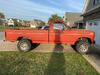



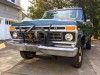


 I just kept wondering why did I attempt this. I jumped in with both feet and thought oooops this was the deep end...lol. That is funny you mentioned the coat hanger trick.....I pondered if that would work, and did actually use it for a few of the bigger gaps. I did end up picking up some .023 wire but I have no gas. You are right about the settings though. I had to go up a few notches to get it to actually weld rather than ball up. There were many ***** of weld that shot off when I went to grind due to zero penetration. I cut the wheelhouse out of the other side today. The other side is not near as bad as the passenger side was. Still debating on if I am going to replace the wheel houses. I did read some posts where some guys didnt bother. Still up in the air though.


