





Pike's Peak

Thread Starter
|
Mountain Pass
Joined: Jul 2017
Posts: 229
Likes: 27
Pike's Peak
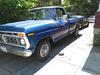
So I recently got my 1978 F-250 into running and driving order. At my son's request, my first big trip is going to be a 1700 mile round-trip to climb Pike's Peak.
My questions is what preparations should I make for the trip? What spare equipment should I bring with me if something breaks on the way?
This is what is either new or rebuilt within the last 200 miles driven:
What other equipment is recommended?
Any advice for driving at altitude? I know they recommend using a lower octane. What other problems might the truck have?
Thank you in advance for any helpful advice
My questions is what preparations should I make for the trip? What spare equipment should I bring with me if something breaks on the way?
This is what is either new or rebuilt within the last 200 miles driven:
- Engine
- Alternator
- Starter
- Water Pump
- Carburetor
- Distributor
- Power Booster
- Master Cylinder
- New brake pads and calipers in front
- New instruments and gauges
- full electrical rewire
What other equipment is recommended?
Any advice for driving at altitude? I know they recommend using a lower octane. What other problems might the truck have?
Thank you in advance for any helpful advice

Grumpy goat


Joined: May 2017
Posts: 3,058
Likes: 596

When I went to college in Colorado back in the early 80's, I was driving a carbureted 1980 Toyota 4wd. It ran great down here at sea level. By the time I got to the Texas panhandle, the truck was kinda weak. It struggled hard to get over the Raton pass @ at under 8000'. After a couple of weeks at school, I couldn't tune that carburetor for the altitude, so I replaced it with a Weber and finally got it tuned. The next year, I drove a 1979 Bronco. Same story. Ended up putting a Holley 2bbl on it, and had to do a lot of tuning.
Grumpy goat
Joined: May 2017
Posts: 3,058
Likes: 596
And another important consideration...Brakes! At altitude, your engine won't make the vacuum it does in Missouri. Your vacuum brake booster won't work as well up there, and our trucks aren't exactly famous for having great braking. Based on the chart I just looked at, you'll drop about 6" of vacuum at 8000', and lose over 10" at 14,000'. If your engine is a good street engine, you may be making up to 19" in Missouri.

Laughing Gas


Joined: Feb 2011
Posts: 996
Likes: 318
The main priority would be a spare ignition control module (Motorcraft brand ) and distributor pickup coil. Yes even if the ones you have are new. Assume the fuel pump has been changed? Mainly you want to take a variety of tools so you have a chance to do a roadside repair if something does happen.
Frmr Ford Trans Engr


Joined: Aug 1999
Posts: 24,732
Likes: 2,661
From: SE Florida
A normally aspirated (no turbo or supercharger) engine loses approximately 3% power per 1000 feet of altitude. So at 8000 feet, the engine is down by 24%. This assumes that the tune is right and the engine isn't running rich at altitude.at 14000 feet on top of Pike's Peak, you'll be down 42%.
I used to drive Pike's Peak many times each year when I did engine tuning. One time I was in a rest area on I-25 on my way to the peak. I was making a quick tuning change to the carb when a young lady asked me if I knew anything about altitude. I told her I knew a little. She said her car has been running terrible since she got to Colorado and there was black smoke. I pulled a vacuum line off, creating a leak. I showed her where to plug it back in when she was on the other side of the mountain. I think it helped.
I used to drive Pike's Peak many times each year when I did engine tuning. One time I was in a rest area on I-25 on my way to the peak. I was making a quick tuning change to the carb when a young lady asked me if I knew anything about altitude. I told her I knew a little. She said her car has been running terrible since she got to Colorado and there was black smoke. I pulled a vacuum line off, creating a leak. I showed her where to plug it back in when she was on the other side of the mountain. I think it helped.
Grumpy goat
Joined: May 2017
Posts: 3,058
Likes: 596
A normally aspirated (no turbo or supercharger) engine loses approximately 3% power per 1000 feet of altitude. So at 8000 feet, the engine is down by 24%. This assumes that the tune is right and the engine isn't running rich at altitude.at 14000 feet on top of Pike's Peak, you'll be down 42%.
I used to drive Pike's Peak many times each year when I did engine tuning. One time I was in a rest area on I-25 on my way to the peak. I was making a quick tuning change to the carb when a young lady asked me if I knew anything about altitude. I told her I knew a little. She said her car has been running terrible since she got to Colorado and there was black smoke. I pulled a vacuum line off, creating a leak. I showed her where to plug it back in when she was on the other side of the mountain. I think it helped.
I used to drive Pike's Peak many times each year when I did engine tuning. One time I was in a rest area on I-25 on my way to the peak. I was making a quick tuning change to the carb when a young lady asked me if I knew anything about altitude. I told her I knew a little. She said her car has been running terrible since she got to Colorado and there was black smoke. I pulled a vacuum line off, creating a leak. I showed her where to plug it back in when she was on the other side of the mountain. I think it helped.
Trending Topics

Lead Driver

Joined: Oct 2018
Posts: 7,894
Likes: 2,372
If your jetting is correct even at sea level you'll be fine. sure it's going to run rich at 14k but it will get there and you're not in a race so who cares.
You shouldn't be using the brakes much on the way up and on the way down you'll be on compression with the plates closed so your brakes should be fine.
Mark8man is right worry about anything that could leave you on the side of the road. don't sweat the altitude.
You shouldn't be using the brakes much on the way up and on the way down you'll be on compression with the plates closed so your brakes should be fine.
Mark8man is right worry about anything that could leave you on the side of the road. don't sweat the altitude.
FTE Stories
Ford Trucks for Ford Truck Enthusiasts

3 Best / 3 Worst Parts of Modern Ford Ownership
Brett Foote
10 Amazing Upgrades That Solve Common Ford Truck Owner Headaches
Pouria Savadkouei
Every 2026 Ford Engine Explained
Brett Foote
10 Ugly Ford Trucks That We Still Kinda Love
Joe Kucinski
10 Things Every Truck Owner NEEDS (2026 Edition)
Michael S. Palmer
Rezvani's Latest Post-Apocalyptic Monster Is a Ford F-150 Raptor Underneath
Verdad Gallardo
Top 10 Most Expensive Ford Trucks Ever Sold on Bring a Trailer
Joe Kucinski
2027 Ford Super Duty Buyer's Guide (Every Model, Engine, & Package)
Brett Foote
Top 10 Ford Truck Tragedies
Joe Kucinski
Logistics Pro

Joined: Mar 2009
Posts: 4,855
Likes: 609
From: Minnesota
Big thing to remember is when coming back down the Peak is to use your engine to brake. Drop into a lower gear and use the brakes as little as possible. I watched plenty of people riding their brakes and get pulled at the guard shack and have to wait for the brakes to cool.
Frmr Ford Trans Engr
Joined: Aug 1999
Posts: 24,732
Likes: 2,661
From: SE Florida
Since I had driven Pike's Peak so many times I knew to use engine braking for controlling speed. When I came to the shack where they check brake temperatures, that was the first time I had used the brake pedal. The ranger used an IR gun to measure the brake temperature. He couldn't believe the first reading, so he did it again. Then he shook his head and sent me on my way.
Another time didn't go as smoothly. I was running a test ascending the peak. We complete the test with a 30 minute idle at the summit. Once we finished the idle test we realized we had just enough time to drive down and get the second car to test. I was driving downhill a bit faster than I should have, and I came around the corner and there was the brake test shack. I locked up all four wheels and slid right past the shack. Now the ranger could see that the car had a Michigan manufacturer's license plate. These are only issued to car companies. He saw the plate and knew we must have experience on the peak, plus I demonstrated that I had enough brakes left to lock up all four wheels. I put it in reverse, but before I could back up he waved me on. So off we went to get the second car to test.
Another time didn't go as smoothly. I was running a test ascending the peak. We complete the test with a 30 minute idle at the summit. Once we finished the idle test we realized we had just enough time to drive down and get the second car to test. I was driving downhill a bit faster than I should have, and I came around the corner and there was the brake test shack. I locked up all four wheels and slid right past the shack. Now the ranger could see that the car had a Michigan manufacturer's license plate. These are only issued to car companies. He saw the plate and knew we must have experience on the peak, plus I demonstrated that I had enough brakes left to lock up all four wheels. I put it in reverse, but before I could back up he waved me on. So off we went to get the second car to test.

Thread Starter
|
Mountain Pass
Joined: Jul 2017
Posts: 229
Likes: 27
Thank you for all the replies.
FYI-I forgot to mention the Mallory HEI ignition upgrade, so that is new too.
Just ordered a full set of belts and hoses.
This is going to be an interesting trip.
I will let you know what happens.
FYI-I forgot to mention the Mallory HEI ignition upgrade, so that is new too.
Just ordered a full set of belts and hoses.
This is going to be an interesting trip.
I will let you know what happens.

Laughing Gas

Joined: Nov 2016
Posts: 857
Likes: 63
From: Oxnard
Check your jack to ensure it's in working order. Pack a large star lug wheel wrench and a 3/4" thick piece of ply wood by ~ 8" wide and 10" long in case you need to firm up the ground if you need to jack your truck up to change a tire. Pack a new quart of motor oil, gallon of anti-freeze, set of jumper cables, road hazard fuses or reflective triangles and make sure your wipers and washers are in good working order. You might want to put some mosquito netting in front of your radiator to trap / prevent insect getting lodged in you radiator fins. And enjoy your well-deserved trip.

Thread Starter
|
Mountain Pass
Joined: Jul 2017
Posts: 229
Likes: 27
Good points. I have a brand new 3 ton floor jack, still in the box. (old one got stolen from under the truck with no handle) Will test it and make sure it works. I have 1 4"x4" block, will get a couple more and a good lug wrench. I plan on bringing tools, both something purpose built will definitely be useful.
I will definitely be bringing PBJ and will post pictures and progress.
I will definitely be bringing PBJ and will post pictures and progress.

Cargo Master
Joined: Nov 2007
Posts: 2,238
Likes: 475
I'd throw a CB radio in the truck, just in case something happens outside of cell service. Flashlights, a plug in 12V drop light and a led headlight, tire plug kit, JB weld, fuel safe form-a-gasket, duct tape, Flex Seal tape, zip ties, bailing wire, hose clamps, ratchet straps, roll of electrical wire and butt connectors, fuses, gasket material, a few feet of 1/4",3/8" and 1/2" fuel/vac line with some barbed connectors, tarp/blanket in case you need to lay on the ground. Also rags and hand cleaner. I replaced a fuel pump on the side of the road and had no way to clean up other than some fast food napkins I had, that wasn't a fun ride after that.