When you click on links to various merchants on this site and make a purchase, this can result in this site earning a commission. Affiliate programs and affiliations include, but are not limited to, the eBay Partner Network.
I've got a 73 P400, which apparently uses the same kingpins B7TY3111A or B8TY, Moog 8458B, 0.922x6.990" as 57-66 F350, so I'm taking a WAG that I can use any spindles that fit your F350 as well. Question: are there any such spindles that take disk brakes natively?
Not really that many 66 and older F350s being restored or modified and I don't ever recall seeing anyone do disc brakes on one. I think your in for a lot of junkyard searching and/or custom work to get disc brakes on that axle.
I'd love to have disc brakes on my '65 F-350 if you find something that will work... I just changed my single-piston wheel cylinders to double-piston which should certainly help. But not as much as discs
I wonder if there is a later model F-450 (for example) with a solid front axle and discs that could just be bolted in place of the entire front suspension? But then does the steering box connect to it...
I'm sure it's been done, I seem to remember a thread a few years back about adding disk brakes. The f350's in the late 70's early 80's had disk brakes. Wonder if those kingpins are also the same size. Although all those have 8 lug rims. A lot of the little cabover trucks like the Isuzu's and Mitsubishi's have 6 lug rims with similar size tires. Don't know their widths, but I bet one of those axles will work.
I already have an 8-lug rear under my truck... even 20 years ago it was hard to find a 6-lug rim that wasn't rusted out.
A friend has one of those GMC/Isuzu trucks so I can look at it. There are 6 studs but they are much larger diameter and on a ~ 9 inch circle.
Even if the kingpins are the same on a later F-350, (and assuming the spindles fit), would the steering knuckles work?
I have 8x6.5" hubs. Looked into a 92 or so F450 and found that virtually none of the dimensions of its front axle (a 10-lug) were the same. Truth be told, I can't even remember what kind of steering it had (push-pull or crossover). I wouldn't mind switching to 10-lug, but the huge 6 mentioned above all seem to take commercial-sized tires, an expense I'd like to avoid. I'm using "civilian"-sized tires: 235/85R16.
Do 66 F350 have 6-lugs, then?
Cross-referencing the Moog part number for those kingpins, they are unique to the mid-70's P-series - all of which had drums - and the 57-66 F350. I'm an import mechanic, well-versed in BMW but this is my first domestic, first rig with kingpins, and first several other things too.
Default solution is to fabricate adapting brackets for a set of calipers I got off a 1980 Dodge motorhome (probably B300). The rotors appear to be a direct fit on the hubs, the master cylinder and rear wheel cylinders are probably a match, the general size/weight of the vehicles is similar, and I got them for free. I'm just hoping, before I expend the effort, for someone to go "Yep, sometime during the Reagan administration I restomodded a 66 F350 and used the disk-brake spindles off a 19mumblemumble Suchandsuch with the Garbage Truck Package" or "Let me check my personal junkyard... yep, looks like Chebby WTF9000 with option code XYZ123 has those kingpin dimensions, disk brakes, and push-pull steering."
I believe that the '66 has six-lug, 7.25" circle just like my '65. The F-100 and F-250 had significant changes (like the twin I-beam front end!) starting in '65 but I think the F-350 didn't get it until '67.
Interesting background. I've been driving and turning wrenches on my BMWs since 1988 My daily driver for many years was an '81 745i (factory turbo that I modified quite a bit). Right now I have three: a '98 740iL, a '97 540i six-speed with Dinan blower, and a '93 525i with 329k miles. They keep me busy when I'm not repairing my F-350, or my '93 F-250 IDI!
The only manufacturer attempt I know of that’s been taken to convert a 6 x 7.25” bolt pattern to disc brakes was pursued by Jim Turner on Studebakers. I don’t know whether the company was successful achieving this on the bigger models. You might contact Turner to inquire. Stu
Welp, I did it. Turned out that fate's choice of donor vehicle, a 1980 Dodge B300, was a lucky one - the rotors fit the stock hubs near-perfectly, the calipers *just* clear the stock 16" steelies, and the rotors are relatively shallow for this type of vehicle, allowing just the right offset of caliper so that the spindles have full rotation for steering while keeping the calipers from hitting the back of the rim. My adapting brackets are the stock drum backing plates, flipped upside down and trimmed. Hydraulic lines are the original ones plus four off-the-shelf adapter pieces - each side has a 3/8-24 straight thread or 3AN (same thing) female-female union with a copper gasket ring, and a 3AN male to 7/16 banjo bolt adapter.
Some details and comments:
* The master cylinder is off a 1980 Chevy P30 with JB6 brakes (many if not most had JB7). It needed the mounting holes slotted inwards slightly, and the booster pushrod trimmed substantially. Its 1-1/8" bore happens to be identical to both the P400 and the B30, which also share rear cylinder bore sizes (depending on some details). The reason for using it is that it's a disk/drum master, with a delay valve for the front disks that drum/drum or disk/disk masters do not have. However, I've yet to find the sweet spot between the brakes feeling great but not releasing fully, and releasing but feeling soft and weak. I am fairly certain the setup could use a bigger master, perhaps a 1-1/4.
* The rotor center bore is a bit bigger than the original drums', while the rotor-to-hub holes are smaller. The result was that the rotors didn't self-center, and had to be manually adjusted for low radial runout, which wasn't especially difficult or time-consuming.
* No modifications to the rotor or hub were required. The caliper needed a small boss trimmed near the banjo bolt fitting to clear the banjo adapter; a block-style adapter, or the correct brake hoses to begin with, would make this unnecessary. The driver's side caliper bracket needed to be ground down in one spot to clear the steering arm. Also, the front upper mounting ear of each spindle needed to be cut off.
I was in a hurry to get it running and didn't take many photos, but here's what I managed. Sometime or other, I'll pop one of the wheels off and take more better pics of the completed setup. All in all, it seems to be a pretty good solution, cheap and effective, just needs a bigger master and/or more booster pushrod adjustment.
Indeed. I was expecting to have to make brackets from scratch, but when I got in there I found that the offsets lined up nicely, and these backing plates are pretty beefy - 1/4" steel plate and stamped for extra rigidity. They feel sturdy enough and work fine.
I'm a little confused?
When you break down the assembly can you take more photo's prior to and during final assembly?
I am curious how you will mount the caliper???
I am curious on the flex line routing and the caliper clearance when he wheels are turned lock-to-lock?
Please keep photo's coming.
Thank you, Pete
I guess I don't understand the desire to have disc brakes on these old trucks. If it's to do something challenging and different, okay I get that cool. But if it's for safety or because the factory brakes aren't good enough for stopping, I don't get it. Wouldn't everyone rather keep the vehicle as it was? It seems way cooler that way, especially because less bells and whistles made for better drivers that were more connected to the vehicle. A stock old truck still stops...
Rezvani's Latest Post-Apocalytic Monster Is a Ford F-150 Raptor Underneath
Slideshow: Called the Fortress, the 850-horsepower pickup combines Raptor underpinnings with military-inspired features, survival equipment, and a starting price of $285,000.


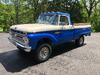


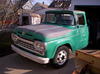

 My daily driver for many years was an '81 745i (factory turbo that I modified quite a bit). Right now I have three: a '98 740iL, a '97 540i six-speed with Dinan blower, and a '93 525i with 329k miles. They keep me busy when I'm not repairing my F-350, or my '93 F-250 IDI!