When you click on links to various merchants on this site and make a purchase, this can result in this site earning a commission. Affiliate programs and affiliations include, but are not limited to, the eBay Partner Network.
So the time is finnaly approaching that I'll get to paint my truck. As soon as the weather brakes I'll tare the truck down and strip the old paint off. this will be the first time I've painted anything so I'm not buying a super expensive paint as I'm sure I'll make plenty of mistakes. I think I'm going with tcp global single stage Acrylic Urithane. My question is the primer I'm going to use do I need to use a sealer on it before I apply my paint or do I just lay down my primer and sand then spray my paint. Also how much paint and primer will I need I'll be painting the truck from top to bottom and inside the cab as well truck has an 8 ft bed Thanks.
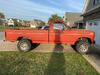
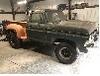
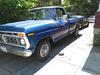
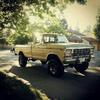
you can use sealer or not it will help some colors cover better and can help "hide" some sanding scratches you might miss before color coat. Most collision jobs dont use sealer but more high end paint shops get sealer. I used that company before and was happy with the product. the silver is the color you mentioned, the red is also tcp firemist, the black just stock paint
Putting down an epoxy primer first is pretty much the way it's done these days. but if you don't want to you don't have to.
How much primer it will take depends on how many times you block it down and reshoot it. you might get by with a gallon if you're just going to prime and shoot but if you plan on doing it right I'd figure 2 gallons minimum.
I agree with your choice of a single stage urethane for a novice painter. but some of that depends on the color, orange and yellow in single stage paints take A LOT of coats so I like base/clear here. I would say talk to your paint supplier about it but if you're going to order off the web I don't know what to say. I would plan on 2 gallons of paint .
I wouldn't rule out NAPA's Martin Senor paint for a budget paint job. it's made by Sherwin Williams and it's decent paint for the money. you'll find local assistance and access to supplies is a great asset about half way through the job.
Make sure you prep and paint the cowl with the right stuff. That area is prone to not holding paint very well. I believe it is galvanized (?). Hopefully some autobody/paint guru will chime on on this being good info or not. I C&P if from a fellow FTE member. To have it to remember come repair time on ol my trucks paint spitting cowl."Cowl painting advice: Poly is not the same as epoxy. You need to lay down an epoxy primer over the areas of bare metal, let dry, give a light scuff then you can either lay down a poly surfacer (high build) over the whole truck to fill any imperfections then block smooth and then spray primer sealer over the high build, block smooth then top coat or you can skip the poly surfacer and just go directly to sealer over the epoxy if you think your body work is good enough. Then top coat."
The hardest color to spray & have it look good, & the one color I would never recommend for a first time paint job is silver. You'll have lots of stripes, mottling of the metallic, & headaches. Unless you are really lucky, & a natural with a spray gun. For a first timer, I recommend a solid color, no metallics. You stand a much better chance of success with a solid color, & can sand & buff out many mistakes that you can't on a mettalic job.
Follow the paint manufacturer's recommendations.Most likely, after the epoxy primer, you'll do your bodywork, get it as straight as you want. Then, cover the truck with a primer surfacer. Start block sanding until you get it as straight as you want. Usually a few days past when you lose your fingertips & are bleeding everywhere. Plan on weeks of block sanding for the best result. Read up on a "guide coat". Then follow the paint manufacturer's recommendations. I use R-M paint, they want you to lay the topcoat on within 12 hours of the last coat of surfacer. Some brands you can sand the surfacer & paint over them weeks later. R-M has a 100+ page book that details how to use their products, I imagine TPC has something similar, either a paper copy or online. Find this info & read it over & over. Then follow their instructions to the letter.
Try & find something to practice on, before you go crazy on your truck. An old fender, hood, or the shop fridge. Practice on something you don't care about, make your mistakes on that.
Epoxy is a sealer. You can not use it as a sandable primer. It can be used direct to metal as a sealer or on top of a sandable or high build primer right before paint as a sealer.
If you are sanding down to bare metal it would be best to use epoxy primer to seal that. then use a high build primer to fill small imperfections and to block sand down.
Epoxy right before paint is nice if you have dark primer with light color paint to help with color bleed through but is not required.
I used Speedokote primer and epoxy with Summit single stage with pretty good results. Here is my thread https://www.ford-trucks.com/forums/1...storation.html
As someone who has worked in auto body shops and has also painted at home. Do the body work, remove stuff like lights/ moldings,etc. and sand/scuff everything down then send it to a shop to spray it. It's gonna cost a little more than what you'd spend in materials, but it's worth it IMO to have a professionally applied paint job done in a clean environment. Not having to sand and buff paint is nice.
If you do it yourself, I'd say don't get a cheaper paint just because you might make some mistakes. Get a good paint so you don't have to deal with whatever problems cheap paint can cause, and plus I suspect that good paints can sometimes work better enough that it becomes an aid to the painter and the finished product. Sometimes you get what you pay extra for...
I've always heard to use an etching primer over bare metal (and keep it off of any filler work.)
The hardest color to spray & have it look good, & the one color I would never recommend for a first time paint job is silver. You'll have lots of stripes, mottling of the metallic, & headaches. Unless you are really lucky, & a natural with a spray gun. For a first timer, I recommend a solid color, no metallics. You stand a much better chance of success with a solid color, & can sand & buff out many mistakes that you can't on a mettalic job.
Follow the paint manufacturer's recommendations.Most likely, after the epoxy primer, you'll do your bodywork, get it as straight as you want. Then, cover the truck with a primer surfacer. Start block sanding until you get it as straight as you want. Usually a few days past when you lose your fingertips & are bleeding everywhere. Plan on weeks of block sanding for the best result. Read up on a "guide coat". Then follow the paint manufacturer's recommendations. I use R-M paint, they want you to lay the topcoat on within 12 hours of the last coat of surfacer. Some brands you can sand the surfacer & paint over them weeks later. R-M has a 100+ page book that details how to use their products, I imagine TPC has something similar, either a paper copy or online. Find this info & read it over & over. Then follow their instructions to the letter.
Try & find something to practice on, before you go crazy on your truck. An old fender, hood, or the shop fridge. Practice on something you don't care about, make your mistakes on that.
I was originally going to go with red then but I really like the factory color silver metallic but after what you said I might reconsider a solid red over the silver. Thanks for the advice.
As someone who has worked in auto body shops and has also painted at home. Do the body work, remove stuff like lights/ moldings,etc. and sand/scuff everything down then send it to a shop to spray it. It's gonna cost a little more than what you'd spend in materials, but it's worth it IMO to have a professionally applied paint job done in a clean environment. Not having to sand and buff paint is nice.
I would but I have no way of transporting the individual pieces and I can't afford someone eles to paint it I've talked to a couple shops around here and they said to paint it be any were form 4-5k if I prepped it be around 10-12k if they had to do it all. The shops actually told me unless I wanted a perfect show truck I'd be better off painting it my self which all I want is a nice driver as I plan on driving this all year round.
any solid color is MUCH easier to do. and as Scott says silver is as tough as it gets.
If you want to go with silver you should be able to get someone to just shoot it reasonably. maybe not a pro but someone with decent experience. maybe even at your place.
As someone who has worked in auto body shops and has also painted at home. Do the body work, remove stuff like lights/ moldings,etc. and sand/scuff everything down then send it to a shop to spray it. It's gonna cost a little more than what you'd spend in materials, but it's worth it IMO to have a professionally applied paint job done in a clean environment. Not having to sand and buff paint is nice.
I'm gonna have to second this statement. I painted my truck gun metal gray and you can tell it was done by a "first-timer", damn stripes, fish-eyes, drips, and even rust where I didn't paint thick enough. Also, it took about six weeks working solo and I was working faster towards the end. It's a much bigger job than you think. Look for a painter that has his own shop, not a big business. The smaller shops are more reasonable. Even a Macco job isn't that bad if you tell them what you want. A flatbed tow truck it's too expensive to haul it to the shop. Just my experience talking. If I could do it over again, I would definitely cough up a little extra coin and had it done professionally.
Just be aware that paint questions will get conflicting opinions on folks personal preferences with products and that can be very confusing to a beginner!
Reread Scottscott & 440 sixpack advice as they are spot on. Other post have great advice also .
A few things & thoughts that I use on a daily basis painting & doing bodywork.
- An epoxy primer is generally a sandable primer with good adhesion on bare metals and bodywork fillers.It has a hardner (catalyst) which gives it the epoxy characteristic and excellent "holdout". Holdout means top layers , containing SOLVENTS will not soak, absorb into the primer & cause the dreaded sand scratches, body work repair areas etc.
- This holdout is also refered to as "sinking". Again, solvents ;in subsequent top coats; are allowed to sink/absorb into the bottom/lower coats. This is where your paint job looks pretty darn good and a day or to later upon semi-drying ,you start to see imperfections materializing. In an ideal world the solvents in all products applied should evaporate UP & OUT, not partially "sink" into bottom coats.That is the purpose of good products and epoxy products.... holding out the solvents.
-It hurts your wallet big time but quality products will get better results.
- My particular process is ,epoxy primer,epoxy sealer,base/coat,clearcoat on the majority of jobs.All major manufacters will have their "system" that will work fine.
Good luck !
Thanks for all the replies and good info so I decided I would go with a solid red over a silver mattalic. I like tcp's rally red I think I'm going to go with that and I'm going to paint the dash in there hot rod flats rally red as I don't want a super glossy dash. I still want to paint it my self though I know it's not going to come out the best but i feel its a good learning experience. the way I see it is if you don't ever do something and have opportunity to learn from your mistakes along the way you will never be good at it. So I think i know how I'm going to tackle this is. epoxy sealer then spray a 2k high build primer over that sand until I'm satisfied then sand some more then spray my paint dose this sound like a good plan thanks.
Rezvani's Latest Post-Apocalytic Monster Is a Ford F-150 Raptor Underneath
Slideshow: Called the Fortress, the 850-horsepower pickup combines Raptor underpinnings with military-inspired features, survival equipment, and a starting price of $285,000.