When you click on links to various merchants on this site and make a purchase, this can result in this site earning a commission. Affiliate programs and affiliations include, but are not limited to, the eBay Partner Network.
I like the idea of the Air Dog 5G in conjunction with a regulated return system and fuel bowl delete. The air dog has an internal bypass to return air entrained fuel to the tank as well as very serviceable filters, the regulated return allows for precise fuel pressure control (Not concerned with the dead head argument) and the fuel bowl delete opens up engine valley space making service to other components easier in my opinon. No claim to performance benefits, other than the removal of air entrained fuel at the air dog system which gives me a warm fuzzy with regards to injector life (Real or percieved).
Know what's better than an internal bypass?... An internal pump. Hard to suck air when you're sitting in the drink. Plus the factory pump can swim so no need to spend $2000.
Know what's better than an internal bypass?... An internal pump. Hard to suck air when you're sitting in the drink. Plus the factory pump can swim so no need to spend $2000.
There is no argument against this statement.
Laws of nature dictate that it's much easier to push a fluid than to pull it and rely on atmospheric pressure to push the fluid towards the fuel pump inlet. My experience is that it completely eliminated any chance of air intrusion into the fuel stream between the fuel pump and the fuel tank. Countless numbers of vehicles on the road today already have that basic design theory in place via the placement of the fuel pump in the fuel sender/pump assembly placed at the bottom of every fuel tank.
Again, I will post up the picture of my fuel pickup modification that I did many years ago. Also, I am still running the old prototype air bleed system that I built, and then Clay took the same idea and made his FRX system which has good reviews. Those two and a HPOP crossover pipe is basically the best you can do for these systems, IMO. Airdog type systems are at best, a bandaid over a problem that could very easily be dealt with, simply by eliminating the air in the fuel that get's introduced in the first place via the vacuum action between the fuel pickup and the fuel pump inlet. The fuel pump that I used was for an old fuel injected VW Rabbit. Same brand of pump that is on the Fords. Same basic design inside for both. The VW pump inlet has a diameter that enables the technician to simply remove the intake screen off of the end of the pickup and clamp it onto the fuel pump inlet that is now mounted on the bottom of the fuel pickup.
Kwikkordead, how many miles on that pump? Also why did you replace your engine? I know you were off here for a while, or at least I didn't see you for a while so never heard what kind of problems you might have had. Don't remember now, did you rebuild it or go reman?
Kwikkordead, how many miles on that pump? Also why did you replace your engine? I know you were off here for a while, or at least I didn't see you for a while so never heard what kind of problems you might have had. Don't remember now, did you rebuild it or go reman?
I don't use the truck much except as an RV hauler, so in the ten years since I did this mod, I'm guessing 50-75k miles. This particular design of fuel pump relies on the fuel itself as lubricant, so it doesn't matter whether it's mounted to the rail, or mounted at the end of the fuel pickup and completely submerged. It's fully "submerged" anyway due to the fact that it draws the fuel through itself and delivers it to the engine under pressure from the inside of the pump. Some pumps, (like the one that I used), come with a plastic laminate label that will detach itself from the body of the pump and float free inside the fuel tank. Soak the pump in a bucket of fuel for a week to detach it before you do the install. Bosch fuel pumps, used on a lot of the vehicles on the road today, have won their place in my mind as the best brand of fuel pump to use because of their longevity. I've seen plenty of factory fuel pumps still installed in cars with well over 100,000 miles on them and those are with gasoline powered cars with very little lubricity offered by the fuel that the pumps are transferring.
The reason that I decided to replace a perfectly running engine with a Ford reman from Clay was I began to notice a knocking sensation coming up through the floorboard of the truck at engine speed frequency. It didn't matter if it was under power or deceleration, the knock was still there. Since this was strictly an RV/vacation rig, and I owned an auto repair shop at the time, I decided that I didn't want to risk having a Windows 7.3 event while pulling a mountain pass heading out of town, ready to enjoy a well-deserved time off with the family. The engine was a forged rod reman from Ford and it has been a great investment. Pulls harder than the previous engine and no more knocking sensation, as well. It acts like they dropped the compression a point or two, because it makes a LOT of fuel smoke at idle on a freezing morning, even with the glow plugs held on manually. Only way to clear the smoke is drive it a half mile, or let it idle for about ten minutes and give it time to heat up the combustion chamber. Previous engine didn't do that. Other than that, it's a better engine than the one I took out
When I dropped my fuel tank (to install a hitch), I found a big pile of debris directly under my umbrella.
Based on what I saw and cleaned up, I think I would want some sort of screen between the umbrella and the fuel pump.
Above image credit: Kwikkordead
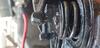
I found the same pile of debris under mine, as well. You can see little bits of it still stuck to the pickup screen in my picture here.
Let me just add a note to this. The Ford frame mounted pump has a screen built into the inlet side of the pump that gets filled up and blocks the flow of fuel. There is no easy way to remove all that gunk from the inside of the fuel pump body on the Ford frame mounted pump and that design gave me a lot of fuel volume issues. One of the diagnostic tests that I ran in the early days is I was chasing a power loss while under load that I narrowed down to loss of fuel pressure due to lack of fuel volume being delivered when needed. Installed a gauge to the fuel supply for the injectors, (I forget how, now, probably at a handy fuel port or something) and observed IIRC around 60 psi at idle. Take off and go climb a hill, not even pulling a heavy trailer and the fuel pressure would immediately drop to less than 30 psi. Let off and it would recover. So I knew it was not enough fuel volume to keep up with demand and it was now my job find out where the restriction was. New fuel filter made zero difference, so I turned my attention to the fuel pump. Removing it from the frame rail and looking down inside the inlet revealed to me what I was saying earlier. Saw the same type of debris jammed up inside the fuel pump inlet. Did my best with compressed air and brake clean to clear it all out, but that experience led me to just do away with the Ford design and put the fuel pump down inside the tank. The VW pump has no such screen inside the inlet, so it relies upon the screen on the mushroom head to keep the chunks out and is able to just "process" anything smaller and send it forward to the fuel filter where it gets filtered out from there. Now, I have no fuel volume issues like before. Truck pulls like a bull elephant on steroids. It's a 1999 F550 7.3 ZF6 4x4 with 4.88 rear axle. Engine RPM 2,600 at 68 mph. I don't have to shift down until about a 3 or 4% grade pulling the RV at about 29,000 GVW.
I'll say this once more. There is no better modification you can do for your truck than to migrate the fuel pump to the end of the pickup in the tank. Changes everything about the quality of fuel delivery and is a game changer if you are having to deal with any sort of air in the fuel or fuel supply issues.
Thank you for your details. Some folks think outside the box. You think inside the tank. That makes you a think tank!
The factory fuel recirculation module inside of my fuel tank has a couple of cylindrical mesh screens. I think those screens are what protects the oem frame mounted fuel pump.
Thank you for your details. Some folks think outside the box. You think inside the tank. That makes you a think tank!
The factory fuel recirculation module inside of my fuel tank has a couple of cylindrical mesh screens. I think those screens are what protects the oem frame mounted fuel pump.
Not well enough. First time I did anything to the inside of the tank was to drop it down for the fuel pump modification. Everything was still there and intact. Still had the junk inside the inlet of the fuel pump. I really feel that the factory design is a major player in a lot of the injector cackle, rattling idle, etc. issues that have been a big part of these discussions over the years. My engine has one of the most even idling sounds you could ever ask for. Air free fuel, with FRX type fuel supply, and an HPOP crossover pipe for the high pressure oil all add up to a much better running engine than what came off of the showroom floor.
Just saying.....
Have a part number for that pump? And what kind of fuel pressure do you keep?
Bosch 69430. Ebay has them for $85.00 at the time of this posting.
I keep stock fuel pressure. 60 psi. Don't like monkeying too much with that due to lack of engineering knowledge on the internals of the fuel injectors and I don't really feel I need more. Truck pulls with enthusiasm on every hill. Heavier you load it the harder it pulls.
If you do decide to go this route, there is a check valve in the outlet fitting that I eliminated, but I'll leave it up to you on whether to keep it or not. Gas engines need residual fuel pressure to prevent vapor lock, but we have diesel so I got rid of it. Zero starting issues, even when fully warmed up and sitting for 15 minutes at a refuel stop. Fires right up every time.
I'm heading for bed right now, but will post more pictures tomorrow morning from my main computer.
I prefer to be able to change these parts on the side of the road with stuff available at the nearest parts store.
I also really like the option to SEE the fuel and condition of the pre-pump filter for quick and easy diagnostic of potential fuel supply issues. On that note, I can’t live without a fuel pressure gauge that shows what the injectors see.
The 100’s of trucks I’ve done the in-tank and pre-pump mods have never needed to drop the tank again. That’s millions of cumulative miles.
The ONLY thing HPx does is add more places for oil to leak. I remove those from every truck I see and advise others do the same. This is one of the dumbest mods that ever got popular...
OK, here comes the picture dump. Note the check valve at the outlet end of the pump. What I did was to cut the tip off and remove the guts of the valve, then weld a short piece of steel pipe to the fitting and then weld it to the fuel supply pipe on the pickup assembly. If you don't have a welder, I'll be willing to bet that you could find the appropriately sized compression type fitting to attach the pump the the fuel supply pipe. The check valve assembly has male fittings on both ends and the threads into the body of the pump are standard metric with a copper sealing washer. I'm guessing 12x1.5 metric. It's been over ten years now, LOL. TAKE CAREFUL MEASUREMENTS OF THE SENDER ASSEMBLY BEFORE MAKING ANY CUTS. You want your finished product to be the same height as the original.
Here is the thread that I started way back when. I'm very surprised to see the timestamp being 2005, so I've been running this pump since then without any sense of needing to do anything more for the fuel supply. One thing about having a tank mounted pump is it lasts virtually forever due to the fact that it's buried in the drink and never runs dry. Seventeen years of reliable service so far with no end in sight. Sorry, all the pictures that I posted back then had to be hosted off-sight due to forum rules at the time I made the thread and that website closed that loop years ago, so no pictures, even though they are mentioned. All I have are the ones that are posted here. https://www.ford-trucks.com/forums/4...ifference.html
I forgot to mention that if you want to do this mod for your truck that you need to do a better job of securing the power supply wires than I did in the pictures. The sloshing of the fuel worked on the wiring and a year later cracked the electrical fitting at the positive post of the fuel pump, creating an intermittent connection. It was good enough of a connection to make it back to the shop, where I dropped the tank again and then took measures to ensure that it wouldn't happen again. IIRC, it was to secure the wiring from the pump to the rubber grommet, and then but up a plastic gallon jug to make a collar that was clamped around the body of the pump and made a "chimney" looking assembly that kept the wave action away from the electrical stuff. That was 15 years ago now and still all OK.
I prefer to be able to change these parts on the side of the road with stuff available at the nearest parts store.
I also really like the option to SEE the fuel and condition of the pre-pump filter for quick and easy diagnostic of potential fuel supply issues. On that note, I can’t live without a fuel pressure gauge that shows what the injectors see.
The 100’s of trucks I’ve done the in-tank and pre-pump mods have never needed to drop the tank again. That’s millions of cumulative miles.
The ONLY thing HPx does is add more places for oil to leak. I remove those from every truck I see and advise others do the same. This is one of the dumbest mods that ever got popular...
I fully agree with you on the leak potential for the HPX assembly. Far too many designs do not take into account for heat expansion and contraction with the ones that go straight across from cylinder head to cylinder head. The only one that I would ever recommend is the solid stainless steel one that I put on my old engine, then took off and transferred to the new engine without ever leaking a drop. The "dip down" in the middle makes it a far more flexible and forgiving design than the ones that go across the top and it doesn't have the leaky hydraulic crimp style fittings with flex hose in the middle like so many of the others out there. For the Ford engineers to take measurements of HPOP pressure on one side of the engine, and then make assumptions on what's going on for the other side is lazy engineering at best. Hence the popularity of the HPX was born. I cannot remember where I bought mine, but for the record, it's the only type of design that I would trust in the long run due to it's ability to absorb engine expansion and contraction without putting any stress on itself.
EDIT: Here is the link to where I bought the HPX way back when. Again, this is the only one that I can recommend due to what I think happens when engines expand and contract due to temperature fluctuations during normal day to day use.
Rezvani's Latest Post-Apocalyptic Monster Is a Ford F-150 Raptor Underneath
Slideshow: Called the Fortress, the 850-horsepower pickup combines Raptor underpinnings with military-inspired features, survival equipment, and a starting price of $285,000.