


Advice wanted: Break system update

Thread Starter
|
New User
Joined: Dec 2020
Posts: 23
Likes: 0
From: Bonney Lake
Advice wanted: Break system update
Hello,
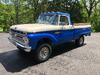
I recently just purchased a 1965 F100 with a 4 speed manual and 4x4 equipped.
the brakes are in need of serious attention.
the truck still has drum up front with the f250 Dana 44 axle. Upon researching I discovered the disc conversion is relatively straight forward
As she sits, the current brake system has leaking components (master cylinder, differential proportional valve) and probably other issues I’m not aware of(the breaks are almost non existent)
now, what do you guys recommend and what components should be replaced to get the system in working, Safe order?
If I do a disc conversion, will all of these leaky components get replaced anyways?
thanks in advance
I recently just purchased a 1965 F100 with a 4 speed manual and 4x4 equipped.
the brakes are in need of serious attention.
the truck still has drum up front with the f250 Dana 44 axle. Upon researching I discovered the disc conversion is relatively straight forward
As she sits, the current brake system has leaking components (master cylinder, differential proportional valve) and probably other issues I’m not aware of(the breaks are almost non existent)
now, what do you guys recommend and what components should be replaced to get the system in working, Safe order?
If I do a disc conversion, will all of these leaky components get replaced anyways?
thanks in advance

Post Fiend
Joined: Apr 2002
Posts: 19,311
Likes: 97
From: Waterloo, Iowa
New hard lines throughout the truck are a must, 3 brake hoses, and the rear wheel cylinders, springs, shoes, and various gee gaws therein. Probably drums as well. Also inspect the backing plate, they have raised shoe pads that are usually heavily gouged and cause the rear brakes to hang up. None of this stuff is a show stopper, just have to go through everything.
Thread Starter
|
New User
Joined: Dec 2020
Posts: 23
Likes: 0
From: Bonney Lake
[QUOTE=Tedster9;19612721]New hard lines throughout the truck are a must, 3 brake hoses, and the rear wheel cylinders, springs, shoes, and various gee gaws therein. Probably drums as well. Also inspect the backing plate, they have raised shoe pads that are usually heavily gouged and cause the rear brakes to hang up. None of this stuff is a show stopper, just have to go through everything.[/QUOTE
thanks for the reply tedster.
I figured most of these components you mentioned will need replaced. But the piece of hardware I had never seen before is this valve - “differential proportional valve” it is leaking and I’m quite unfamiliar with the repair/ replacement on these.
Do you have any insight on fixing these?
From the looks of it the following will need replaced:
1: hard lines
2: soft lines
3: drums
4: differential proportional valve
in regards to the disc conversion, is it recommended for light use(dump runs, log hauling, etc)
my goal is for the breaks to work as they should nothing more.
This is a classic truck with tons of life left so I’m excited to start showing her off
thanks for the reply tedster.
I figured most of these components you mentioned will need replaced. But the piece of hardware I had never seen before is this valve - “differential proportional valve” it is leaking and I’m quite unfamiliar with the repair/ replacement on these.
Do you have any insight on fixing these?
From the looks of it the following will need replaced:
1: hard lines
2: soft lines
3: drums
4: differential proportional valve
in regards to the disc conversion, is it recommended for light use(dump runs, log hauling, etc)
my goal is for the breaks to work as they should nothing more.
This is a classic truck with tons of life left so I’m excited to start showing her off
Post Fiend
Joined: Apr 2002
Posts: 19,311
Likes: 97
From: Waterloo, Iowa
I can't really answer that for you, a lot of it depends on your comfort level as well as skill level. The thing about brakes or brake systems is they don't really lend themselves to doing replacement "a little bit at a time". At least the hydraulic portion. I mean you can, but a little bit of bleeding is involved every time the system is opened up. I decided one single brake bleeding session was plenty. Replaced everything at once, or near enough. Worked great.
I chose to retain the stock 4 drum system as it is adequate for my requirements. This can pose problems too, because some parts are getting difficult to find. For a while right in there in 64 thru 67 or so, Ford only offered the front drum and hub together, as an assembly. These are no longer available. Not a show stopper, the drums are readily available, old hubs on new drums = back in business. But can't really change your mind midstream, and say "Well maybe front discs are easier to install", not without laying and bending more brake line. Maybe not a huge deal, but.
Point being kind of have to decide on a plan of attack, inspect everything thoroughly for condition and usability and decide which way you want to go, and then stick with it.
I chose to retain the stock 4 drum system as it is adequate for my requirements. This can pose problems too, because some parts are getting difficult to find. For a while right in there in 64 thru 67 or so, Ford only offered the front drum and hub together, as an assembly. These are no longer available. Not a show stopper, the drums are readily available, old hubs on new drums = back in business. But can't really change your mind midstream, and say "Well maybe front discs are easier to install", not without laying and bending more brake line. Maybe not a huge deal, but.
Point being kind of have to decide on a plan of attack, inspect everything thoroughly for condition and usability and decide which way you want to go, and then stick with it.

Cargo Master
Joined: Sep 2005
Posts: 2,954
Likes: 64
If I was going to do a lot of hyway driving I would convert to front disc. Other than that drums work fine. The shortfalls are; they don't like deep puddles, after forging a deep puddle it's good to drag your foot a bit to dry them out 'til you get a brake again. With Repeated high speed use they get hot and do not stop as well. ANd finally you do have to keep them adjusted, I probably adjust the brakes in my CJ every spring.
That being said, my '76 CJ7 has drums all around, they were manual when I got it, but my wife wasn't comfortable with them so I added a booster but kept them drum all around. And it stops great, just have to keep them adjusted, you'll know when, because they will start to pull one way or the other..
That being said, my '76 CJ7 has drums all around, they were manual when I got it, but my wife wasn't comfortable with them so I added a booster but kept them drum all around. And it stops great, just have to keep them adjusted, you'll know when, because they will start to pull one way or the other..

Logistics Pro


Joined: May 2015
Posts: 4,464
Likes: 955
From: Tri Cities, TN

I had never seen before is this valve - “differential proportional valve” it is leaking and I’m quite unfamiliar with the repair/ replacement on these.
There is no such valve used with drum brakes. That is a disc brake thing.
Can you post a picture of your master cylinder and this valve?
Do you have a single pot master cylinder? Or a dual pot?
Over the many years these trucks have been on the road people change things without having a complete understanding of how stuff works. Then the next guy has to figure out what went wrong.
There is no such valve used with drum brakes. That is a disc brake thing.
Can you post a picture of your master cylinder and this valve?
Do you have a single pot master cylinder? Or a dual pot?
Over the many years these trucks have been on the road people change things without having a complete understanding of how stuff works. Then the next guy has to figure out what went wrong.

Posting Guru
Joined: Apr 2006
Posts: 1,477
Likes: 7
From: NAMPA, ID.
My understanding is that the brake pressure differential valve didn't show up until there were obviously two different hydraulic systems with which to have a difference in pressures, hence the dual circuit master cylinder. My 65 has the single system, several 67's I've had have the dual circuit so I think 67 was the first year for this system.
Also, I disagree with the blanket statement that all hard lines need to be replaced. They should be spotless inside, no doubt rusty on the outside which doesn't hurt anything. The problem usually arises when someone tries to loosen the fittings without due care. These will need to be soaked in penetrating oil, the proper line wrench used and if you're lucky they'll break loose. A tiny pipe wrench is very helpful here.
I got all 3 of my flexible brake lines from Rock Auto for under 40.00.
Also, I disagree with the blanket statement that all hard lines need to be replaced. They should be spotless inside, no doubt rusty on the outside which doesn't hurt anything. The problem usually arises when someone tries to loosen the fittings without due care. These will need to be soaked in penetrating oil, the proper line wrench used and if you're lucky they'll break loose. A tiny pipe wrench is very helpful here.
I got all 3 of my flexible brake lines from Rock Auto for under 40.00.
Trending Topics

Lead Gopher


Joined: Aug 2012
Posts: 10,043
Likes: 1,595
From: Seattle
As far as the disc brake conversion up front the first thing to do there is determine which Dana 44 you have - open knuckle or closed knuckle. If open knuckle the conversion may be possible - closed knuckle could be a different story unless you want to go to 5-lug. I haven't seen a kit to do an eight-lug closed knuckle (yet). Possible a person can fabricate their own.
FTE Stories
Ford Trucks for Ford Truck Enthusiasts

AEV FXL Super Duty - the Super Duty Raptor Ford Doesn't Make
Brett Foote
Lobo Vs Lobo: Proof the F-150 Lobo Should Be Even Lower!
Michael S. Palmer
Ford's 2001 Explorer Sportsman Concept Looks For a New Home
Verdad Gallardo
10 Best Ford Truck Engines We Miss the Most!
Joe Kucinski
2026 Shelby F-150 Off-Road: Better Than a Raptor R?
Brett Foote
2027 Super Duty Carhartt Package First Look: 12 Things You NEED to Know!
Michael S. Palmer
10 Most Surprising 2026 Ford Truck Features!
Joe Kucinski
Top 10 Ford Trucks Coming to Mecum Indy 2026
Brett Foote
5 Best / 5 Worst Ford Truck Wheels of All Time
Joe Kucinski
Post Fiend
Joined: Apr 2002
Posts: 19,311
Likes: 97
From: Waterloo, Iowa
While the brake lines "might" be OK, that probably isn't the way to bet. They won't be spotless inside either. Not a chance. How could one tell that anyway?
Anyhoo a 25 foot roll of Nicopp is about $25, it makes little sense to upgrade the brake system components and then leave the original factory brake line. A likely scenario is lots of old sludge or sediment and rust gets pushed into those nice new hoses and wheel cylinders, never mind the likelihood of rusty line letting go at a weak point during braking.
Posting Guru
Joined: Apr 2006
Posts: 1,477
Likes: 7
From: NAMPA, ID.
From 1965?
While the brake lines "might" be OK, that probably isn't the way to bet. They won't be spotless inside either. Not a chance. How could one tell that anyway?
Anyhoo a 25 foot roll of Nicopp is about $25, it makes little sense to upgrade the brake system components and then leave the original factory brake line. A likely scenario is lots of old sludge or sediment and rust gets pushed into those nice new hoses and wheel cylinders, never mind the likelihood of rusty line letting go at a weak point during braking.
While the brake lines "might" be OK, that probably isn't the way to bet. They won't be spotless inside either. Not a chance. How could one tell that anyway?
Anyhoo a 25 foot roll of Nicopp is about $25, it makes little sense to upgrade the brake system components and then leave the original factory brake line. A likely scenario is lots of old sludge or sediment and rust gets pushed into those nice new hoses and wheel cylinders, never mind the likelihood of rusty line letting go at a weak point during braking.

Fleet Mechanic
Joined: Nov 2006
Posts: 1,664
Likes: 219
From: Northwest
I would simply repair the original system. Upgrades are great until you need to service the brakes again and can't remember where the components came from. After all, the original lasted 50 years.
Hobo
Hobo
Fleet Mechanic


Joined: Nov 2005
Posts: 1,846
Likes: 431
From: Lehigh Valley, Penna.
This truck is already not original if it has a F250 front axle and most likely then a F250 rear axle also. We need to see some pictures and have a little more detail on what he has. For all we know it's a early 70's F250 chassis with a 65 body. In any case the complete system should be gone through and I agree with replacing hard lines. Cost for hard lines is minimal and maybe in areas of the country that are dry they'd be OK, but why take a chance.

Cargo Master

Joined: Jul 2006
Posts: 3,014
Likes: 91
From: Concord, CA
Post Fiend
Joined: Apr 2002
Posts: 19,311
Likes: 97
From: Waterloo, Iowa
Some judgment is certainly required when determining whether to replace brake lines, or anything else for that matter, corrosion is definitely a factor in the rust belt, while much less so in say, Arizona. Washington state is pretty dang dry east of the Cascades.
1965 was a long time ago though, I can't see any downside to replacement as a generally good maintenance practice. I took a few cross country trips with original issue brake lines. Hell, I'm pretty sure it had original issue brake fluid.
1965 was a long time ago though, I can't see any downside to replacement as a generally good maintenance practice. I took a few cross country trips with original issue brake lines. Hell, I'm pretty sure it had original issue brake fluid.
Thread Starter
|
New User
Joined: Dec 2020
Posts: 23
Likes: 0
From: Bonney Lake
I didn’t anticipate such a great response from the community.
I will provide pictures of the truck and requested information tomorrow morning PST.
What I do know is that the front Dana is 8 lug.
from what I’ve gathered with reading the replies, I think it’s more feasible to inspect ,clean and replace as needed. (Though I am in western Washington and it does rain so the lines may be fully rusted through, who knows till I get in there to inspect)
my main goal is to get the truck running and driving safely for the occasion log haul, dump haul or similar instances. This is not my daily driver. So, the drum breaks should work out fine
once I get the breaks sorted, I will be looking to upgrading the tires and axles to be more of a capable 4w rig. I regrettably got stuck in the lower half of my property.
My xj Jeep could easily get up and down those two big hills all stock but this heavy, long truck will need upgraded for sure
But that’s another thread entirely
I will provide pictures of the truck and requested information tomorrow morning PST.
What I do know is that the front Dana is 8 lug.
from what I’ve gathered with reading the replies, I think it’s more feasible to inspect ,clean and replace as needed. (Though I am in western Washington and it does rain so the lines may be fully rusted through, who knows till I get in there to inspect)
my main goal is to get the truck running and driving safely for the occasion log haul, dump haul or similar instances. This is not my daily driver. So, the drum breaks should work out fine
once I get the breaks sorted, I will be looking to upgrading the tires and axles to be more of a capable 4w rig. I regrettably got stuck in the lower half of my property.
My xj Jeep could easily get up and down those two big hills all stock but this heavy, long truck will need upgraded for sure
But that’s another thread entirely