





Winter Oil
Thread Starter
|
Senior User
Joined: Aug 2020
Posts: 137
Likes: 1
Winter Oil
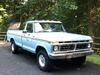
I have heard I should run “winter oil” I’m my 77 F150. 351M 4x4
is that true and if so what should I use
I live in Washington DC so can get to 0 F a couple times a year
anything else to consider in winter?
thanks in advance
is that true and if so what should I use
I live in Washington DC so can get to 0 F a couple times a year
anything else to consider in winter?
thanks in advance

Post Fiend
Joined: Apr 2002
Posts: 19,311
Likes: 97
From: Waterloo, Iowa
10w30 was very likely recommended for year round use by Ford in your Operator's Manual. In extreme cold, extended operation below 0° on a continuous basis might want to look at something lighter. What viscosity do you normally run?
Other areas to look at - make sure the engine thermostat is the correct temperature rating. A 195° F. is not "too hot" and is what Ford spec'd, or near enough. Check that there is a 50/50 mix of antifreeze concentrate and water in the radiator for adequate freeze protection.
Make sure the battery, and charging system, is up to snuff. Heat is actually what kills car batteries, but it is the cold temperatures that exposes this defect, because it takes a whole lot more current to turn over an icy cold engine with thick, sludgy oil, and at the same time ability for the battery to supply current output is cut in half at low temperatures. It can take hours or days to fully charge a car battery that is even slightly low.
Other areas to look at - make sure the engine thermostat is the correct temperature rating. A 195° F. is not "too hot" and is what Ford spec'd, or near enough. Check that there is a 50/50 mix of antifreeze concentrate and water in the radiator for adequate freeze protection.
Make sure the battery, and charging system, is up to snuff. Heat is actually what kills car batteries, but it is the cold temperatures that exposes this defect, because it takes a whole lot more current to turn over an icy cold engine with thick, sludgy oil, and at the same time ability for the battery to supply current output is cut in half at low temperatures. It can take hours or days to fully charge a car battery that is even slightly low.

Laughing Gas
Joined: Nov 2013
Posts: 1,207
Likes: 60
From: S.E. Louisiana;so far USA
For multi-viscosity oils Ford recommended 10W-30 or 10W-40 for -10F to +90F. If you use single viscosity, it would be 10W for -10F to +32F.
Be sure to use an oil that has sufficient additive to protect your flat tappets' cam.
I agree, the Valvoline VR-1 would be a good choice.
In the warm weather (above +10F) Ford recommended 20W-40.
Be sure to use an oil that has sufficient additive to protect your flat tappets' cam.
I agree, the Valvoline VR-1 would be a good choice.
In the warm weather (above +10F) Ford recommended 20W-40.
Last edited by Ozzie H.; Nov 22, 2020 at 07:39 AM. Reason: clarification
Thread Starter
|
Senior User
Joined: Aug 2020
Posts: 137
Likes: 1
For multi-viscosity oils Ford recommended 10W-30 or 10W-40 for -10F to +90F. If you use single viscosity, it would be 10W for -10F to +32F.
Be sure to use an oil that has sufficient additive to protect your flat tappets.
I agree, the Valvoline VR-1 would be a good choice.
In the warm weather (above +10F) Ford recommended 20W-40.
Be sure to use an oil that has sufficient additive to protect your flat tappets.
I agree, the Valvoline VR-1 would be a good choice.
In the warm weather (above +10F) Ford recommended 20W-40.
Post Fiend
Joined: Apr 2002
Posts: 19,311
Likes: 97
From: Waterloo, Iowa
VR1 is good oil, though technically it is supposed to be changed every 3 months, or 3000 miles. It doesn't have all the detergents or dispersents to control sludge that extended drain interval oils do. It is a true racing oil, whether the conventional or synthetic flavors.
I know motor oil is a personal thing with a lot of people, but in most cases the operator's manual will tell you what you need to know. It would be useful to know the actual oil pressure of your motor. 1977 was a long time ago, it may have had main and rod bearing replacement and low end work done since then. Or not. The actual bearing clearances are important to judge whether an oil viscosity is suitable.
Laughing Gas
Joined: Nov 2013
Posts: 1,207
Likes: 60
From: S.E. Louisiana;so far USA
What does the Operator's Manual specify Ozzie? Sounds contradictory to me.
VR1 is good oil, though technically it is supposed to be changed every 3 months, or 3000 miles. It doesn't have all the detergents or dispersents to control sludge that extended drain interval oils do. It is a true racing oil, whether the conventional or synthetic flavors.
I know motor oil is a personal thing with a lot of people, but in most cases the operator's manual will tell you what you need to know. It would be useful to know the actual oil pressure of your motor. 1977 was a long time ago, it may have had main and rod bearing replacement and low end work done since then. Or not. The actual bearing clearances are important to judge whether an oil viscosity is suitable.
VR1 is good oil, though technically it is supposed to be changed every 3 months, or 3000 miles. It doesn't have all the detergents or dispersents to control sludge that extended drain interval oils do. It is a true racing oil, whether the conventional or synthetic flavors.
I know motor oil is a personal thing with a lot of people, but in most cases the operator's manual will tell you what you need to know. It would be useful to know the actual oil pressure of your motor. 1977 was a long time ago, it may have had main and rod bearing replacement and low end work done since then. Or not. The actual bearing clearances are important to judge whether an oil viscosity is suitable.
Below +32F 5W-30
-10F to +90F 10W-30
-10F to +90F 10W-40
Above +10F 20W-40
In a footnote for the 5W-30 it says "Where sustained driving and/or high speed operation above 60 MPH is anticipated, use the next heavier viscosity oil.
Where is the contradiction?
The original question involved temperatures down to 0 degrees F in winter.
Ford recommended oil changes at 5 months or 5,000 miles, whichever occurs first. If severe operations: 2.5 months or 2,500 miles, whichever occurs first.
Other oils beside the VR-1 could be found that would protect the camshaft also.
Trending Topics
Post Fiend
Joined: Apr 2002
Posts: 19,311
Likes: 97
From: Waterloo, Iowa
Well OK maybe not a contradiction, though that's quite a spread. I'd sure want to use 10w30 in the winter before ever using 20w40, unless maybe it's an oil burner and the rods are a knockin'.
The problem with most of the motor oils that still contain phosphorous/zinc, is they usually want $18 a quart. I'm not poor but jeeze.
The problem with most of the motor oils that still contain phosphorous/zinc, is they usually want $18 a quart. I'm not poor but jeeze.
FTE Stories
Ford Trucks for Ford Truck Enthusiasts

Top 10 Fords at 2026 Carlisle Ford Nationals
Joe Kucinski
3 Best / 3 Worst Parts of Modern Ford Ownership
Brett Foote
10 Amazing Upgrades That Solve Common Ford Truck Owner Headaches
Pouria Savadkouei
Every 2026 Ford Engine Explained
Brett Foote
10 Ugly Ford Trucks That We Still Kinda Love
Joe Kucinski
10 Things Every Truck Owner NEEDS (2026 Edition)
Michael S. Palmer
Rezvani's Latest Post-Apocalyptic Monster Is a Ford F-150 Raptor Underneath
Verdad Gallardo
Top 10 Most Expensive Ford Trucks Ever Sold on Bring a Trailer
Joe Kucinski
2027 Ford Super Duty Buyer's Guide (Every Model, Engine, & Package)
Brett Foote
Fleet Owner


Joined: Jan 2004
Posts: 26,007
Likes: 575
From: Brentwood,CA

Well OK maybe not a contradiction, though that's quite a spread. I'd sure want to use 10w30 in the winter before ever using 20w40, unless maybe it's an oil burner and the rods are a knockin'.
The problem with most of the motor oils that still contain phosphorous/zinc, is they usually want $18 a quart. I'm not poor but jeeze.
The problem with most of the motor oils that still contain phosphorous/zinc, is they usually want $18 a quart. I'm not poor but jeeze.
Thats why Rotella T6 5w40 is a common go to for me and others year round. Doesn't break the bank and has all the requirements.



Thread
Thread Starter
Forum
Replies
Last Post
neilc88
General Diesel Discussion
3
Dec 29, 2013 04:34 PM
Fordrules
1987 - 1996 F150 & Larger F-Series Trucks
15
Jul 12, 2007 07:05 AM