


Weird Charging Issue HELP

Thread Starter
|
New User
Joined: Sep 2020
Posts: 2
Likes: 0
Weird Charging Issue HELP
Hey. I've got a weird charging issue that I cannot figure out for the life of me. The truck is a 1983 F100 XLT 302ci
Here is the back story on the truck. I purchased the truck about 6 months ago from a guy that used it as a work truck. He would use it when ever he needed to pull something or do any yard work. Once I got it I drove it often and didn't have any charging issues that I knew of. The battery was an older one the guy told me and one day it wouldn't start so I went out and got a new one for it. A few months go by and no issues that I can tell and I stop to get gas and the truck wouldn't start. Turns out that the alternator belt had broken while I was driving and the truck Battery didn't have enough juice to start again. Got it fixed and jump started the truck and took it home. Ever since then the truck has had issues with the battery going dead. (there could have been an issue the whole time and I just didn't know about it)
Looked at getting a new alternator and found out that the previous owner had "someone" install a G3 alternator to replace the factory one. Couldn't find the same alternator because the number was worn off the case but found another one close with the help of the Auto Zone manager. Installed it and charged up the battery. Truck started and when I checked the voltage it was over 14.3v running. Thought it was fixed but realized not when the battery died again.
Charged it up again and then did some more testing. Started just fine and it read 14v+ on first start. I drove it down the road and stopped and tested and it read around 12.8v. Realized that the issue wasn't fixed. Did some more testing and charged up the battery once again. First start it registered high voltage and then I turned it off and started again and tested. It registered low around 12.5v telling me that it isn't charging again. Went down to the Advanced Auto and got the guy to replace the alternator again. This time went through the wiring that was done for the G3 swap. It looked very bad so I rewired it with better wire and followed a few threads showing how to do it properly. Installed the new one and charged the battery up again. It started well and then read 14.4v on the meter. Thought it was fixed and drove it around. Got back home and checked it again and it read low again.....
Charged up the battery again and tested it once again and it read 14v+ again. Unhooked the battery and the truck ran just fine and tested high telling me the alternator is working. Hooked it back up and turned it off and restarted and tested. The truck tested low once again and was not charging. I have checked everything I can think of and am stuck on what the issue is. I have tested the I (green/black) wire to make sure it has voltage when the key is on. I have checked everything else that I can think of and still not charging. If I start the truck and disconnect the battery and then test the voltage the alternator is putting out it reads about 8v and continues to drop until the truck dies.
Any ideas on this one??
Thanks
Laurence
Here is the back story on the truck. I purchased the truck about 6 months ago from a guy that used it as a work truck. He would use it when ever he needed to pull something or do any yard work. Once I got it I drove it often and didn't have any charging issues that I knew of. The battery was an older one the guy told me and one day it wouldn't start so I went out and got a new one for it. A few months go by and no issues that I can tell and I stop to get gas and the truck wouldn't start. Turns out that the alternator belt had broken while I was driving and the truck Battery didn't have enough juice to start again. Got it fixed and jump started the truck and took it home. Ever since then the truck has had issues with the battery going dead. (there could have been an issue the whole time and I just didn't know about it)
Looked at getting a new alternator and found out that the previous owner had "someone" install a G3 alternator to replace the factory one. Couldn't find the same alternator because the number was worn off the case but found another one close with the help of the Auto Zone manager. Installed it and charged up the battery. Truck started and when I checked the voltage it was over 14.3v running. Thought it was fixed but realized not when the battery died again.
Charged it up again and then did some more testing. Started just fine and it read 14v+ on first start. I drove it down the road and stopped and tested and it read around 12.8v. Realized that the issue wasn't fixed. Did some more testing and charged up the battery once again. First start it registered high voltage and then I turned it off and started again and tested. It registered low around 12.5v telling me that it isn't charging again. Went down to the Advanced Auto and got the guy to replace the alternator again. This time went through the wiring that was done for the G3 swap. It looked very bad so I rewired it with better wire and followed a few threads showing how to do it properly. Installed the new one and charged the battery up again. It started well and then read 14.4v on the meter. Thought it was fixed and drove it around. Got back home and checked it again and it read low again.....
Charged up the battery again and tested it once again and it read 14v+ again. Unhooked the battery and the truck ran just fine and tested high telling me the alternator is working. Hooked it back up and turned it off and restarted and tested. The truck tested low once again and was not charging. I have checked everything I can think of and am stuck on what the issue is. I have tested the I (green/black) wire to make sure it has voltage when the key is on. I have checked everything else that I can think of and still not charging. If I start the truck and disconnect the battery and then test the voltage the alternator is putting out it reads about 8v and continues to drop until the truck dies.
Any ideas on this one??
Thanks
Laurence

Lead Driver


Joined: Nov 2013
Posts: 7,178
Likes: 1,174
Sorry I can't help with the rest of the issue. I don't have an 11 foot pole for trying to clean up a mystery swap performed by who knows who. But I do know disconnecting the battery with the engine running is brutal on the system. Hopefully this didn’t cause any additional damage in addition to the original issue.

Post Fiend
Joined: Feb 2008
Posts: 5,831
Likes: 121
From: St Albert, Alberta
Hey. I've got a weird charging issue that I cannot figure out for the life of me. The truck is a 1983 F100 XLT 302ci
Here is the back story on the truck. I purchased the truck about 6 months ago from a guy that used it as a work truck. He would use it when ever he needed to pull something or do any yard work. Once I got it I drove it often and didn't have any charging issues that I knew of. The battery was an older one the guy told me and one day it wouldn't start so I went out and got a new one for it. A few months go by and no issues that I can tell and I stop to get gas and the truck wouldn't start. Turns out that the alternator belt had broken while I was driving and the truck Battery didn't have enough juice to start again. Got it fixed and jump started the truck and took it home. Ever since then the truck has had issues with the battery going dead. (there could have been an issue the whole time and I just didn't know about it)
Looked at getting a new alternator and found out that the previous owner had "someone" install a G3 alternator to replace the factory one. Couldn't find the same alternator because the number was worn off the case but found another one close with the help of the Auto Zone manager. Installed it and charged up the battery. Truck started and when I checked the voltage it was over 14.3v running. Thought it was fixed but realized not when the battery died again.
Charged it up again and then did some more testing. Started just fine and it read 14v+ on first start. I drove it down the road and stopped and tested and it read around 12.8v. Realized that the issue wasn't fixed. Did some more testing and charged up the battery once again. First start it registered high voltage and then I turned it off and started again and tested. It registered low around 12.5v telling me that it isn't charging again. Went down to the Advanced Auto and got the guy to replace the alternator again. This time went through the wiring that was done for the G3 swap. It looked very bad so I rewired it with better wire and followed a few threads showing how to do it properly. Installed the new one and charged the battery up again. It started well and then read 14.4v on the meter. Thought it was fixed and drove it around. Got back home and checked it again and it read low again.....
Charged up the battery again and tested it once again and it read 14v+ again. Unhooked the battery and the truck ran just fine and tested high telling me the alternator is working. Hooked it back up and turned it off and restarted and tested. The truck tested low once again and was not charging. I have checked everything I can think of and am stuck on what the issue is. I have tested the I (green/black) wire to make sure it has voltage when the key is on. I have checked everything else that I can think of and still not charging. If I start the truck and disconnect the battery and then test the voltage the alternator is putting out it reads about 8v and continues to drop until the truck dies.
Any ideas on this one??
Thanks
Laurence
Here is the back story on the truck. I purchased the truck about 6 months ago from a guy that used it as a work truck. He would use it when ever he needed to pull something or do any yard work. Once I got it I drove it often and didn't have any charging issues that I knew of. The battery was an older one the guy told me and one day it wouldn't start so I went out and got a new one for it. A few months go by and no issues that I can tell and I stop to get gas and the truck wouldn't start. Turns out that the alternator belt had broken while I was driving and the truck Battery didn't have enough juice to start again. Got it fixed and jump started the truck and took it home. Ever since then the truck has had issues with the battery going dead. (there could have been an issue the whole time and I just didn't know about it)
Looked at getting a new alternator and found out that the previous owner had "someone" install a G3 alternator to replace the factory one. Couldn't find the same alternator because the number was worn off the case but found another one close with the help of the Auto Zone manager. Installed it and charged up the battery. Truck started and when I checked the voltage it was over 14.3v running. Thought it was fixed but realized not when the battery died again.
Charged it up again and then did some more testing. Started just fine and it read 14v+ on first start. I drove it down the road and stopped and tested and it read around 12.8v. Realized that the issue wasn't fixed. Did some more testing and charged up the battery once again. First start it registered high voltage and then I turned it off and started again and tested. It registered low around 12.5v telling me that it isn't charging again. Went down to the Advanced Auto and got the guy to replace the alternator again. This time went through the wiring that was done for the G3 swap. It looked very bad so I rewired it with better wire and followed a few threads showing how to do it properly. Installed the new one and charged the battery up again. It started well and then read 14.4v on the meter. Thought it was fixed and drove it around. Got back home and checked it again and it read low again.....
Charged up the battery again and tested it once again and it read 14v+ again. Unhooked the battery and the truck ran just fine and tested high telling me the alternator is working. Hooked it back up and turned it off and restarted and tested. The truck tested low once again and was not charging. I have checked everything I can think of and am stuck on what the issue is. I have tested the I (green/black) wire to make sure it has voltage when the key is on. I have checked everything else that I can think of and still not charging. If I start the truck and disconnect the battery and then test the voltage the alternator is putting out it reads about 8v and continues to drop until the truck dies.
Any ideas on this one??
Thanks
Laurence
And this is why I discourage 3G swaps unless you are running high draw items.
You are going to have to wire trace the Alt to see how it was wired in. Unfortunately, you have no option but to do this as you can not diagnose anything until you verify the wiring install.
Lead Driver
Joined: Nov 2013
Posts: 7,178
Likes: 1,174
Against my better judgment...
Before doing anything else, make sure the battery is fully charged. This is from Electrical Troubleshooting 101. Do NOT rely on a jump start nor the alternator, even if it seems to have been working at any given moment. Don't use a trickle charger, either. You'll want an automatic charger with at least a ten amp output. This is a VERY important prerequisite for any electrical troubleshooting, so please don't skip this step.
Does the 3G have an internal regulator? I think so, but am not sure. Please post the wiring diagram you used to redo all the wiring.
In the meantime, please run a voltage drop test between the alternator and battery. This tests the output and ground path under load:
1) Run the engine at approximately 2000 RPM. Turn on the high brand and heater fan to make the alternator work hard.
2) Select a scale around 2 VDC on your meter. Connect the red lead to the big insulated output terminal on the alternator. (Safer to connect before starting the engine) Connect the black meter lead to the battery's (+) post. That's not a typo, black lead on positive post. Put the lead directly on the battery post, not the cable terminal. Ignore any reading with the engine off. At 2000 RPM, with the electrical system loaded, you should see less than 0.5 VDC. Any more than that indicates an unwanted restriction in the wiring. This tests the positive leg of the circuit.
3) Move the meter leads to test the ground path. Put the black lead on the alternator case. Put the red lead directly on the battery's (-) post. Once again, not a typo. Red lead on the negative post. Ignore any reading with the engine off. At 2000 RPM, with the electrical system loaded, you should see less than 0.5 VDC. Any more than that indicates an unwanted restriction in the wiring. This tests the negative leg of the circuit.
Before doing anything else, make sure the battery is fully charged. This is from Electrical Troubleshooting 101. Do NOT rely on a jump start nor the alternator, even if it seems to have been working at any given moment. Don't use a trickle charger, either. You'll want an automatic charger with at least a ten amp output. This is a VERY important prerequisite for any electrical troubleshooting, so please don't skip this step.
Does the 3G have an internal regulator? I think so, but am not sure. Please post the wiring diagram you used to redo all the wiring.
In the meantime, please run a voltage drop test between the alternator and battery. This tests the output and ground path under load:
1) Run the engine at approximately 2000 RPM. Turn on the high brand and heater fan to make the alternator work hard.
2) Select a scale around 2 VDC on your meter. Connect the red lead to the big insulated output terminal on the alternator. (Safer to connect before starting the engine) Connect the black meter lead to the battery's (+) post. That's not a typo, black lead on positive post. Put the lead directly on the battery post, not the cable terminal. Ignore any reading with the engine off. At 2000 RPM, with the electrical system loaded, you should see less than 0.5 VDC. Any more than that indicates an unwanted restriction in the wiring. This tests the positive leg of the circuit.
3) Move the meter leads to test the ground path. Put the black lead on the alternator case. Put the red lead directly on the battery's (-) post. Once again, not a typo. Red lead on the negative post. Ignore any reading with the engine off. At 2000 RPM, with the electrical system loaded, you should see less than 0.5 VDC. Any more than that indicates an unwanted restriction in the wiring. This tests the negative leg of the circuit.

Moderator


Joined: Jan 2001
Posts: 56,992
Likes: 2,741
From: Virginia

All 3G's have a internal alternator. Here is a diagram. Are you sure you have 12v on the wire going to the I terminal? It sounds like you don't. I would check this when it craps out and is only putting out 12v. Leave the engine running and check it. Be careful, don't get caught up in the fan.
Just make sure you have the wires like below (fuse optional) and make sure you have a solid 12v to the I. If you are unsure, you can temporarily run a wire from the I to the battery + to see if that makes a difference. You can't leave it on the battery + because it will eventually run the battery down with the engine off, but for testing purposes you can.
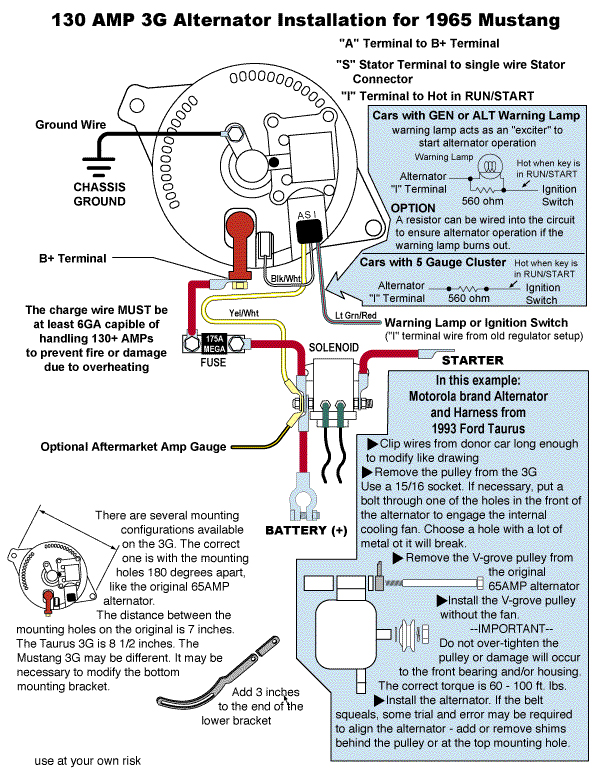
Just make sure you have the wires like below (fuse optional) and make sure you have a solid 12v to the I. If you are unsure, you can temporarily run a wire from the I to the battery + to see if that makes a difference. You can't leave it on the battery + because it will eventually run the battery down with the engine off, but for testing purposes you can.
Thread Starter
|
New User
Joined: Sep 2020
Posts: 2
Likes: 0
And this is why I discourage 3G swaps unless you are running high draw items.
You are going to have to wire trace the Alt to see how it was wired in. Unfortunately, you have no option but to do this as you can not diagnose anything until you verify the wiring install.
You are going to have to wire trace the Alt to see how it was wired in. Unfortunately, you have no option but to do this as you can not diagnose anything until you verify the wiring install.
Against my better judgment...
Before doing anything else, make sure the battery is fully charged. This is from Electrical Troubleshooting 101. Do NOT rely on a jump start nor the alternator, even if it seems to have been working at any given moment. Don't use a trickle charger, either. You'll want an automatic charger with at least a ten amp output. This is a VERY important prerequisite for any electrical troubleshooting, so please don't skip this step.
Does the 3G have an internal regulator? I think so, but am not sure. Please post the wiring diagram you used to redo all the wiring.
In the meantime, please run a voltage drop test between the alternator and battery. This tests the output and ground path under load:
1) Run the engine at approximately 2000 RPM. Turn on the high brand and heater fan to make the alternator work hard.
2) Select a scale around 2 VDC on your meter. Connect the red lead to the big insulated output terminal on the alternator. (Safer to connect before starting the engine) Connect the black meter lead to the battery's (+) post. That's not a typo, black lead on positive post. Put the lead directly on the battery post, not the cable terminal. Ignore any reading with the engine off. At 2000 RPM, with the electrical system loaded, you should see less than 0.5 VDC. Any more than that indicates an unwanted restriction in the wiring. This tests the positive leg of the circuit.
3) Move the meter leads to test the ground path. Put the black lead on the alternator case. Put the red lead directly on the battery's (-) post. Once again, not a typo. Red lead on the negative post. Ignore any reading with the engine off. At 2000 RPM, with the electrical system loaded, you should see less than 0.5 VDC. Any more than that indicates an unwanted restriction in the wiring. This tests the negative leg of the circuit.
Before doing anything else, make sure the battery is fully charged. This is from Electrical Troubleshooting 101. Do NOT rely on a jump start nor the alternator, even if it seems to have been working at any given moment. Don't use a trickle charger, either. You'll want an automatic charger with at least a ten amp output. This is a VERY important prerequisite for any electrical troubleshooting, so please don't skip this step.
Does the 3G have an internal regulator? I think so, but am not sure. Please post the wiring diagram you used to redo all the wiring.
In the meantime, please run a voltage drop test between the alternator and battery. This tests the output and ground path under load:
1) Run the engine at approximately 2000 RPM. Turn on the high brand and heater fan to make the alternator work hard.
2) Select a scale around 2 VDC on your meter. Connect the red lead to the big insulated output terminal on the alternator. (Safer to connect before starting the engine) Connect the black meter lead to the battery's (+) post. That's not a typo, black lead on positive post. Put the lead directly on the battery post, not the cable terminal. Ignore any reading with the engine off. At 2000 RPM, with the electrical system loaded, you should see less than 0.5 VDC. Any more than that indicates an unwanted restriction in the wiring. This tests the positive leg of the circuit.
3) Move the meter leads to test the ground path. Put the black lead on the alternator case. Put the red lead directly on the battery's (-) post. Once again, not a typo. Red lead on the negative post. Ignore any reading with the engine off. At 2000 RPM, with the electrical system loaded, you should see less than 0.5 VDC. Any more than that indicates an unwanted restriction in the wiring. This tests the negative leg of the circuit.
All 3G's have a internal alternator. Here is a diagram. Are you sure you have 12v on the wire going to the I terminal? It sounds like you don't. I would check this when it craps out and is only putting out 12v. Leave the engine running and check it. Be careful, don't get caught up in the fan.
Just make sure you have the wires like below (fuse optional) and make sure you have a solid 12v to the I. If you are unsure, you can temporarily run a wire from the I to the battery + to see if that makes a difference. You can't leave it on the battery + because it will eventually run the battery down with the engine off, but for testing purposes you can.
Just make sure you have the wires like below (fuse optional) and make sure you have a solid 12v to the I. If you are unsure, you can temporarily run a wire from the I to the battery + to see if that makes a difference. You can't leave it on the battery + because it will eventually run the battery down with the engine off, but for testing purposes you can.
Moderator
Joined: Jan 2001
Posts: 56,992
Likes: 2,741
From: Virginia
When you get a 12v reading with the engine running, rev it up a little and see if the voltage comes up. If it does, the alternator may indeed be working, and then next thing I would check is if you have a drain in the system. You can turn the truck off, take the negative battery cable off and lay it on a rag, and then clip a testlight to the terminal on the rag, and then touch the probe to the bare negative terminal of the battery, and if the testlight lights up, you have a drain on the battery. Make sure everything is off and the door is closed to turn off the domelight or it will foul your test.
Trending Topics
Lead Driver
Joined: Nov 2013
Posts: 7,178
Likes: 1,174
To recap:
All seemed good but the previous battery succumbed to old age. You replaced it and once again you had a grooviness overload for a while. But then your truck suffered a random and purely mechanical fault, the breaking of the alternator belt. With the charging system not working, the battery ran WAY down and left you stranded. And that's when the problem started in earnest.
Deep cycle batteries are designed to be run way down and recharged time after time, with no ill effect. A starting battery? Not so much. Even the best quality starting battery will be hurting if run down too many times. I forget all the details, but it has to do with the plate design.
What brand did you install? Mind if I ask how much did it cost? Battery price is a good indicator of quality. I suppose somebody could overcharge for a poor quality battery. But nobody in his right mind would sell a costly premium battery for $69.
So my theory is your present battery was damaged internally that first time it was run way down. The damage may have happened with the jump start and/or subsequent high rate of charge once you replaced the drive belt. An alternator does a passable job of keeping a charged battery topped off. But for bringing a dead battery back to life? It's going to crank out way too many amps. The high output of a 3G is only going to make it worse. This leads to warped plates and broken internal connections.
In your history, I've noticed all voltage checks seem good when everything is cold. You only have the low voltage when things are warmed up. This could be a warped plate that only acts up when hot, either aggravating a damaged internal connection or touching an adjacent plate and killing a cell.
Given the chance to spend your time and money, I'd try another battery. For testing, can you rob a known-good battery from another vehicle? (A vehicle belonging to you, in case I have to be specific) Or get this suspect battery good and warm, and have it load tested before it cools off. Normally I recommend a capacitance style tester for batteries, but in this case you want the old fashioned resistive type (aka toaster) to really put a load on it.
And if you can confirm the battery is indeed bad, be sure to stay away from the $69 house specials.
FTE Stories
Ford Trucks for Ford Truck Enthusiasts

3 Best / 3 Worst Parts of Modern Ford Ownership
Brett Foote
10 Amazing Upgrades That Solve Common Ford Truck Owner Headaches
Pouria Savadkouei
Every 2026 Ford Engine Explained
Brett Foote
10 Ugly Ford Trucks That We Still Kinda Love
Joe Kucinski
10 Things Every Truck Owner NEEDS (2026 Edition)
Michael S. Palmer
Rezvani's Latest Post-Apocalyptic Monster Is a Ford F-150 Raptor Underneath
Verdad Gallardo
Top 10 Most Expensive Ford Trucks Ever Sold on Bring a Trailer
Joe Kucinski
2027 Ford Super Duty Buyer's Guide (Every Model, Engine, & Package)
Brett Foote
Top 10 Ford Truck Tragedies
Joe Kucinski
Thread
Thread Starter
Forum
Replies
Last Post
lign
Excursion - King of SUVs
29
Oct 19, 2013 01:37 PM
dyingtolive
1980 - 1986 Bullnose F100, F150 & Larger F-Series Trucks
8
Aug 1, 2012 07:37 AM
Smalltar
1980 - 1986 Bullnose F100, F150 & Larger F-Series Trucks
8
May 29, 2007 05:44 PM
Grashopr
Electrical Systems/Wiring
8
Apr 16, 2004 08:29 PM