When you click on links to various merchants on this site and make a purchase, this can result in this site earning a commission. Affiliate programs and affiliations include, but are not limited to, the eBay Partner Network.
Thanks for putting so much work into setting this up for everyone, can't wait to try this out. I was wondering if you could clarify what some of this data is stating. For instance I'm interested in comparing the engine speed in rpm's to the VSS in MPH. Is there a way to convert one to the other? I'm interested in detecting trans/ convertor slippage. When I look at the graphs above, specifically those two, I'm not sure if I'd be able to know if they are working correctly or not. Not sure if I'm even making any sense with my question to be honest, lol.
I will see if I can answer your questions, but I am not sure I understand them 100%. If not, please let me know and I will try again, or someone else will come along and do a better job than I have.
VSS = Vehicle Speed Sensor which is on top of the rear differential and how the PCM registers MPH in order to display it in the instrument cluster.
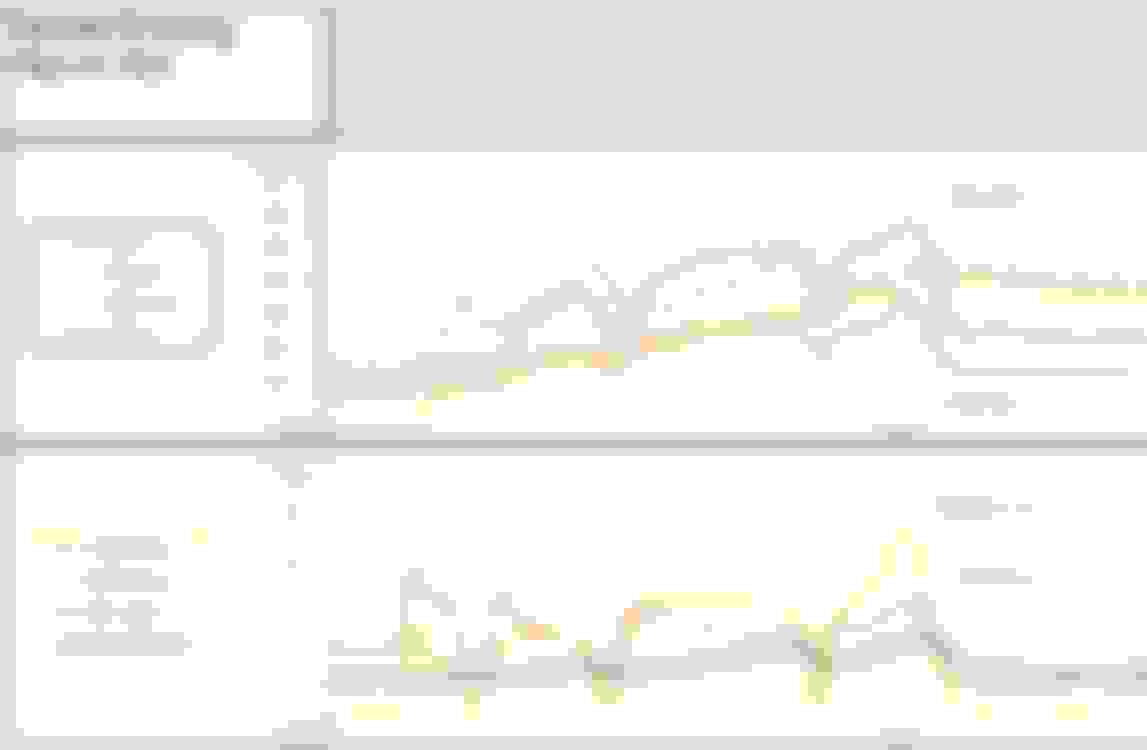
You simply copy and paste your data log into the PID Charting Tool and the tool does the rest. It will automatically assign each PID to the relevant sections.
I own a ZF6 and am not up on the 4R100 TC slip values, but coincidentally (@BWST ) Jeff, who built this PID Charting Tool is deep in the weeds regarding this very subject right now. He may have some time shortly in order to provide some advice on how to attain the values and trace lines you are looking for.
Hey @ajjw0828 , the PID charting tool will show you VSS and RPM on chart 1, so you can compare them, but for converter slip, you can view a dedicated PID for that parameter. It will also be graphed in the PID charting tool, on chart 4, if you set up FORScan to grab it. The PID is called TC_SLIPACT(1/min). I believe it compares input shaft speed to output shaft speed and records the RPM difference. You can also add TCC% PID to your log, and see when the PCM is commanding the TC to lock or unlock.
Recommend following the how-to thread below and set up your copy of FORScan to capture a log of your particular driving situation. Save the log as a CSV file and paste the data in the charting tool - let's take a look!
Formatting information provided by FTE'r @uglypitbull . Thank you for sharing this with the community.
Originally Posted by uglypitbull
Also....for those of you who screw up (like I did) and save the files as .fls and not .csv there is hope. You just open the .fls file in Forscan and resave it as .csv text tab delimited. I didn't see anything on that on the Forscan forums or here (but I could have missed it) so I thought I would share that.
@Wes444 per Sous request, I've charted one of the two files he sent me from your recent T4 testing. I've added a boost trace by estimating your BARO at 14.5psi, and subtracting that from MAP.
EBP and MAP track together and on top of each other. Boost would seem typical for this unloaded run if injectors were split shots, where MFDES peaked at 71% just briefly, with normal ICP (2800), IPR (46%) and FUELPW (2.9ms) numbers. Since you have 160/0 single shots, 2.9ms FUELPW should be quite a bit, so boost does seem low, but I'm not experienced enough to know for sure.
The May 17th file does not appear to be working the truck as hard - no issues jump out to me on that file. Can you describe the specific issues you are having?
Blowing smoke/very dense haze on normal acceleration since going to T4. Lower peak boost, increase in rpm to begin to build boost compared to MST. When hotter tunes that used to run crystal clean with insane power increses were tried it stopped traffic behind me on the 3 lane highway with the dense smoke clouds and very little increase in power if at all. Used to hit 32# of boost, now the max I've seen is 25#
Boost leak and exhaust drive pressure leak tests performed and were addressed. Air filter changed, chip changed, multiple tunes tried. Can only get rid of the smoke/haze when pulling out lots of fuel on Heavy Tow and Strenuous Tow tunes
Blowing smoke/very dense haze on normal acceleration since going to T4. Lower peak boost, increase in rpm to begin to build boost compared to MST. When hotter tunes that used to run crystal clean with insane power increses were tried it stopped traffic behind me on the 3 lane highway with the dense smoke clouds and very little increase in power if at all. Used to hit 32# of boost, now the max I've seen is 25#
Boost leak and exhaust drive pressure leak tests performed and were addressed. Air filter changed, chip changed, multiple tunes tried. Can only get rid of the smoke/haze when pulling out lots of fuel on Heavy Tow and Strenuous Tow tunes
What T4 have you got? Sorry if this has been mentioned before. I missed it.
PVC cap @ turbo at 25# for boost side, idle showed a leak at uppipe to manifold initially till I got it sealed up. I've sprayed a lot of Dawn all over the place. Valley and harness is quite clean at this point
I don't use towels, I stretch a rubber glove over the plenum when spider is off. I place the cac tunes on the bench while they aren't in place.
I've replaced the air filter, tried a Hydra with multiple tunes from different tuners, changed oil, done pressure tests many times, pulled the turbo and changed the scroll gasket. Only thing that seemed to clean it up was the oil change to an extent, and super heavy tow tunes that pull so much fuel out that the truck is more anemic than it ever was in stock form.
This Hennessey Takes the Expedition Tremor's Off-Roading Capability to the Next Level
Slideshow: The VelociRaptor Expedition gains a lift, upgraded suspension, Brembo brakes, and trail-ready equipment while retaining the stock 440-horsepower EcoBoost V6.
Rezvani's Latest Post-Apocalyptic Monster Is a Ford F-150 Raptor Underneath
Slideshow: Called the Fortress, the 850-horsepower pickup combines Raptor underpinnings with military-inspired features, survival equipment, and a starting price of $285,000.