



axle wt.

Thread Starter
|
Freshman User
Joined: Feb 2020
Posts: 29
Likes: 0
 axle wt.
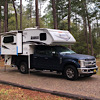
i'm stumped. i had a 2010 ford f-350 supercab. the weight for the front axle was 4400 and the back 7000. i haul a 2017 northern lite 811qse and i weighed it at a cat scale. both axle weights were under. but with a gvwr at 10600 i was at maximum for truck and camper. i thought a newer model with a gvwr of 11300 would do it. so i bought a 2014 ford f-350 crew cab. i loaded the camper and weighed the truck and camper at a cat scale. the front axle is good for 6000 and my weight is 4430. but the back axle is good for 7000 and i'm at 7380. i didnt load anything more in the camper, in fact i dont have the fresh water tank completely full. not understanding why on the old truck the axle weights were good but on the newer truck the back axle is over. i am also now without filling up the water over gvwr by 400 lbs. if i went from 10600 to 11300 for graa wt and didn't add anything from the last truck, how could i be that much over? i can see a few hundred pounds for the difference in the supercab to the crew cab but the rest is just not right. any ideas? i know you cant change the gvwr but the only thing i see to try is to get tires rated more than 3750 in size 275/65/20. maybe to wedge the *** end of the camper in the bed to see if it throws the weight forward.
Logistics Pro


Joined: Apr 2000
Posts: 4,334
Likes: 306
From: Mills River
Tell us more about your 2010 F350 SuperCab’s configuration: which engine, 4x4 or 4x2, which bed, and what size wheels and tires from the factory?
We need the same details for your 2015 F350 CrewCab.
More later,
Mim / crewzer
We need the same details for your 2015 F350 CrewCab.
More later,
Mim / crewzer
Logistics Pro
Joined: Apr 2000
Posts: 4,334
Likes: 306
From: Mills River
OK; my analysis will be posted in bits and pieces as I work it into my day’s regular activities.
Reference material:
2010 Super Duty Body Builders Layout Book
2014 Super Duty Specs
2014 Super Duty Sales Brochure
I suspect the 2010 is not a 6.2, which, IIRC, was introduced for MY2011.
Based on the description and specs provided, the 2010 F350 appears to be an SRW SuperCab Shortbed 4x4 5.4 manual with 18” wheels and tires. Here are key base trim weight specs:
GVWR: 10600 lbs.
GAWR front: 4400 - 4800
GAWR rear: 7000
Max payload: 4090 (base trim, no options)
Curb weight: 6437
(full fuel tank, no driver or passengers, no accessories, cargo, or options)
CW front: 3687
CW back: 2750
The 2014 F350 appears to be a CrewCab shortbed 4x4 6.2 auto with 20” wheels and tires, and probably the optional snowplow package:
GVWR: 11300 lbs.
GAWR front: 4800 (max); 5600 with snowplow package
GAWR rear: 7000
Max payload: 4440 (base trim, no options)
Curb weight: 6955
(full fuel tank, no driver or passengers, no accessories, cargo, or options)
CW front: 3980
CW back: 2975
Reference material:
2010 Super Duty Body Builders Layout Book
2014 Super Duty Specs
2014 Super Duty Sales Brochure
I suspect the 2010 is not a 6.2, which, IIRC, was introduced for MY2011.
Based on the description and specs provided, the 2010 F350 appears to be an SRW SuperCab Shortbed 4x4 5.4 manual with 18” wheels and tires. Here are key base trim weight specs:
GVWR: 10600 lbs.
GAWR front: 4400 - 4800
GAWR rear: 7000
Max payload: 4090 (base trim, no options)
Curb weight: 6437
(full fuel tank, no driver or passengers, no accessories, cargo, or options)
CW front: 3687
CW back: 2750
The 2014 F350 appears to be a CrewCab shortbed 4x4 6.2 auto with 20” wheels and tires, and probably the optional snowplow package:
GVWR: 11300 lbs.
GAWR front: 4800 (max); 5600 with snowplow package
GAWR rear: 7000
Max payload: 4440 (base trim, no options)
Curb weight: 6955
(full fuel tank, no driver or passengers, no accessories, cargo, or options)
CW front: 3980
CW back: 2975
Thread Starter
|
Freshman User
Joined: Feb 2020
Posts: 29
Likes: 0
Trending Topics
Logistics Pro
Joined: Apr 2000
Posts: 4,334
Likes: 306
From: Mills River

6740 sounds about right for the 2010 once you figure in the weight of the XLT trim items and other options (such as the side running boards).
Using just the base numbers, the 2014’s rear axle curb weight is 275 lbs. higher than the 2010. The Platinum trim weights more than the XLT, and they may be other options, so let’s allow for another 100 lbs. on the rear axle.
We’ve now reasonably accounted for 375 lbs. higher rear axle weight, which is pretty darn close to the 380 lbs. for which you are looking.
Bigger tires won’t increase your rear axle load capacity, as it’s probably limited by wheel load specs and/or rear spring specs.
Check to see if your 2014 has a rear stabilizer bar; many trucks with factory 20” wheels do not. A stabilizer bar (which will add more weight to the rear axle) is highly recommended when carrying a truck camper.
Pushing your camper a bit farther forward in the bed may be a good idea, as it will shift some load from the rear axle to the front.
HTH,
Jim / crewzer
Using just the base numbers, the 2014’s rear axle curb weight is 275 lbs. higher than the 2010. The Platinum trim weights more than the XLT, and they may be other options, so let’s allow for another 100 lbs. on the rear axle.
We’ve now reasonably accounted for 375 lbs. higher rear axle weight, which is pretty darn close to the 380 lbs. for which you are looking.
Bigger tires won’t increase your rear axle load capacity, as it’s probably limited by wheel load specs and/or rear spring specs.
Check to see if your 2014 has a rear stabilizer bar; many trucks with factory 20” wheels do not. A stabilizer bar (which will add more weight to the rear axle) is highly recommended when carrying a truck camper.
Pushing your camper a bit farther forward in the bed may be a good idea, as it will shift some load from the rear axle to the front.
HTH,
Jim / crewzer
FTE Stories
Ford Trucks for Ford Truck Enthusiasts

3 Best / 3 Worst Parts of Modern Ford Ownership
Brett Foote
10 Amazing Upgrades That Solve Common Ford Truck Owner Headaches
Pouria Savadkouei
Every 2026 Ford Engine Explained
Brett Foote
10 Ugly Ford Trucks That We Still Kinda Love
Joe Kucinski
10 Things Every Truck Owner NEEDS (2026 Edition)
Michael S. Palmer
Rezvani's Latest Post-Apocalyptic Monster Is a Ford F-150 Raptor Underneath
Verdad Gallardo
Top 10 Most Expensive Ford Trucks Ever Sold on Bring a Trailer
Joe Kucinski
2027 Ford Super Duty Buyer's Guide (Every Model, Engine, & Package)
Brett Foote
Top 10 Ford Truck Tragedies
Joe Kucinski
Logistics Pro
Joined: Apr 2000
Posts: 4,334
Likes: 306
From: Mills River
Following up...
We carry a 2019 Lance 855s on our 2019 F350 CCSB 6.2 4x2, and weight is a challenge. Here’s a list of things we’ve done to improve our weight-carrying-and-handling capability and keep our “fully-loaded-headin’-out-on-a-trip” weight down to about 11K lbs.
Our truck was special ordered to safely, reliably, and comfortably carry a medium-size truck camper. The build included Lariat Ultimate trim, The Chrome Package, lots of cameras, a 240A alternator, and the optional Camper Package, which added stiffer front springs and a rear stabilizer bar, but we passed on the heavy double moon roof.
We also passed on 4x4, but did order the optional 4.30 locking axle. 4x4 with larger tires would have increased the GVWR and payload due to the larger tires. I added the larger tires last year. I also installed Firestone air springs to help level the truck.
To reduce truck weight, I remove several items before loading the camper: bed mat (50 lbs.!), bed cleats, rear seat headrests, floor mat, and under-seat storage box. Of course, the tailgate with integrated step and grab bar come off.
To attach the camper to the truck, I installed Torklift tiedowns and turnbuckles. The rear tiedowns attach to the hitch, so that heavy item has to stay. However, I may look at removing the truck’s rear bumper when carrying the camper. I may also look at moving the spare tire to our crewcab’s back seat floor area.
To reduce camper weight, I removed the propane generator, the extra propane tank (38 lbs.!) and the drop-down bunk. The cabover queen mattress was replaced with a lighter and more comfortable product from Tuft & Needle / Amazon. We replaced our cast iron Dutch oven with an aluminum model. Our two zero-gravity chairs are stored in sleeves and place on the cabover bed for travel. I did add 2x 100 W solar modules on the rooftop luggage rack.
I replaced the camper’s two long front bumpers with shorter types that allowed me to locate the camper perhaps 1-1/2” further forward in the truck bed. We generally travel with little or no fresh water. If we need it, we fill the FW tank and water heater at/near our destination. We dump the GW and BW when we leave a site.
For a spare fridge, we carry an an electric cooler instead of an ice chest; it’s lighter when full.
Finally, we remove most personal items, tools, and supplies from the camper when we return home. Items that we actually use are stored to be loaded for the next trip. Things that we don’t use are used elsewhere at home, given away, or discarded. I’m getting better about my tools- and spares kit for the truck and camper.
In sum, we find that we can carry virtually everything that we want or need, and we can keep our weights in check. However, it takes a fair amount of effort and attention to detail.
HTH,
Jim / crewzer
We carry a 2019 Lance 855s on our 2019 F350 CCSB 6.2 4x2, and weight is a challenge. Here’s a list of things we’ve done to improve our weight-carrying-and-handling capability and keep our “fully-loaded-headin’-out-on-a-trip” weight down to about 11K lbs.
Our truck was special ordered to safely, reliably, and comfortably carry a medium-size truck camper. The build included Lariat Ultimate trim, The Chrome Package, lots of cameras, a 240A alternator, and the optional Camper Package, which added stiffer front springs and a rear stabilizer bar, but we passed on the heavy double moon roof.
We also passed on 4x4, but did order the optional 4.30 locking axle. 4x4 with larger tires would have increased the GVWR and payload due to the larger tires. I added the larger tires last year. I also installed Firestone air springs to help level the truck.
To reduce truck weight, I remove several items before loading the camper: bed mat (50 lbs.!), bed cleats, rear seat headrests, floor mat, and under-seat storage box. Of course, the tailgate with integrated step and grab bar come off.
To attach the camper to the truck, I installed Torklift tiedowns and turnbuckles. The rear tiedowns attach to the hitch, so that heavy item has to stay. However, I may look at removing the truck’s rear bumper when carrying the camper. I may also look at moving the spare tire to our crewcab’s back seat floor area.
To reduce camper weight, I removed the propane generator, the extra propane tank (38 lbs.!) and the drop-down bunk. The cabover queen mattress was replaced with a lighter and more comfortable product from Tuft & Needle / Amazon. We replaced our cast iron Dutch oven with an aluminum model. Our two zero-gravity chairs are stored in sleeves and place on the cabover bed for travel. I did add 2x 100 W solar modules on the rooftop luggage rack.
I replaced the camper’s two long front bumpers with shorter types that allowed me to locate the camper perhaps 1-1/2” further forward in the truck bed. We generally travel with little or no fresh water. If we need it, we fill the FW tank and water heater at/near our destination. We dump the GW and BW when we leave a site.
For a spare fridge, we carry an an electric cooler instead of an ice chest; it’s lighter when full.
Finally, we remove most personal items, tools, and supplies from the camper when we return home. Items that we actually use are stored to be loaded for the next trip. Things that we don’t use are used elsewhere at home, given away, or discarded. I’m getting better about my tools- and spares kit for the truck and camper.
In sum, we find that we can carry virtually everything that we want or need, and we can keep our weights in check. However, it takes a fair amount of effort and attention to detail.
HTH,
Jim / crewzer

5th Wheeling
Joined: Feb 2020
Posts: 28
Likes: 4
From: Spring
When I was in college in the mid 1970's my job was hauling bundles of newspapers (Houston Chronicle) from downtown Houston to Pasadena TX every day-7 days a week. The size of the paper varied every day but Thursday and Sunday were the heaviest days, I recall putting over a hundred bundles of papers in the back of my F250, they weighed between 30 and 50 pounds each, it was 1800-2000 papers per day. The truck squatted but i never had anyone flash their lights at me at night. My point is that IMO you can put anything that will fit in the bed of an F250 and drive away safely (except maybe car batteries LOL). Seriously these trucks are very stout, that's why they ride so choppy when empty. As a side note, the other 3/4 ton trucks that I saw loading papers were 75% Ford, 25% Chevy/GMC, and not a single Dodge ever. I also drove Ford E350 van during this time, I recall putting bundles of papers in the front passenger seat because they wouldn't all fit in the back.

Thread
Thread Starter
Forum
Replies
Last Post
LowlanderG
1987 - 1996 F150 & Larger F-Series Trucks
6
Jul 30, 2020 12:19 PM
preppypyro
1999 - 2016 Super Duty
24
Jun 29, 2007 10:18 PM