


72 F250 360 Help

Thread Starter
|
Cross-Country
Joined: Apr 2020
Posts: 68
Likes: 21
72 F250 360 Help
Hello gents,
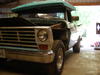
I am in dire need of some assistance. I recently inherited a 1972 Ford F250, manual, 2wd with a 360. I have gone through the engine and replaced all rubber hoses, belt, fluids, fuel filter, spark plugs, added a Pertronix unit in the distributor, and new spark plug wires. I am running into a fueling issue with my the reman carb that was just put on the truck about a year ago. It is a factory 2100 carb. I have pulled it completely apart twice now and cleaned it in its entirety and made sure it is set to factory specs. As a bit of a forewarning I am somewhat new to carbs however I am quick to learn and have studied more info on this carb than I care to admit. The truck will start and idle perfectly without flaw. Where I run into an issue is once it is warmed up to operating temp and I attempt to step on the throttle it will sound like it is inhaling a ton of air and will choke. I have tried to mess around with the two idle circuit screws on the front bottom of the carb to no avail. When I turn them all the way in the truck will want to die so I know they are working as they should. I have a vacuum gauge hooked up to pure manifold vacuum and the reading is steadily in the green. What could possibly be causing this issue? I am completely stumped and have been messing with this issue for many weeks.
I am in dire need of some assistance. I recently inherited a 1972 Ford F250, manual, 2wd with a 360. I have gone through the engine and replaced all rubber hoses, belt, fluids, fuel filter, spark plugs, added a Pertronix unit in the distributor, and new spark plug wires. I am running into a fueling issue with my the reman carb that was just put on the truck about a year ago. It is a factory 2100 carb. I have pulled it completely apart twice now and cleaned it in its entirety and made sure it is set to factory specs. As a bit of a forewarning I am somewhat new to carbs however I am quick to learn and have studied more info on this carb than I care to admit. The truck will start and idle perfectly without flaw. Where I run into an issue is once it is warmed up to operating temp and I attempt to step on the throttle it will sound like it is inhaling a ton of air and will choke. I have tried to mess around with the two idle circuit screws on the front bottom of the carb to no avail. When I turn them all the way in the truck will want to die so I know they are working as they should. I have a vacuum gauge hooked up to pure manifold vacuum and the reading is steadily in the green. What could possibly be causing this issue? I am completely stumped and have been messing with this issue for many weeks.

Super Moderator


Joined: Apr 2004
Posts: 34,495
Likes: 2,809

Are you getting a good squirt of gas from the accelerator pump when you move the throttle?
Any vacuum leaks, especially the carb base, and any spacer gaskets?
What about timing? About 10 degrees seems to work well for these. (Factory spec probably 6 degrees)
Set your idle with timing and the screws, then look elsewhere for the stumble.
How is your PCV connected? Got the right valve, in good condtion?
Any vacuum leaks, especially the carb base, and any spacer gaskets?
What about timing? About 10 degrees seems to work well for these. (Factory spec probably 6 degrees)
Set your idle with timing and the screws, then look elsewhere for the stumble.
How is your PCV connected? Got the right valve, in good condtion?
Thread Starter
|
Cross-Country
Joined: Apr 2020
Posts: 68
Likes: 21
Are you getting a good squirt of gas from the accelerator pump when you move the throttle?
Any vacuum leaks, especially the carb base, and any spacer gaskets?
What about timing? About 10 degrees seems to work well for these. (Factory spec probably 6 degrees)
Set your idle with timing and the screws, then look elsewhere for the stumble.
How is your PCV connected? Got the right valve, in good condtion?
Any vacuum leaks, especially the carb base, and any spacer gaskets?
What about timing? About 10 degrees seems to work well for these. (Factory spec probably 6 degrees)
Set your idle with timing and the screws, then look elsewhere for the stumble.
How is your PCV connected? Got the right valve, in good condtion?
One other thing to note is when I had the carb apart again this past weekend I did notice that the jets say "50" on them but I was under the impression that the 2100 needed jets that were .053. Could it be possible that the vendor installed too small of jets? When I initially started working on the truck weeks ago I did note that I had the idle screws turned almost 3.5 to 4 full turns out and it was still not running rich and basically acted the same as it does now with them out about 2.75 turns.
Thread Starter
|
Cross-Country
Joined: Apr 2020
Posts: 68
Likes: 21
I am using the outermost hole (the one at the end of the arm). I have also tried moving it to the other hole closer to the accelerator pump and have the same issues. Which hole is suggested for use during the summer? Or do you ever have to adjust it? Sorry for all the seemingly dense questions.
Thread Starter
|
Cross-Country
Joined: Apr 2020
Posts: 68
Likes: 21
Trending Topics
Tuned

Joined: May 2017
Posts: 414
Likes: 40
From: C-town,MD
The jets have nothing to do with off-idle fueling. They control how much fuel you get while cruising. Your accelerator pump controls fuel enrichment. So are either not getting enough fuel, or you have a vacuum leak. If when you step on step on the gas while cruising and it does this, it could be a bad power valve.
FTE Stories
Ford Trucks for Ford Truck Enthusiasts

Rezvani's Latest Post-Apocalytic Monster Is a Ford F-150 Raptor Underneath
Verdad Gallardo
Top 10 Most Expensive Ford Trucks Ever Sold on Bring a Trailer
Joe Kucinski
2027 Ford Super Duty Buyer's Guide (Every Model, Engine, & Package)
Brett Foote
Top 10 Ford Truck Tragedies
Joe Kucinski
AEV FXL Super Duty - the Super Duty Raptor Ford Doesn't Make
Brett Foote
Lobo Vs Lobo: Proof the F-150 Lobo Should Be Even Lower!
Michael S. Palmer
Ford's 2001 Explorer Sportsman Concept Looks For a New Home
Verdad Gallardo
10 Best Ford Truck Engines We Miss the Most!
Joe Kucinski
2026 Shelby F-150 Off-Road: Better Than a Raptor R?
Brett Foote
Post Fiend
Joined: Apr 2002
Posts: 19,311
Likes: 97
From: Waterloo, Iowa
The jet size is what determines the steady flat ground cruise air fuel ratio above 35 or 45 mph. The jets don't factor for idle. You can install larger jets to remedy an off idle bog, and jet size does affect the wide open throttle AFR, but that is exactly the wrong way to go about tuning, will run pig rich at cruise and waste amazing amounts of fuel. Once the correct jetting is found (do this first) it's always a matter of tuning the other circuits - transition, power valve, accelerator "pump shot" etc.
Thread Starter
|
Cross-Country
Joined: Apr 2020
Posts: 68
Likes: 21
Where or who did you buy the carb from? If they bench flowed it the jets installed should be close to perfect. Very misunderstood topic. Keep in mind a lot of the info out there is either by or for drag racing. Nothing wrong with that, but normal driving on the street is different.
The jet size is what determines the steady flat ground cruise air fuel ratio above 35 or 45 mph. The jets don't factor for idle. You can install larger jets to remedy an off idle bog, and jet size does affect the wide open throttle AFR, but that is exactly the wrong way to go about tuning, will run pig rich at cruise and waste amazing amounts of fuel. Once the correct jetting is found (do this first) it's always a matter of tuning the other circuits - transition, power valve, accelerator "pump shot" etc.
The jet size is what determines the steady flat ground cruise air fuel ratio above 35 or 45 mph. The jets don't factor for idle. You can install larger jets to remedy an off idle bog, and jet size does affect the wide open throttle AFR, but that is exactly the wrong way to go about tuning, will run pig rich at cruise and waste amazing amounts of fuel. Once the correct jetting is found (do this first) it's always a matter of tuning the other circuits - transition, power valve, accelerator "pump shot" etc.
Thread Starter
|
Cross-Country
Joined: Apr 2020
Posts: 68
Likes: 21
I think I may have found a potential problem. I was looking through a few schematics this morning and think I have the spring in the accelerator pump backwards. It is smaller at one end than the other and I have been installing it with the small end pressing on the little red plug on the carb and the larger end butted up to the accelerator pump diaphragm. In a couple rebuild videos and some exploded diagrams I have found it shows the larger end of the spring has to touch the carb and the smaller end is in contact with the diaphragm.
Post Fiend
Joined: Apr 2002
Posts: 19,311
Likes: 97
From: Waterloo, Iowa
Tuned
Joined: May 2017
Posts: 414
Likes: 40
From: C-town,MD
I think I may have found a potential problem. I was looking through a few schematics this morning and think I have the spring in the accelerator pump backwards. It is smaller at one end than the other and I have been installing it with the small end pressing on the little red plug on the carb and the larger end butted up to the accelerator pump diaphragm. In a couple rebuild videos and some exploded diagrams I have found it shows the larger end of the spring has to touch the carb and the smaller end is in contact with the diaphragm.
Thread Starter
|
Cross-Country
Joined: Apr 2020
Posts: 68
Likes: 21

Thread
Thread Starter
Forum
Replies
Last Post
Donnalee
1967 - 1972 F-100 & Larger F-Series Trucks
11
Nov 16, 2016 06:19 PM
Canty
1973 - 1979 F-100 & Larger F-Series Trucks
2
Jun 10, 2012 06:28 PM
tl1965
1967 - 1972 F-100 & Larger F-Series Trucks
7
Jul 20, 2011 11:54 PM
supercabfreak
1973 - 1979 F-100 & Larger F-Series Trucks
6
Jan 12, 2011 09:17 PM