When you click on links to various merchants on this site and make a purchase, this can result in this site earning a commission. Affiliate programs and affiliations include, but are not limited to, the eBay Partner Network.
When the hazards are on, it fluctuates and is hard to read but the left (working) one spikes around 10-11v or so and the right one (not working) spikes only 5-6v. So it seems like it has power but its low voltage for some reason?
Eric,
The low voltage you recorded has me baffled. When checking an unloaded circuit with a voltmeter, it's very easy to get a misleading (but technically accurate) full voltage indication. However, you seem to have the opposite, low voltage on the side that isn't working.
I suppose I should explain why this seems so odd to me. Suppose you have a restriction somewhere in the circuit, such as only one strand intact in a multi-strand conductor. If you measure voltage downstream of that point, the voltmeter draws such a tiny amount of current, that trickle of electrons has no trouble passing through that single strand. In such a case, you have a seemingly normal indication of full voltage available. But install the bulb and power up the circuit, and that single strand seriously restricts the current flow. So unloaded you might see 12v, but only 5 under load.
Meanwhile, you're seeing 5v unloaded, which is opposite of what one might expect as explained above. That makes me thing something is drawing down the circuit elsewhere, and reducing the available power to the inop bulb. Just for giggles, try removing the bulb on the other side, and then rechecking the original side. See if that brings the voltage back up to normal. Maybe the bulb on the working side is drawing too much power, who knows.
Not sure what brand bulbs you're using, but my experience with no-name LED bulbs has been iffy. About 10% of them were bad right out of the box. Maybe another 10% failed within a few weeks.
Who uses a voltmeter when checking something like this?
I think this is the second or third post where someone was using a meter to check for lights not working and kind of had the same reading of low volts.
If checking for lights not working use a good old test light.
Volt meter for checking if the ALT is putting out the right volts.
Who uses a voltmeter when checking something like this?
I think this is the second or third post where someone was using a meter to check for lights not working and kind of had the same reading of low volts.
If checking for lights not working use a good old test light.
Volt meter for checking if the ALT is putting out the right volts.
Dave ----
Dave, I can only speak for myself and I should clarify, I dunno why I call it a Voltmeter when its technically a Multimeter but for me, the reason I use one is it is far more versatile than a test light, they only cost $9 (
Thinking back on it, I might have recorded that with the bulb out (the one not working) so that might have contributed to the low voltage. I haven't had time to get back to the truck yet, this week is looking super busy so it might be next weekend before I get some data. I am also very curious to check out the turn switch area on the steering column to see whats going on there as well.
Thanks to everyone for their input so far, this has been a great help. Hopefully I can get it figured out this weekend and actually drive my new (old) truck!
Volt or multi meter is the same in my book and it does have its place.
The ohm side when you need to check a wire from 1 end to the other.
Volt side if it is charging.
I had to use the ohm meter for a 24" hi flow fan I got at the land fill. It looked new just sat around for along time.
I think it did not work and sat in the back room till scraped. I found the plug was bad on the end but the wire was good.
$3 plug and I now have a working fan that goes for about $100
But for what you are doing my go to tool is a test light and you can get them for under $10 also.
Dave -----
Ok, so a small update. I still haven't hardly had any time to work on it yet, but my 2nd steering column showed up (yeah I wanted a tilt wheel ) so I thought I'd just test it out real quick to see if anything changed. Well, nope, same old thing. So.... I feel pretty confident in ruling out the wiring in the steering wheel, including the turn signal switch and such. I also bought some more LED flashers to try swapping those around and the one I tried is better IMO, it has a separate ground wire and actually makes the clicking noise (first one didn't, but by design) and the lights seemed brighter maybe, could just have been because it was dusk, but regardless the situation was the same. Right rear light will not flash.
Ugg, well, narrowing it down a little more at least.
Ok, problem solved. I checked every point from the steering column to the tail lights and the wiring was good, turns out the connectors like to corrode a bit. After checking the voltage at certain plugs it became obvious it had to be the connector itself. I cleaned the blade part of the connectors and suddenly a nice 12v connection all the way back. Now my electrical is good and its on to mechanical.... got a clutch acting funky...
Ok, problem solved. I checked every point from the steering column to the tail lights and the wiring was good, turns out the connectors like to corrode a bit. After checking the voltage at certain plugs it became obvious it had to be the connector itself. I cleaned the blade part of the connectors and suddenly a nice 12v connection all the way back. Now my electrical is good and its on to mechanical.... got a clutch acting funky...
Nothing fancy, just a little wire brush. They weren't super corroded, just looking at them I wouldn't have even thought there was a problem, must have been just a thin layer that caused some resistance. And, like mentioned before, if I were using incandescent bulbs, the tail light probably would have worked, just wouldn't have been as bright. The LEDs needed a solid 12v.
Rezvani's Latest Post-Apocalyptic Monster Is a Ford F-150 Raptor Underneath
Slideshow: Called the Fortress, the 850-horsepower pickup combines Raptor underpinnings with military-inspired features, survival equipment, and a starting price of $285,000.


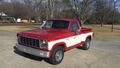



 ) so I thought I'd just test it out real quick to see if anything changed. Well, nope, same old thing. So.... I feel pretty confident in ruling out the wiring in the steering wheel, including the turn signal switch and such. I also bought some more LED flashers to try swapping those around and the one I tried is better IMO, it has a separate ground wire and actually makes the clicking noise (first one didn't, but by design) and the lights seemed brighter maybe, could just have been because it was dusk, but regardless the situation was the same. Right rear light will not flash.


