When you click on links to various merchants on this site and make a purchase, this can result in this site earning a commission. Affiliate programs and affiliations include, but are not limited to, the eBay Partner Network.
I wouldn't say I'm an "after market" guy, just never ended up with steel lug nuts when I've gone to get a replacement that fit. I've seen several vehicles missing one or more studs, sometimes on the same wheel, but I've never owned one. And the only torque wrench I own is I think capped at 80, and that's in inch pounds if I remember right. Now I'm careful when using a large four way make out of a pretty springy steel. Seen lugs snap under them, although being wielded by carefree guys larger in *** than I.
I am curious about your hand tightening, then rushing home to torque. Were they at or above torque when you checked them, or were they quite a bit under?
It was quite a while ago when I last used the lug wrench on a flat change. I don't quite recall the condition but seem to remember that some were good and some required a bit more.
Another good thing about torquing is that all your lugs are the same tension, the clamping forces are not out of balance. Maybe it's me but it just seems like a smoother tighter roll.
Have you ever had a broken stud? I've never needed to use a penetrating oil on studs/lugs. You in the rust belt?
Personally no I haven't broken any...but have witnessed some carnage effected by others on their jalopies. I'm on the edge of the rust belt ...mostly the rain belt.
i have 5 lugs, and yeah my 4 speed granny low transmission with an straight 6 is definitely not that fastest truck around... it will crawl through anything I want it too though
Sounds like a nice truck. Only need 100 ft-lbs of torque so with 130 pounds you can get there.
Took me a minute to make my mind up on that. I'm going to have to say that was a torsion failure. Really difficult to see in the photo. Would be nice to see the back side as well.
Found this picture to illustrate. It's at the top because my phone won't cooperate.
At first glance it looks almost exactly like the photo of tension failure in a brittle material. But look at the top one thread over. The break wraps helically? around the stud. Unless it's not a hardened stud, then I'll have to study it more. Would help to see the cross-section of the break.
Took me a minute to make my mind up on that. I'm going to have to say that was a torsion failure. Really difficult to see in the photo. Would be nice to see the back side as well.
Found this picture to illustrate. It's at the top because my phone won't cooperate.
At first glance it looks almost exactly like the photo of tension failure in a brittle material. But look at the top one thread over. The break wraps helically? around the stud. Unless it's not a hardened stud, then I'll have to study it more. Would help to see the cross-section of the break.
It's clearly a ductile tension initiated failure. The necking down of the stud could only occur from tension. Once necked down from tension a shearing or torsional failure over the reduced cross section may have contributed to the crack seen. It's a combination of tension and torsion at that point. This stud was over tightened and stretched. That is clearly shown.
It's clearly a ductile tension initiated failure. The necking down of the stud could only occur from tension. Once necked down from tension a shearing or torsional failure over the reduced cross section may have contributed to the crack seen. It's a combination of tension and torsion at that point. This stud was over tightened and stretched. That is clearly shown.
Well obviously it was over tightened. Disagree about the stretch. Here's what do. Get two Tootsie rolls. Pull one in half and twist one in half. The twisted one will look just like that stud. Hour Glass shape won't be as pretty on the pulled apart one because it's a bit stretchy. But they will both be "necked down." Still gonna ere on the side of torsion...
Well obviously it was over tightened. Disagree about the stretch. Here's what do. Get two Tootsie rolls. Pull one in half and twist one in half. The twisted one will look just like that stud. Hour Glass shape won't be as pretty on the pulled apart one because it's a bit stretchy. But they will both be "necked down." Still gonna ere on the side of torsion...
Which failure mode above shows necking. There is only one, ductile tension. Ok waiting for your tootsie roll test...don't eat the evidence!
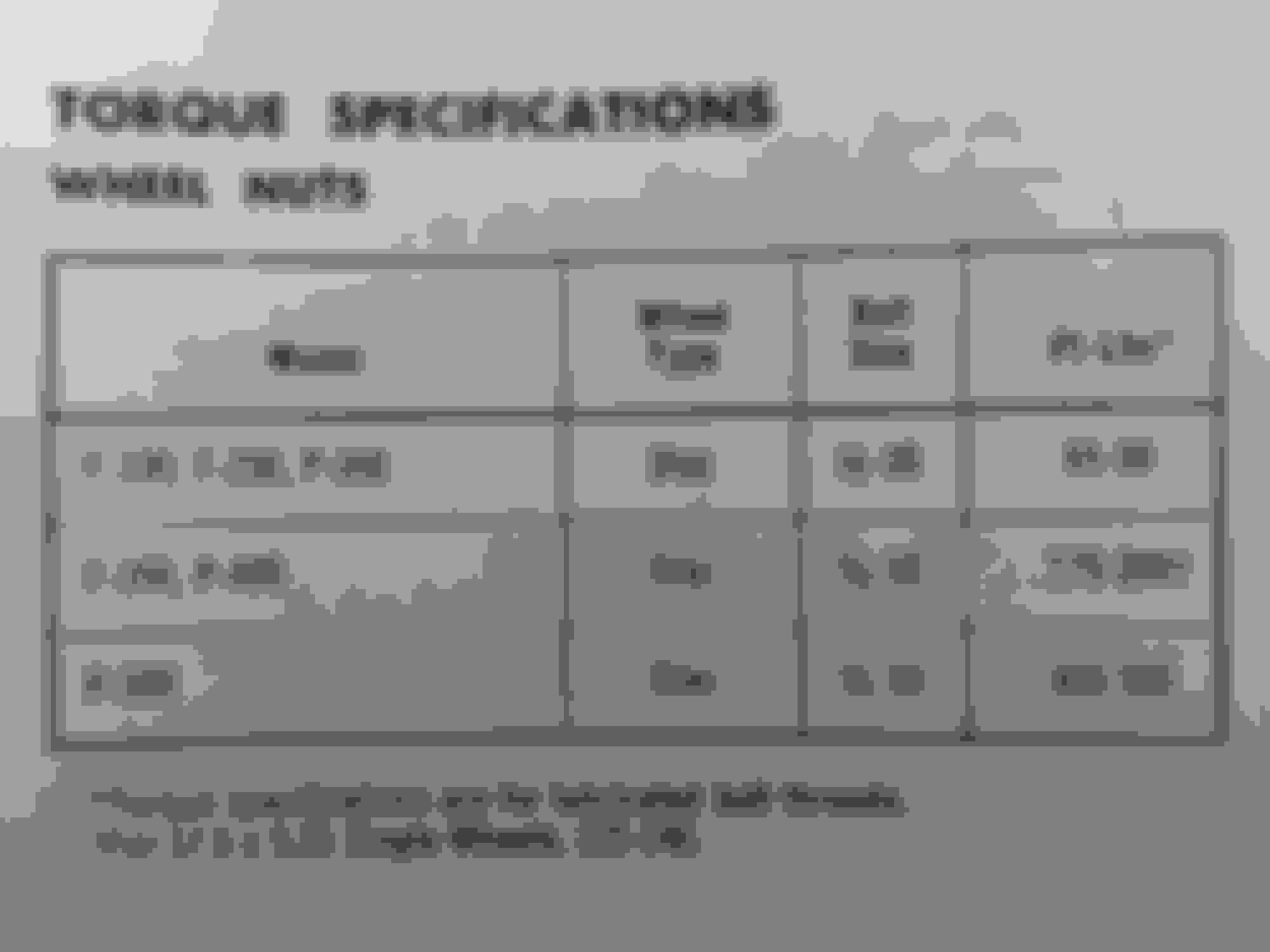
The older manuals had torques for lubricated threads. This is from the
'64 Truck Shop Manual. The Operator's Manual for the same year specifies dry threads. Hm. Use a torque wrench when practicable.
A small dab of anti-sieze, just enough to keep threads from siezing and galling. If they are overtorqued dry it may be impossible to change a tire with hand tools. It is important that wheel lug tightness is checked now and then, especially before a road trip. They can tend to loosen slightly when first cinched down. I agree the better things about a torque wrench is I know they are evenly cinched. Then run em for 100 miles and cinch 'em down again in a criss-cross pattern. This takes a few iterations.
The older manuals had torques for lubricated threads. This is from the
'64 Truck Shop Manual. The Operator's Manual for the same year specifies dry threads. Hm. Use a torque wrench when practicable.
A small dab of anti-sieze, just enough to keep threads from siezing and galling. If they are overtorqued dry it may be impossible to change a tire with hand tools. It is important that wheel lug tightness is checked now and then, especially before a road trip. They can tend to loosen slightly when first cinched down. I agree the better things about a torque wrench is I know they are evenly cinched. Then run em for 100 miles and cinch 'em down again in a criss-cross pattern. This takes a few iterations.
Which failure mode above shows necking. There is only one, ductile tension. Ok waiting for your tootsie roll test...don't eat the evidence!
No, you have to do the test. I'm going to eat them, plus I could FUDGE the data... Get it?
And yes, only the ductile tension shows the necking. That illustration is for straight shafts, I figure the reduced diameter between the treads will behave differently. Also, my eyeballs are saying grade 8 stud and my heart is saying brittle. We may need to call in an expert witness to testify. Cross section of the failed stud would tell us more.
The older manuals had torques for lubricated threads. This is from the
'64 Truck Shop Manual. The Operator's Manual for the same year specifies dry threads. Hm. Use a torque wrench when practicable.
A small dab of anti-sieze, just enough to keep threads from siezing and galling. If they are overtorqued dry it may be impossible to change a tire with hand tools. It is important that wheel lug tightness is checked now and then, especially before a road trip. They can tend to loosen slightly when first cinched down. I agree the better things about a torque wrench is I know they are evenly cinched. Then run em for 100 miles and cinch 'em down again in a criss-cross pattern. This takes a few iterations.
Interesting that the shop manual says lubricated and the operator's manual says dry torque. Are the torque values the same? I ran the numbers on the stress on the 1/2" studs at 90 ft-lbs lubricated threads and it's over 110,000 psi stress on the stud. If the yield point is 130,000 psi you'd be 85 percent of the way towards permanently stretching it. I prefer not to dance that close to the cliff
All studs should be lightly oiled, because if they are not rust will form. The amount of oil to prevent rust is very small, a light film, like new stuff in the hardware bin. Adding too much lubricant and getting it on the face of the nut could allow you to over torque and stretch your studs.
The lubricated torque in your manual are lower than the dry torque specified for the 80-86 trucks on 1/2" studs, if you take the average of the range given it's about 77 ft lbs which is less than the 100 ft-lbs for dry torque on the 80-86 truck specs. I don't like it when a range of torque is given on a lug nut. Why? When I see a range of torque I tend to apply the higher value.
I think most manufacturer's specs today are for dry torque. Assemble and torque dry and then add a bit of rust preventative to the exposed threads and call it good. I have no problem getting lug nuts off at the specified dry torque. Even with the stock lug wrench that came with the truck, which is a decent tool. There's too much variability in what constitutes lubricated, though they say only the threads, it's likely that some will get it on the nut face too. It's probably a good idea to use less force or torque when you are talking lubricated threads. A lot of folks are not using a torque wrench for lugs so do be careful!
I'm staying dry assembly. I don't want my lug nuts coming off and to me if they are a bit hard to get off that is a good thing.
Interesting that the shop manual says lubricated and the operator's manual says dry torque. Are the torque values the same? I ran the numbers on the stress on the 1/2" studs at 90 ft-lbs lubricated threads and it's over 110,000 psi stress on the stud. If the yield point is 130,000 psi you'd be 85 percent of the way towards permanently stretching it. I prefer not to dance that close to the cliff
All studs should be lightly oiled, because if they are not rust will form. The amount of oil to prevent rust is very small, a light film, like new stuff in the hardware bin. Adding too much lubricant and getting it on the face of the nut could allow you to over torque and stretch your studs.
The lubricated torque in your manual are lower than the dry torque specified for the 80-86 trucks on 1/2" studs, if you take the average of the range given it's about 77 ft lbs which is less than the 100 ft-lbs for dry torque on the 80-86 truck specs. I don't like it when a range of torque is given on a lug nut. Why? When I see a range of torque I tend to apply the higher value.
I think most manufacturer's specs today are for dry torque. Assemble and torque dry and then add a bit of rust preventative to the exposed threads and call it good. I have no problem getting lug nuts off at the specified dry torque. Even with the stock lug wrench that came with the truck, which is a decent tool. There's too much variability in what constitutes lubricated, though they say only the threads, it's likely that some will get it on the nut face too. It's probably a good idea to use less force or torque when you are talking lubricated threads. A lot of folks are not using a torque wrench for lugs so do be careful!
I'm staying dry assembly. I don't want my lug nuts coming off and to me if they are a bit hard to get off that is a good thing.
BB2
I assume all you have to do to get them back off is not abuse the threads and not crossthread the nut.
This Hennessey Takes the Expedition Tremor's Off-Roading Capability to the Next Level
Slideshow: The VelociRaptor Expedition gains a lift, upgraded suspension, Brembo brakes, and trail-ready equipment while retaining the stock 440-horsepower EcoBoost V6.
Rezvani's Latest Post-Apocalyptic Monster Is a Ford F-150 Raptor Underneath
Slideshow: Called the Fortress, the 850-horsepower pickup combines Raptor underpinnings with military-inspired features, survival equipment, and a starting price of $285,000.