When you click on links to various merchants on this site and make a purchase, this can result in this site earning a commission. Affiliate programs and affiliations include, but are not limited to, the eBay Partner Network.
Ive been messing with my timing some and I seem to be limited by my starter. What’s the best way to find the right timing and what do you guys have on your 460s?
My engine has a 69/70/71 block and timing set (straight up I think it’s called). Not sure of the cam or pistons but it has D3VE a2a heads and runs on 87 octane. I believe it has the duraspark distributor.
This is evening when I was messing with it I took the vacuum line off my vacuum advance and put a vacuum gauge on it. I advanced it to 15 degrees btdc and would get over 30 degrees with the mechanical advance. The truck had way more power and did not seem to ping but it had a hard time starting because of the advanced timing. Do high torque starters overcome the sluggishness from timing or is this way too much timing for my truck? Just a newb with this stuff, thanks in advance.
I'm not sure how much vacuum advance contributes to the timing, if any, during actual starting. The manifold vacuum during cranking is only about 5", not enough to get things moving very much.
Depending on the compression ratio about 15° or 16° BTDC initial or base timing may well be all she wrote. It will be worse in hot weather/high temperatures. If starting and ground cables are undersized or corroded connections to block and frame, this will not help. These cause problems on their own. As a starter gets old or abused they draw a lot more juice than their rating. My old Y-block with 8-1 compression, I can run 17° initial no problem.
What you've discovered with the starter kickback is only part of the equation. The initial timing number isn't really that important, the far end is more so. Usually 34° or 36° or 38° BTDC is right in there, more for low compression engines, less for high compression engines. This would be without vacuum advance. If you want to tune the distributor better you'll have to get inside it. It probably has heavy springs on the weights, and way too much total advance. The amount of ignition advance, and at what RPM it comes in at, is the advance curve. Heavy trucks have slower advance, lighter cars have faster advance.
Put a timing light on it with the vacuum advance disconnected and plugged. Run it up to 3000 to 4000 or so from idle and observe the timing marks. You may just need to install lighter springs to get what you want. A stock or OEM distributor will not usually allow very much initial timing. If you don't want to get inside the distributor turn the distributor wherever it needs to be to get 34° or 36° BTDC when wound out. Make sure it's done advancing all the way. Let the initial fall where it may, probably around 8° or 10° maybe. Take it for a test drive and run it hard and see if it pings or knocks on acceleration. Remember this is without vacuum advance connected. It's important that the mechanical advance works smoothly and advances to the proper spec. Remember distributor degrees and vacuum advance degrees are measured 1/2 of crankshaft degrees, because the distributor turns at 1/2 the speed of the crank.
SO, you'll see mention of a "10L slot" or a "13L slot" or "18L slot", if the distributor is setup internally with an 18L slot it can add up to 36 deg. of timing. If you crank in 15 deg. on the distributor - that's 51 deg. of mechanical timing - Ping city! Won't work. Usually guys want the 10L slot - this makes for 20 deg. mechanical advance. Then add about 16 deg. at the distributor itself, and install light springs so it comes in early. This can take some experimentation, every engine is a little bit different, altitude, gearing, fuel quality plays a role. When the mechanical timing is satisfactory re-connect the vacuum advance. The cans are adjustable. They add in more timing under low load conditions, like when cruising on level ground in high gear. It takes very little horsepower once up to speed, and lots more ignition advance is needed on top of the mechanical for best efficiency and cooler running, the weights can't do it because the RPM is relatively low when cruising in high gear, and the fuel mixtures are lean. Hope this makes sense.
Wow, thanks for all the information. I’ll probably read it 5 more times before it all sinks in but that’s on me. I recently replaced the ground wire from the battery to the block with a real thick wire. Probably 1/2” thick with the insulation. I know the ground from block to cab is in pretty rough shape... I’ll look around some more tomorrow and see how the wires look near the starter. There’s a good chance the starter is the original, are there any brands in particular that make good starters?
I need to put some more marks on my crank to read the mechanical advance. I think it only read up to 30 btdc. Also, I’m not convinced my vacuum secondary’s are opening on my Holley 750 cfm carburetor. Need to try the paper clip trick and see if they’re actually moving. I can’t see it move any by opening the throttle under the hood and under acceleration there’s not much difference in 1/2 throttle and wide open. I’ve adjusted the floats so I don’t believe that is a problem.
Feel like I just went to distributor school.................. Good stuff. I have D3 heads and run 14 initial and 35 at 3000 rpm after installing a 75 Elite distributor and changing the springs.
What is your compression ? it will run on any gas, that doesn't mean it's running properly. If your compression is much over 10 to 1 you're never going to get it to run on pump gas without retarding the timing.
If it's kicking the starter your initial is to high and you have no choice but to retard it.
Get it to where it starts good , you can check it but it's basically meaningless. now you can retard it a bit to set your mechanical if need be but you cannot advance it .
Then with the vac advance unhooked check your mechanical all in it 2500 RPM or there abouts. it should be 30-36 on most engines , size and make don't matter. 15-34-50 seems to work on most rigs and that's my goal. if you're there great, if not you need weight correction and springs.
Once your mechanical is set hook up your vac advance and see what your total is at 2500 . it should be 50-60 on most engines but this can somewhat lower if you're light on octane.
If all is well great. if you're still detonating then turn the dizzy back a little and see if you can live with it. if it still detonates then decide which expensive route you're going to resort to in order to get the octane you need. I run a AV100 mix with non ethanol premium in my higher compression engines but there are many options.
If your carb sounds like the secondaries are opening they are. on vacuum secondaries you aren't really going to see them open much unless it's under load if they're working properly. the vacuum has to drop out for more than a fraction of a second. .
My 460 is rebuilt to stock specs with an RV cam. '77 block and D3 heads. No special work done to either of them. Stock intake, Holley 4bbl carb, stock exhaust manifold, straight up timing chain from a '71 or lower 429/460.
I have my initial timing set to 14* BTDC with roughly 20* of centrifugal inside the dizzy to give me about 34* total timing. Big blocks seem to like 34*-36* total timing, so I'm on the low end but she likes it that way. Vacuum advance is hooked up (on a street engine it's a must for fuel economy and Max power. Street strip engines are a different story) to the ported spark port on my carb so it only contributes anything when you're cruising or accelerating which is when you'd need it.
My truck screams when you give it the berries and gets about 15mpg on the interstate holding 75mph for 8hrs on end (just for back from a 1200 mile parts run that's how I know).
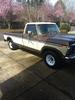
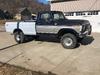
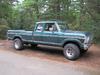
It has to be somewhere in the 8’s. Dad always put 87 in it when he was driving it 15 years ago. He took out a 70 model with D0VE heads to put this engine in because he got sick of putting 93 in it.
With the initial set at 15 and mechanical going slightly above 30 the truck would not start with the engine hot. Before I turned it off though I drove it and it seemed happy with the timing. It was probably sitting at 0 degrees before I started messing with it and had way less power. It was set to 0 when my dad was helping set the timing and make it start easier. We had the vacuum advance on when we set it though so I knew it wasn’t right. We had retarded the timing to help it start but for the performance difference I’m more than ready to buy a new starter if it will overcome the timing.
Ill mess with the secondaries some more today. I don’t think they are coming on since the truck would run worse at full throttle than at half-3/4. It felt like the truck was starving for gas, not detonating.
If your starter is kicking back at 15*, that tells me either your motor is running wicked hot and cooking the starter, the starter is dying or a cheap reman, or your cables going to the starter (including your battery ground) are deteriorating. 14-15* should not kick back your starter. Unless of course the dizzy was removed and out back in a tooth off making your 15* reading seem right when it's actually somewhere around 25*. I'd verify your dizzy is in right. Line up TDC on the balancer, pull the #1 spark plugs and and the dizzy cap. With the balancer at TDC the #1 piston should be at it's highest point in the stroke and the dizzy rotor should be pointing at the #1 spark plug wire on the cap.
My 460 is rebuilt to stock specs with an RV cam. '77 block and D3 heads. No special work done to either of them. Stock intake, Holley 4bbl carb, stock exhaust manifold, straight up timing chain from a '71 or lower 429/460.
I have my initial timing set to 14* BTDC with roughly 20* of centrifugal inside the dizzy to give me about 34* total timing. Big blocks seem to like 34*-36* total timing, so I'm on the low end but she likes it that way. Vacuum advance is hooked up (on a street engine it's a must for fuel economy and Max power. Street strip engines are a different story) to the ported spark port on my carb so it only contributes anything when you're cruising or accelerating which is when you'd need it.
My truck screams when you give it the berries and gets about 15mpg on the interstate holding 75mph for 8hrs on end (just for back from a 1200 mile parts run that's how I know).
Wow, impressive numbers. Id like to get those mpg numbers out of mine. Not sure what it’s getting now, I haven’t been driving it a whole lot but that is soon to change since I sold my 2004 F150 yesterday and will be transferring the plates. There was a huge difference in power yesterday changing it from 0 to 15 initial. From a stop it broke both tires loose, something it wouldn’t do before. 3.50 gears, 33” tires. My dads 2wd short bed won’t even do that with an open diff and shorter tires. He has a 78 460 that’s bone stock. I feel like the engine could handle the timing but the starter is holding it back
Wow, impressive numbers. Id like to get those mpg numbers out of mine. Not sure what it’s getting now, I haven’t been driving it a whole lot but that is soon to change since I sold my 2004 F150 yesterday and will be transferring the plates. There was a huge difference in power yesterday changing it from 0 to 15 initial. From a stop it broke both tires loose, something it wouldn’t do before. 3.50 gears, 33” tires. I feel like the engine could handle the timing but the starter is holding it back
I'd buy yourself a starter out of a newer truck so that you can get a gear reduction starter. Easier in the battery too. That being said...I'm still running the stock starter in mine. Just a generic parts house replacement. New 2ga cables to everything and an 850cca battery and she starts up when it's -20* or 100* outside without an issue.
If your starter is kicking back at 15*, that tells me either your motor is running wicked hot and cooking the starter, the starter is dying or a cheap reman, or your cables going to the starter (including your battery ground) are deteriorating. 14-15* should not kick back your starter. Unless of course the dizzy was removed and out back in a tooth off making your 15* reading seem right when it's actually somewhere around 25*. I'd verify your dizzy is in right. Line up TDC on the balancer, pull the #1 spark plugs and and the dizzy cap. With the balancer at TDC the #1 piston should be at it's highest point in the stroke and the dizzy rotor should be pointing at the #1 spark plug wire on the cap.
The engine didn’t seem hot based on the factory gauge. I don’t believe it is a reman, probably just old and worn out. I’ll check the distributor today and make sure but I really don’t think it is at 25* initial. Crazy that the starter would turn the engine like it’s nothing with retarded timing and not even turn it over at 15*. So I should avoid reman starters?
I'd buy yourself a starter out of a newer truck so that you can get a gear reduction starter. Easier in the battery too. That being said...I'm still running the stock starter in mine. Just a generic parts house replacement. New 2ga cables to everything and an 850cca battery and she starts up when it's -20* or 100* outside without an issue.
Awesome, that’s what I needed to know. It should bolt right up with the flywheel I have and clear the C6? I know there was a forum recently that someone was having a hard time getting the right starter for their 429...
If it's kicking your starter it's not the starters fault, your timing is advanced too much. if it just won't hump it that's another thing.
If your compression is really that low you should have no trouble dialing it in. just keep in mind with that compression nothing you can do is going to make it a powerhouse. I'd buy a dial back light and make it easy on yourself.
Rezvani's Latest Post-Apocalyptic Monster Is a Ford F-150 Raptor Underneath
Slideshow: Called the Fortress, the 850-horsepower pickup combines Raptor underpinnings with military-inspired features, survival equipment, and a starting price of $285,000.