


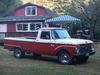


ignition wire getting hot

Thread Starter
|
Junior User
Joined: Nov 2017
Posts: 59
Likes: 0
ignition wire getting hot
hello,
1963 f250 4x4 y block
I installed electronis ignition distributer and noticed resistor wire from coil to ignition switch getting un comfortably hot when truck is running so I'm thinking that I need to replace it. My question is 1)Can I replace this resistor wire with a generic ceramic ballast resistor?(2) is this wire the issue?Been running with this issue for a few months after I noticed it and thought with snow on the ground I might as well get some issues off my list.
thanks,gatorjaws
1963 f250 4x4 y block
I installed electronis ignition distributer and noticed resistor wire from coil to ignition switch getting un comfortably hot when truck is running so I'm thinking that I need to replace it. My question is
1)Can I replace this resistor wire with a generic ceramic ballast resistor?(2) is this wire the issue?Been running with this issue for a few months after I noticed it and thought with snow on the ground I might as well get some issues off my list.thanks,gatorjaws

Post Fiend
Joined: Apr 2002
Posts: 19,311
Likes: 97
From: Waterloo, Iowa
Resistor wires dissipate heat, that's their job. If you buy a new one it will likely even smoke for a little while as it burns off. There are some voltage checks you could make, I would want to make sure battery cables and ground connections are clean & tight. Maybe check the coil resistance. If too much current is flowing for some reason things will get toasty. The resistance wires were typically about 1.4 ohms cold. I doubt there's anything wrong with it, if it's not needed don't use it.

Lead Driver


Joined: Jul 2017
Posts: 9,609
Likes: 1,179
From: San Jose, CA
That. As far as I've seen (so far anyway) all HEI style (the big GM style with the huge cap and coil on top) use the full 12v so you're not supposed to re-use your original resistor wire.
Some people run a new wire, some people find another factory wire under the hood and use that, and still others use the factory resistor wire to trigger a relay in order to feed the new ignition the full voltage it wants.
A relay is more wiring, and one more thing to go wrong (if you don't count any splices that is) but I think it's still a good solution for some.
Paul
Some people run a new wire, some people find another factory wire under the hood and use that, and still others use the factory resistor wire to trigger a relay in order to feed the new ignition the full voltage it wants.
A relay is more wiring, and one more thing to go wrong (if you don't count any splices that is) but I think it's still a good solution for some.
Paul
Thread Starter
|
Junior User
Joined: Nov 2017
Posts: 59
Likes: 0
so,I can buy another resistor wire, or replace with regular wire or is it possible to use a ceramic block type resistor at 1.4 ohms .Does anyone know where I can get a resistor wire the right length?
Trending Topics
Thread Starter
|
Junior User
Joined: Nov 2017
Posts: 59
Likes: 0
found wire 63"long at parts geek for $18.00, the ceramic resistor block 1.4 ohms at autozone for $3.00 and I have some #10 wire so I will try regular wire first then the block then the new wire.
Thanks all, gatorjaws
Thanks all, gatorjaws
FTE Stories
Ford Trucks for Ford Truck Enthusiasts

Top 10 Fords at 2026 Carlisle Ford Nationals
Joe Kucinski
3 Best / 3 Worst Parts of Modern Ford Ownership
Brett Foote
10 Amazing Upgrades That Solve Common Ford Truck Owner Headaches
Pouria Savadkouei
Every 2026 Ford Engine Explained
Brett Foote
10 Ugly Ford Trucks That We Still Kinda Love
Joe Kucinski
10 Things Every Truck Owner NEEDS (2026 Edition)
Michael S. Palmer
Rezvani's Latest Post-Apocalyptic Monster Is a Ford F-150 Raptor Underneath
Verdad Gallardo
Top 10 Most Expensive Ford Trucks Ever Sold on Bring a Trailer
Joe Kucinski
2027 Ford Super Duty Buyer's Guide (Every Model, Engine, & Package)
Brett Foote
Post Fiend
Joined: Apr 2002
Posts: 19,311
Likes: 97
From: Waterloo, Iowa
Have you determined whether a ballast is needed with that particular setup? If isn't needed it should be removed or bypassed. If it is needed, I doubt there's anything wrong with it. They do get hot.
Thread Starter
|
Junior User
Joined: Nov 2017
Posts: 59
Likes: 0
I was thinking about that too.We did cut the end of the resistor wire at the coil to put a new end on it before we realized what it was so I don't if we might have compromized the thing.Honestly, I'm not sure the wire wasn't getting hot all along and just didn't notice it.Like you said earlier it might just be doing its job.
Lead Driver
Joined: Jul 2017
Posts: 9,609
Likes: 1,179
From: San Jose, CA
It IS doing it's job. It's job is to get hot.
The wire is extra small with an extra thick jacket on it to resist the heat. The smaller the gauge of the conductor, the more resistance it has. The longer the run of wire for a given gauge, the more resistance it has. Remember ohms-per-foot here.
The more resistance it has, the more heat builds up as current is pulled through it. The more heat it builds up, the more resistance it builds up as well.
Heat equals resistance, and resistance equals heat. Not sure about your year, but in later years Ford enclosed the wire in one of those fiber/tar heat resistant outer jackets and separated it entirely from the rest of the harness so it would not melt the adjacent wires.
I'm not sure how the factories mounted the ceramic base ballast resistors (Chrysler used them for years, but not sure about GM and Ford since they adopted resistor wire pretty early on), but if you ever mount one straight to the body of a vehicle it will literally burn the paint off the body just beneath the ceramic base! It's bare wire conductor protected by the ceramic base, but it's exposed on the one area and gets so hot that anything within reach is burned.
So yeah, make sure it's busted before going to the hassle of replacing it.
I believe the resistance value on the typical Ford resistor wire was listed in the past few days in another thread by Number Dummy. Something like 1.4-1.5 ohms. Not sure if that is total, or per-foot rating.
And as a final note, as Tedster said above, make sure your new ignition even needs it. Be a waste of your time and money to replace a perfectly good resistor wire with another perfectly good resistor wire, only to find out that you don't need it for your new ignition.
Which I'm pretty sure you don't. But you need to find out.
Did it come with any instructions by any chance?
Good luck.
Paul
The wire is extra small with an extra thick jacket on it to resist the heat. The smaller the gauge of the conductor, the more resistance it has. The longer the run of wire for a given gauge, the more resistance it has. Remember ohms-per-foot here.
The more resistance it has, the more heat builds up as current is pulled through it. The more heat it builds up, the more resistance it builds up as well.
Heat equals resistance, and resistance equals heat. Not sure about your year, but in later years Ford enclosed the wire in one of those fiber/tar heat resistant outer jackets and separated it entirely from the rest of the harness so it would not melt the adjacent wires.
I'm not sure how the factories mounted the ceramic base ballast resistors (Chrysler used them for years, but not sure about GM and Ford since they adopted resistor wire pretty early on), but if you ever mount one straight to the body of a vehicle it will literally burn the paint off the body just beneath the ceramic base! It's bare wire conductor protected by the ceramic base, but it's exposed on the one area and gets so hot that anything within reach is burned.
So yeah, make sure it's busted before going to the hassle of replacing it.
I believe the resistance value on the typical Ford resistor wire was listed in the past few days in another thread by Number Dummy. Something like 1.4-1.5 ohms. Not sure if that is total, or per-foot rating.
And as a final note, as Tedster said above, make sure your new ignition even needs it. Be a waste of your time and money to replace a perfectly good resistor wire with another perfectly good resistor wire, only to find out that you don't need it for your new ignition.
Which I'm pretty sure you don't. But you need to find out.
Did it come with any instructions by any chance?
Good luck.
Paul

Lead Gopher


Joined: Aug 2012
Posts: 10,069
Likes: 1,625
From: Seattle

If you do need a new resistor wire they are not hard to find NOS.
C0LF-12250-A (DY37) - Ignition Coil Resistor Assembly - 61.50" long - No. 20 gauge wire - color code Pink - 1.30-1.40 ohms resistance - 1 each
You can search eBay for that part number, for example.
Chad
C0LF-12250-A (DY37) - Ignition Coil Resistor Assembly - 61.50" long - No. 20 gauge wire - color code Pink - 1.30-1.40 ohms resistance - 1 each
You can search eBay for that part number, for example.
Chad

Mountain Pass
Joined: Mar 2018
Posts: 134
Likes: 3
From: Az.
Gatorjaws, It would appear that your bound and determined not to read or look up the instructions for your ignition. You may not have an issue as others have said. If by chance your system requires your resistor wire and you replace it with a non resistor wire you may be creating an issue.