When you click on links to various merchants on this site and make a purchase, this can result in this site earning a commission. Affiliate programs and affiliations include, but are not limited to, the eBay Partner Network.
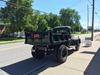
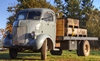
In response to the ghost town thread, here is the work I did to prepare my truck for winter as seen in these two photos:
Summer:
Winter:
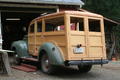
I didn't bother to take any photos during grape harvest and deliveries this fall. So here is one from 2002 showing the truck in summer mode. Obviously a lot of work has been done on the truck since then.
Tom, she's looking good.
Your summer vs winter pic is similar to what mine would look like. It's winter here in Southern California, and it's going to be a "chilly" 70° for the high.
So you have one step in your winterization checklist;
1) Close L and R Air Vents
Man I wish we had your climate! We are just beginning the season of salt and brine covered vehicles - yuck!
What a beautiful truck! Hope this might help a little...this is what we have done for 50+ years in our family when we store a vehicle for the winter...…….
Once parked, don't drive it.....periodic operation can induce more problems than if you let-it-be in most cases.
2. Wash, wax it, completely clean the interior and place an open box on a tray on the floor of baking soda.....it will help absorb moisture
3. Tires.....today's tires will not get flat spots like those built befor 2000......overfill them by 10 psi and this will help to ensure roundness.....if you want to fill them with nitrogen, this is ok as well because it is no prone to temp changes, precludes moisture formation & dosen't leak (larger molecules). If exposed to sun, place large trashbags (contractor type) over theem to protect against UV light.
4. Fuel- add fuel stabilizer (I like Marvel Mystery Oil assuming the vehicle does not have cats, if it does then I add acetone) and fill tank to the top......fuel will begin to "turn" to a varnish like substance beginning at 6 months, with enough fuel stabilizer, this will prevent that. Filling to the top will eliminate as much air in the tank as possible which is a requirement for condensation & "turning" of the gasoline...this helps to stop it. I personally don't like to drain a system because especially using the MMO, it lubricates the "moving parts", which although it still sometimes happens, will help prevent hardening of o-rings, gaskets, injectors, etc.
5. ensure all fluids are topped off, lube/grease everything including graphite in all locks, dry lube in the window seals, etc. Don't bother changing fluids, etc...you will want to do this befor you fire it up upon your return. I would recommend purchasing a radiator anode (zinc) from JC Whitney...they sell for about $10, place it in the radiator overflow...it will act as a sacrificial lamb for the entire cooling system- keeping it corrosion free.
6. Pull the battery.....on a short term, disconnecting the terminals is ok, long term, pull it just in case....especially with temp changes, although very rare, a crack in a battery case undetected can do a lot of damage.
7. Place a plastic bag over the end of the air intake tube or filter...this will help keep bugs/dirt out.
8. If there is a potential for rodents, place a few moth ***** in the engine compartment.....if the storage facility has cats, forget it...the cats will do the work.
When its time to start it for the 1st time, check all the fluids, change the oil (this will provide some lube from the top down in the engine) spin the engine over for 30 seconds...it may or may not start- its ok....wait 1 minute, repeat......the 1 minute is a good cool down for the starter and the 30 second duration will not overly stress any component. By the 2nd or 3rd round, it should start...probably run a little rough, but it will be ok. Repack the wheel bearings (the newer cars are sealed so -does not apply), inspect & lube brake assemblies. After 50 miles of driving time, drain all the fluids & replace (coolant may be ok), but definitely engine, tranny, power steering, brake.
Battery Tender’s If you simply put a charger on the battery once a month, it will be fine...the issue with "Battery Tender" devices is to start with, they are not monitored by a human! Unless you are dealing with a marine or FAA approved battery where the entire battery is sealed, then there is always a likelihood/possibility (that although all batteries today are "sealed"), there is some gas that is escaping at the top of the case, terminals, etc....especially when they are exposed to temp changes and charging, all of which induces expansion/contraction of the battery case.....if a leak occurs, you are dealing with hydrogen sulfide gas...highly flammable and relying on mexico or overseas made circuit boards that is "receiving 120 volts/10-15 amps (such as the Chinese made “Battery Tender”), reducing this and based upon "feedback" varying the charge to your battery, to ensure your "rides safety"......probably not the best recommendation in the world since these charging devices are not 'intrinsically safe"..meaning they produce sparks and static electricity...a great ignition source for the potential hydrogen sulfide gas. Now the manufacturers state/imply this is safe to do, but, if you were a business, every state in the US and including the US National and International Fire Codes prohibit such unmonitored battery charging operations at anytime! Although these codes and standards do not apply to residences, why would you not want to heed the advise of recognized national and international standards…you wouldn’t……..cheap insurance for you vehicle, garage, house and maybe your lives.
My closing of the vents in the fall and opening in the spring is driven by ambient temperature. It isn't preparation for winter layup.
For those that have no first hand experience with COE trucks, the engine is in the cab with you. A 100 hp heater between the driver and passenger seats. So you are never cold once the engine has warmed up. And those side vents are as good as it gets for most of the year when ambient temperature is 60 or above.
In the winter the engine heat is more welcome, hence the fall vent closing ritual.
A guy I know dropped by one winter day and was curious about the 47. He has an old farm truck with conventional cab. I took him for a ride and within a mile he commented on how nice and warm it was in the cab. The truck originally had a heater just above the passenger's feet. When I did all the restoration work 10 years ago, I removed the heater because it wasn't necessary. Thus gaining more room for the passenger's feet.
Since I only put about 500 miles on the truck each year, it could be considered to be in layup mode year round.
I have a farm gas tank of no ethanol gas and add gas stabilizer to the tank every time it is filled up. So there is always gas stabilizer in the truck's tank.
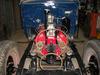
When not in use I keep it plugged into a Battery Minder. Once charged, it switches to pulse mode. It is designed for continuous use. And since the truck isn't parked in an enclosed space as you can see here, I'm not worried about fumes building up. Although I've never noticed any evidence that the Minder is causing fumes from overcharging. I don't see that leaving the Battery Minder plugged in is any more of a risk than the myriad of other wall wart devices such as phone chargers that already are in use.
Open air parking:
I installed a battery disconnect switch under the passenger seat that I turn off whenever the truck is parked. Originally that was necessary because the old wiring had something wrong that would drain the battery over time. During the restoration I put in all new wiring so the slow leak is gone. But still its better to not trust the wiring when I'm not around.
Battery Disconnect:
Back when my brother and I were trying to get the 36 pickup running after an engine rebuild we ran the battery down many times over several days. After finally finding a wiring mistake it ran well. But by then the battery was pretty much shot and we figured that replacing it was going to be one of the costs of getting the pickup running again. But after a few weeks on the Battery Minder it was as good as new. And it is still good 5 years later.
This Hennessey Takes the Expedition Tremor's Off-Roading Capability to the Next Level
Slideshow: The VelociRaptor Expedition gains a lift, upgraded suspension, Brembo brakes, and trail-ready equipment while retaining the stock 440-horsepower EcoBoost V6.
Rezvani's Latest Post-Apocalyptic Monster Is a Ford F-150 Raptor Underneath
Slideshow: Called the Fortress, the 850-horsepower pickup combines Raptor underpinnings with military-inspired features, survival equipment, and a starting price of $285,000.