



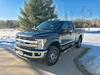


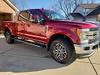

2019 6.9 box
Thread Starter
|
Senior User
Joined: Nov 2018
Posts: 319
Likes: 0
From: Cheboygan Mi
2019 6.9 box
While installing my weather tech bed liner I noticed that you can see right thu the gap where the bed floor meets the sides of the bed, Granted this is my first Ford in prob 15 yrs but when did this start, can it be that expensive to run some of that epoxy chaulk in there? Maybe it’s for drainage, hell I don’t know,

Tuned


Joined: Oct 2006
Posts: 449
Likes: 40
It's partially do to the forming limits of the aluminum. Aluminum can be formed to make the gaps small to non-existent, but that would greatly increase the cost to manufacture. The aluminum would need to be annealed (softened), then formed, then heat treated so make stronger/stiffer. The limits to how strong/stiff aluminum is and how much it can be formed/bent before it breaks or cracks is a smaller window that what can be done with steel.
I would have thought the gaps would have been filled and drains been made, but i guess it was lost in the cost-benefit analysis. If I dumped sand in the bed, I wonder how much would fall out. Some of the gaps do seem on the large size.
I was surprised how much water made its way into the bed when driving around. The rear wheels kick up a good amount that makes it in in the gaps between the wheel well and tailgate. I wonder how much crap is getting trapped under the Bed Tred liner I have? Granted it's aluminum which won't rust , but once the paint and primer are worn away it will oxidize. It will be interesting to see how the aluminum holds up over time compared to steel.
I would have thought the gaps would have been filled and drains been made, but i guess it was lost in the cost-benefit analysis. If I dumped sand in the bed, I wonder how much would fall out. Some of the gaps do seem on the large size.
I was surprised how much water made its way into the bed when driving around. The rear wheels kick up a good amount that makes it in in the gaps between the wheel well and tailgate. I wonder how much crap is getting trapped under the Bed Tred liner I have? Granted it's aluminum which won't rust , but once the paint and primer are worn away it will oxidize. It will be interesting to see how the aluminum holds up over time compared to steel.

Mountain Pass
Joined: Jul 2017
Posts: 172
Likes: 5
It's partially do to the forming limits of the aluminum. Aluminum can be formed to make the gaps small to non-existent, but that would greatly increase the cost to manufacture. The aluminum would need to be annealed (softened), then formed, then heat treated so make stronger/stiffer. The limits to how strong/stiff aluminum is and how much it can be formed/bent before it breaks or cracks is a smaller window that what can be done with steel.
I would have thought the gaps would have been filled and drains been made, but i guess it was lost in the cost-benefit analysis. If I dumped sand in the bed, I wonder how much would fall out. Some of the gaps do seem on the large size.
I was surprised how much water made its way into the bed when driving around. The rear wheels kick up a good amount that makes it in in the gaps between the wheel well and tailgate. I wonder how much crap is getting trapped under the Bed Tred liner I have? Granted it's aluminum which won't rust , but once the paint and primer are worn away it will oxidize. It will be interesting to see how the aluminum holds up over time compared to steel.
I would have thought the gaps would have been filled and drains been made, but i guess it was lost in the cost-benefit analysis. If I dumped sand in the bed, I wonder how much would fall out. Some of the gaps do seem on the large size.
I was surprised how much water made its way into the bed when driving around. The rear wheels kick up a good amount that makes it in in the gaps between the wheel well and tailgate. I wonder how much crap is getting trapped under the Bed Tred liner I have? Granted it's aluminum which won't rust , but once the paint and primer are worn away it will oxidize. It will be interesting to see how the aluminum holds up over time compared to steel.
Not quite......
Its to do with the tolerances and spring back of the material used which is accounted for in the initial design and tooling. Not because of the forming limits. In mass production you need the tolerance stack to offset any variation in the build process so the parts will always fit. It is never a net/net build.
I had mine line-x and then filled in where there was a small gap with roofing sealant (black obviously) . With my cover its dry and not dusty.

Junior User
Joined: Sep 2018
Posts: 64
Likes: 0
From: NH
Thanks for pointing this out... did not notice when looking at trucks at a couple of dealers back in Oct. I will have to see what mine looks like when it comes in... Feb-Mar, just ordered it last week. I also live on a dirt road, so I also want to keep the road under the truck not in it. Ordered a Truxedo cover on Black Friday. Any other ideas on sealing the gaps?
Trending Topics
Mountain Pass
Joined: Jul 2017
Posts: 172
Likes: 5
Thanks for pointing this out... did not notice when looking at trucks at a couple of dealers back in Oct. I will have to see what mine looks like when it comes in... Feb-Mar, just ordered it last week. I also live on a dirt road, so I also want to keep the road under the truck not in it. Ordered a Truxedo cover on Black Friday. Any other ideas on sealing the gaps?

FTE Stories
Ford Trucks for Ford Truck Enthusiasts

Rezvani's Latest Post-Apocalytic Monster Is a Ford F-150 Raptor Underneath
Verdad Gallardo
Top 10 Most Expensive Ford Trucks Ever Sold on Bring a Trailer
Joe Kucinski
2027 Ford Super Duty Buyer's Guide (Every Model, Engine, & Package)
Brett Foote
Top 10 Ford Truck Tragedies
Joe Kucinski
AEV FXL Super Duty - the Super Duty Raptor Ford Doesn't Make
Brett Foote
Lobo Vs Lobo: Proof the F-150 Lobo Should Be Even Lower!
Michael S. Palmer
Ford's 2001 Explorer Sportsman Concept Looks For a New Home
Verdad Gallardo
10 Best Ford Truck Engines We Miss the Most!
Joe Kucinski
2026 Shelby F-150 Off-Road: Better Than a Raptor R?
Brett Foote

Thread
Thread Starter
Forum
Replies
Last Post
hamviper
1973 - 1979 F-100 & Larger F-Series Trucks
1
Jul 4, 2018 05:58 AM
daf_62
1973 - 1979 F-100 & Larger F-Series Trucks
4
Mar 17, 2001 12:25 AM