When you click on links to various merchants on this site and make a purchase, this can result in this site earning a commission. Affiliate programs and affiliations include, but are not limited to, the eBay Partner Network.
Today, all of my cars are using LED. A decade ago, in the 2000's & 1990's, every car I drove had "upgraded" headlamps. Instead of 55 low beam / 60 high beam, we used 80 low beam / 100 high beam. They draw a little more power. Run a little hotter. You can see a lot better.
For the record, I never once got stopped or ticketed for the headlights. Ever. No cop could ever tell with the naked eye that I had more powerful lamps.
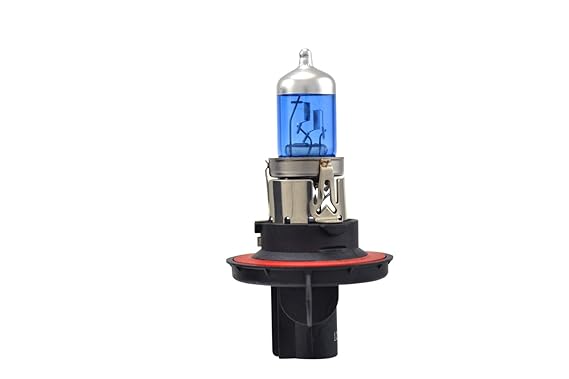
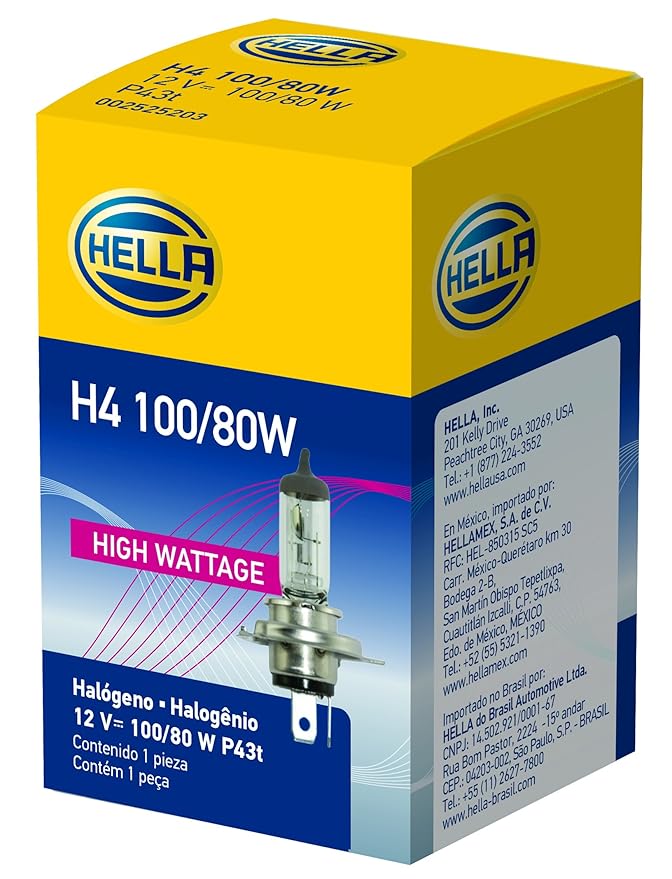
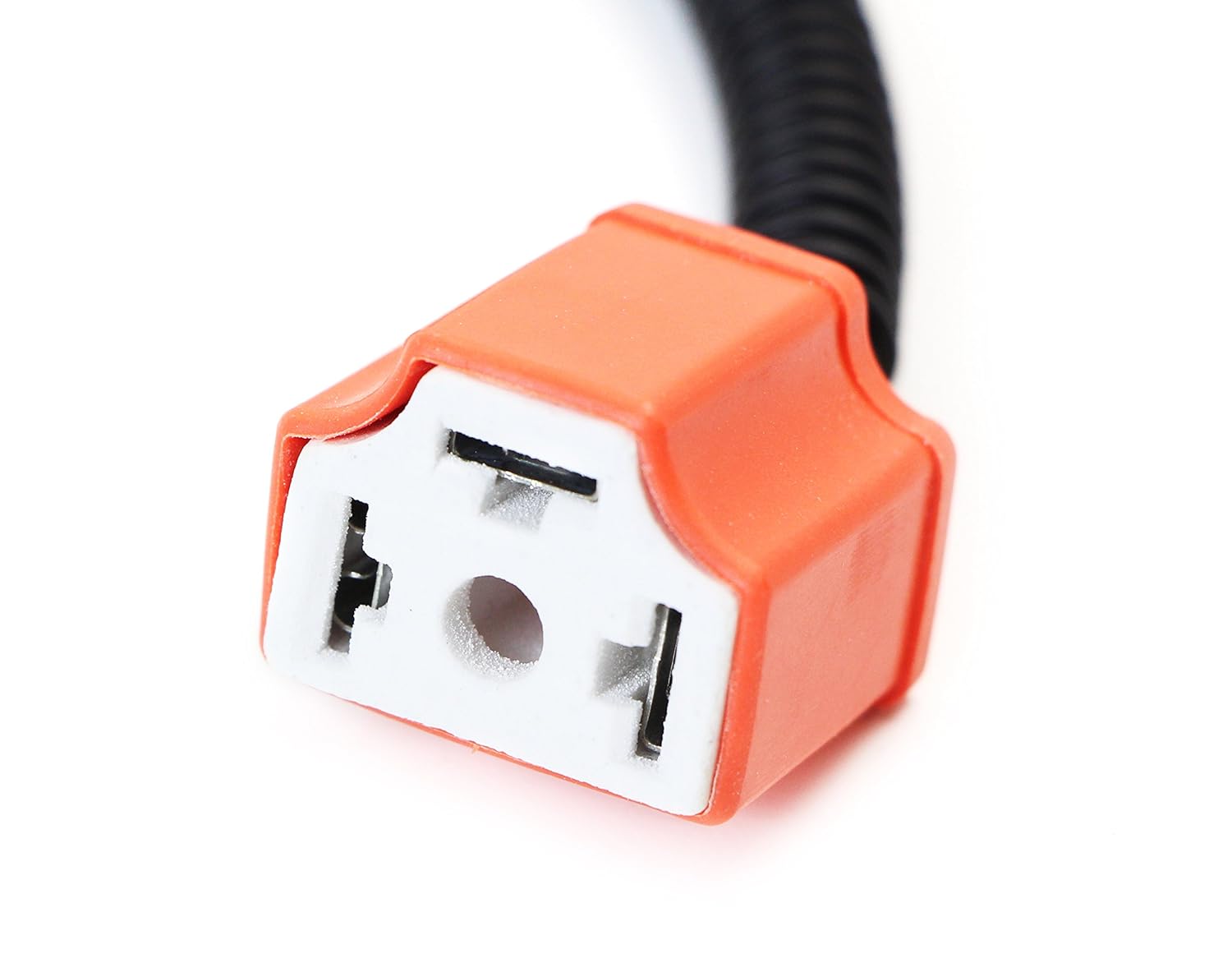
Fifty150 --- Thanks for the reply. Are you in CA? I am going to try the Night Breaker that are a brighter H4 halogen and see how they work with my lens. If they are still not as bright as I would like I will try a pair of Hella 100/80 watt, but I need H4 3 prong to fit my relay harness plug. Tom
Fifty150 -- Thanks for you reply & Amazon web information. I just got my Osram Night Breakers from them at what I thought was a cheap price. I will check the ad on the Hella 100/80 later today.
Fifty150 --- Will the higher wattage draw be a problem with my original head light harness that is plugged into my new relay harness? Also I am running a 65 amp alternator currently.
Will I need to upgrade to a higher Amp unit?
12V system. (2X100W) 200W lamps. 16.66666666666667 amp draw. Assuming that like other cars, once the ignition is on, your electrical system is actually operating on 14V. You would be fine with a 20A fuse. Use the appropriate size wire to handle the load and length of your wire run. Also, install a ceramic socket, and use dielectric grease.
I can't answer the question as to what size alternator you will need. I have no idea what the total load is on your electrical system, once you turn everything on. Figure out that you need XXX amount of electricity from the alternator to your battery, to keep everything running.......whatever it is that you have hooked up......and you will probably get the idea that the more electrical power you have the better. I see a lot of alternators on modern vehicles putting out well over 100 amp, and high output alternators putting out over 200 amp. It does make 65 amp seem a little under powered. However, I'm not an expert in 12v electrical systems, so i do not want to offer an unqualified opinion.
Fifty150 --- Thanks for all the information, great help.
Open question for others out there is what would the be the best Amp size for my alternator on my 1971 F250 300 4.9L truck. No extra running lights, straight am/fm radio, No sound system amps, Going to run 100/80W halogen bulbs, 16.6 amp draw, I have a relay harness installed with ceramic sockets already in the truck.
I have a 65 amp alternator in the truck currently. I would like to increase my alternator amp size, but I have no idea what amp size would be best for my operation. What say out there?
For the earlier question, yes your stock wiring will be fine, including the headlight switch. That's because once you have the relays in place, there is zero change in what the switch and original wiring sees beyond energizing the relays themselves.
Since relays are basically just "remote switches" being activated by your original switch, all you see at that end is a few milliamps to maybe a couple of amps being pulled through the old wiring. Much LESS than original. That's the same whether you have 45w bulbs, or 130w bulbs.
The relays and their wiring see the increased current demand, but are usually up to the task. Being larger diameter (usually 14 or 16 gauge) and shorter length, they can usually handle it.
The recommendation of the ceramic high-temp connectors is a good one too, but hopefully you don't need to go down that road just yet. Wait and see how it all works out.
As for how much power, I'm kind of torn on that. With a six-cylinder and V-belts still(?) you don't really want to go too big unless you can run dual v-belts on the alternator. That, or a larger diameter pulley might be needed to get the traction needed to keep the belt from slipping when power needs are up. The big alternators not only create more current, but I believe have more spinning mass inside that needs to be overcome by the belt.
My initial recommendation was going to be use a 65a rated stock alternator. But it seems you have that already. The downside to those though is if you have one that's just decent, but not great, your available output at lower rpm is not the best. A good one however is sufficient for most of your needs it sounds to me.
If there is room for one (do we have pics of your engine compartment by the way?), I also like the large case version of the 1G alternator. You could use the lower powered one at 70a and not be gaining much at maximum, but gain quite a bit at the lower rpm levels. That's what I used for years on my '71 Bronco in fact.
In my case, it wasn't for more power (although that was a bonus) because my 55a units seemed to be enough back then. But it was for longer reliability as I was going with the cheapy $29 rebuilds and they always seemed to wear out the bearings in 2 to 3 years.
Went with a semi-cheapy 70a large unit and never had to replace an alternator again. As far as I know that unit is still running on a Bronco-buggy that's been sold a couple of times since I gave the alternator to a friend.
If it's still working, that would mean it's about 38 years old and outlasted the local chain of stores I bought it from!
If you're really wanting to upgrade, and simplify the wiring at the same time, then the more modern internally regulated 3G would be the way to go. You could get the 90a version, rather than the full 130a version too, since your needs don't require that much power at this point.
The 3G is relatively compact (about the same overall size as the one you have now) and is even available in a small case version as well. I tend to like the larger case version, but have no reason other than "bigger is better" sometimes.
But no matter what you upgrade to, I would try it with a single belt maybe, but be ready to move up to a dual belt drive if you can. Something to think about.
Paul,
Got a couple pictures of the engine but no good shots of the alternator or the area around it. Will take some in the AM get them posted later in the day. Thanks for the information as it is very helpful. Tom
I don't think you can go wrong doing the 140 amp upgrade as it will cover any low charging issues you may have an not really know it.
I had run dual batteries since 1978 when, I first put on a c/o camper got a 70 amp alternator that always seem to do a good job of keeping both
of the batterers charged up as long as they are good to begin with.
But after,I did the 140 upgrade really was really noticeable an would never go back to the stock charging system.
I was a happy camper after doing the upgrade.
Plus it cleans up your engine bay some what not having the old regulator an it's wiring any more.
I slowly gather up the parts as, I came across some at the junk yards. then it was pretty easy doing the upgrade once you understand what is needed to do it.
Orich
.
1Ton Basecamp & orich --- Thanks again for the additional information. The truck has a single V belt on it that I would like to stay with. I really don't want to make a bunch of wiring or pully changes at this time. I am leaning towards the IG 70a. Will this fit right in & hook up the same as my current alternator? The alternator in the truck may be a Remy 20144 that is 42 amp or a Remy 20155 65 amp, hard for me to tell?
The pictures are from my truck, 1971 F250 with 300 4.9L motor. Maybe you guys can tell from the size or look what amp it is
Unfortunately with the old alternators you can't tell just by looking at the general layout what amp rating they have. All of them had the same casing, with just some re-wiring done internally.
However, usually in that string of numbers you can just barely see stamped in near the pivot bolt, there may be an amp rating number. It may say 45a, or 55a, or similar. All cases would have their original rating stamped there, and in the old days the standard rebuild practice would be to cover the old numbers and add new ones if the rating had changed. Nowadays though, I don't know if they even both. So if you don't know the history of the particular unit, it might say 45A but really have been upgraded to a higher output.
But the bottom line is an old alternator can get weaker, and the old "small case 1G" (stands for "1st generation") like yours would not be as capable at lower rpm levels than either it's large-case big brother, or newer 3G would have.
And yes, either a large 1G or a 3G would fit your brackets. There are differences, but the brackets can accommodate them. My '71 V8 used the same brackets as yours (although on the V8) and it fit fine.
I actually did grind out the adjusting slot on the lower arm a little so I could use the stock length belt, but you could just as easily get a bet that was a half-inch shorter if needed.
When it comes right down to it, you will have to do a teeny bit of re-wiring no matter which upgraded alternator you choose. Either one is pretty straightforward, but both require at least a small change to a connector here or there.
The only way to avoid any re-orienting of the wiring at all, is to stick with the stock small-case 1G alternator. If you want more power out of one of those, you can probably buy one from one of the many companies that upgrade them. Companies like Tuff Stuff have good stuff.
Not sure if they can increase the low-rpm performance or not though. I know they can make some much higher output versions, but not sure about getting more power at idle.
OH, and so we don't lose sight of an important factor in all this (stock wiring in other words) no matter what model design you use, if you go over 70 amps output, you're going to have to do a little extra re-wiring anyway.
Again, pretty simple, but if you just hate wiring (even if it's to upgrade) then best to stick with 70a or less.
Maybe someone can tell us for sure though, how yours is wired. Do the '71 250's have a single charge wire running from the alternator, through the cabin and then back out to the battery?
Or does it go straight from the alternator to the battery?
I don't think you can go wrong doing the 140 amp upgrade as it will cover any low charging issues you may have an not really know it.
I had run dual batteries since 1978 when, I first put on a c/o camper got a 70 amp alternator that always seem to do a good job of keeping both
of the batterers charged up as long as they are good to begin with.
But after,I did the 140 upgrade really was really noticeable an would never go back to the stock charging system.
I was a happy camper after doing the upgrade.
Plus it cleans up your engine bay some what not having the old regulator an it's wiring any more.
I slowly gather up the parts as, I came across some at the junk yards. then it was pretty easy doing the upgrade once you understand what is needed to do it.
When doing the G3 grade their is two sizes of alternators the later one mounts bolts are closer then the first one that came out an less troubles due to the mounting distends between the two mounting bolts the first ones were like 8. 6 an the later one of 6.6" which makes it so much easier
Orich
.
Last edited by orich; Sep 30, 2018 at 07:34 AM.
Reason: info up date
This Hennessey Takes the Expedition Tremor's Off-Roading Capability to the Next Level
Slideshow: The VelociRaptor Expedition gains a lift, upgraded suspension, Brembo brakes, and trail-ready equipment while retaining the stock 440-horsepower EcoBoost V6.
Rezvani's Latest Post-Apocalyptic Monster Is a Ford F-150 Raptor Underneath
Slideshow: Called the Fortress, the 850-horsepower pickup combines Raptor underpinnings with military-inspired features, survival equipment, and a starting price of $285,000.