When you click on links to various merchants on this site and make a purchase, this can result in this site earning a commission. Affiliate programs and affiliations include, but are not limited to, the eBay Partner Network.
My 85 F150 probably has a carb problem...maybe a fuel delivery problem. It's difficult to start and you have to use a fair amount of starter fluid to get started, once she is started she runs rough.
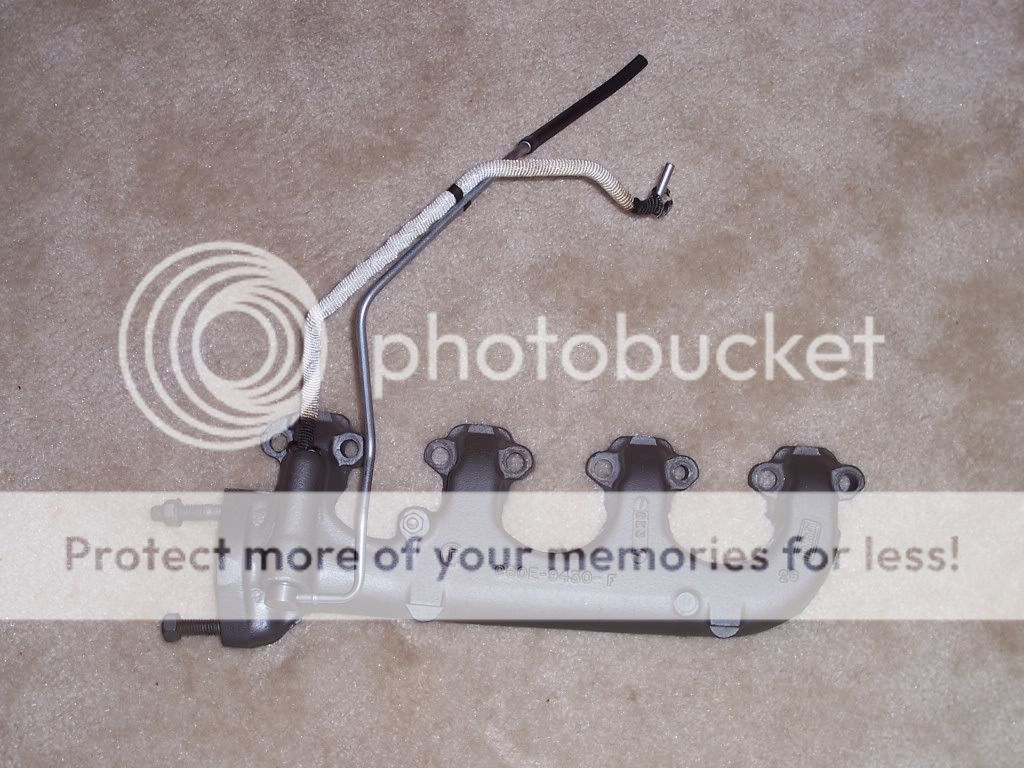
In doing a little investigating I noticed that there was a rusted metal tube simply hanging off of the bottom half of the carb, had a rubber hose that attached it.
I am assuming that this is the bottom of the Choke Heat Tube? Looks like the top goes into the top of the manifold and comes down then shoots out hot air back up to the carb?
My questions...
How much of a pain in the A%$ is it to replace that little metal tube? I haven't been able to find a pre-bent tube for this application online anywhere.
It's really warm here in DC lately, is it necessary right now for it to run smoothly?
Could this be a reason why my truck runs so rough?
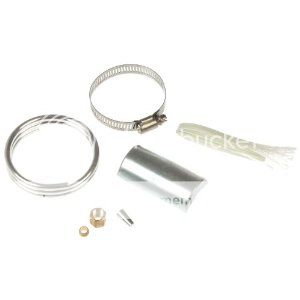
Would an aftermarket setup like this help me? https://www.oreillyauto.com/detail/b...tove+kit&pos=1
Thanks in advance,
JT
Here on this bottom half you can just make out the little hole where I BELIEVE the metal tube used to come out of (or go into)
Closer up shot of the rusty hole, insert joke here...this is the bottom half of the manifold and directly UNDER where the top part of the metal tube enters the top of the manifold.
It might be easier to block off the old heat riser and change to an electric choke. Good luck, I'm not certain that you can get your hands on new choke risers or not. NumberDummy might know.
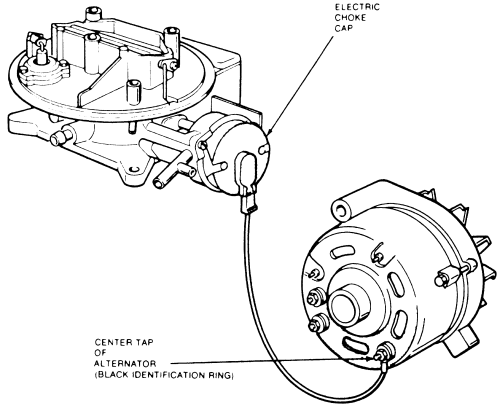
I have done this exact fix in the past. You will need a drill bit that fits snug. You are trying to remove the pipe that is still in that hole. Autozone and the like sell kits for this replacement. This tube sends the heat to the spring to make it retract. You should also have a wire to the stator on the alternator to assist.
I have done this exact fix in the past. You will need a drill bit that fits snug. You are trying to remove the pipe that is still in that hole. Autozone and the like sell kits for this replacement. This tube sends the heat to the spring to make it retract. You should also have a wire to the stator on the alternator to assist.
Thanks bcamill, what is the wire to the stator for? Assist with what?
It provides ~7 volts to a small heater in the choke housing, only when the engine is spinning, so the choke does not begin to come off while the ignition is on, but the engine is not yet running.
[QUOTE=Tonto Kowalski;18042519]My 85 F150 probably has a carb problem...maybe a fuel delivery problem. It's difficult to start and you have to use a fair amount of starter fluid to get started, once she is started she runs rough.
These six cylinders absolutely hate vacuum leaks and run rough with them. Your 1985 is one of 3 years which came with the feedback ignition system [computer controlled]. It has sensors and vacuum lines [both rubber and plastic]. There are a number of vacuum ports which from the factory that are not used. They are capped with a rubber cap, which after time, cracks or falls off. Check all vacuum hoses and ports.
Gently grab the air cleaner and see if you can rock it from side to side. If it moves a good bit, check the two nuts which hold down the carburetor. They are 1/2". The carburetor vibrates loose. The two halves [upper and lower] of the carburetor can also loosen. If this happens, sometimes the gasoline leaks. The carburetor has to be removed and turned upside down.
If any sensors are not working, the timing will be locked @ 10 degrees BTDC and the carburetor will be at its richest setting [poor performance and lousy gas mileage].
I had to replace my choke heat tube. I bought some copper brake line and a cheap pipe bender and cutter tool from an auto parts store, and made my own to fit. Make sure your tube goes in one side of the manifold and out the other, otherwise you will have one hole unplugged and an exhaust leak.
On my carburetor I have a choke heat tube AND an electric choke hooked up. Not sure if I need both or if they conflict with each other, I guess I never really thought about that.
A thermostatic "hot air" choke in conjunction with an electric assist is what Ford used on the stock Carter 1V carburetor and Motorcraft 2V carburetor. The way it works is this:
I. Thermostatic "hot air" choke Clean, filtered air from the air cleaner is pulled through the "fresh air" tube (a rubber hose that is connected to the carburetor air horn and attaches to an aluminum tube) and into the bottom of the choke stovechamber on the exhaust manifold, where the air is heated up when the engine is running. From there, the heated air goes back up through the insulated "hot air" tube (attached on the top of the choke stove chamber on the exhaust manifold) that connects to the choke cap. As the air gets hot, it relaxes the spring in the choke cap, which allows the choke plate to open up as the engine warms up to run on a leaner mixture.
If your original choke tubes have rusted off, you are going to have to remove the exhaust manifold from the engine and drill out the broken tube(s).
You should be able to find a universal Choke Stove Kit,(Dorman 03840) in the Help! section of most auto parts stores. This simple, cheap kit (about $20) is designed to bypass the choke stove chamber on the exhaust manifold and replace the stock choke tubes completely. The kit comes with a length of coiled up aluminum tubing that you can easily bend by hand, the tubing insulation, the hardware to mount the tube to the choke cap, and a little "dome" with a hole in one end for the tubing to push into. This dome clamps to the exhaust manifold or header pipe to trap the hot air when the engine is running and routes the hot air up to the choke cap:
II. "Electric assist" choke cap The "electric assist" portion of the stock choke system does not work on its own like an aftermarket electric choke. In fact, it doesn't have to work at all in order for the hot air choke to be effective. It is only there to "assist" the hot air choke in temperatures above 60 degrees, where it helps the choke come off sooner for cleaner emissions. It doesn't work at all when the weather is colder than 60 degrees. It connects from the spade on the choke cap by a wire that connects to the back of the alternator. This part of the choke is secondary, meaning the choke will work fine without it, but the choke will not work without the thermostatic "hot air" choke system.
The stock thermostatic "hot air" chokes with electric assist works MUCH BETTER than the fully electric chokes found on all aftermarket carburetors in that the choke opening corresponds with the engine temperature. As a result, the engine gets the right amount of choke it needs, and because it uses hot air generated from the engine, it doesn't choke the engine when it isn't needed.
This Hennessey Takes the Expedition Tremor's Off-Roading Capability to the Next Level
Slideshow: The VelociRaptor Expedition gains a lift, upgraded suspension, Brembo brakes, and trail-ready equipment while retaining the stock 440-horsepower EcoBoost V6.
Rezvani's Latest Post-Apocalyptic Monster Is a Ford F-150 Raptor Underneath
Slideshow: Called the Fortress, the 850-horsepower pickup combines Raptor underpinnings with military-inspired features, survival equipment, and a starting price of $285,000.