





Cooling Issue

Thread Starter
|
Cross-Country
Joined: Sep 2014
Posts: 77
Likes: 1
Cooling Issue
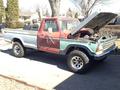
Hello all. I am having a temperature problem and am looking for some insight. My truck is a 75 F-100 and it has a 351m motor. I don't know how old the motor is or how old the water pump is, they were both in it when I bought it 4 years ago. I have changed out the thermostat and installed the Motorcraft RT-139. No issues at all with leaking or overheating until this weekend. Drove it down the road to enter the local car show, there was a crazy long line to register and while waiting I noticed the gauge moving on up. Wasn't concerned since it was a stop and go line and to be expected. Drove it out to eat dinner that evening and noticed it was running warmer than usual. On the stock gauge, about 3/4 way over on or around the "P" in the TEMP print. Figured it was maybe the thermostat sticking, so I picked up another one at NAPA THM 297. The truck does not have a fan clutch, no air conditioning, and no fan shroud. I've always meant to install a shroud, but haven't yet ( I did order one today). Swapped out the T-stat when I got home and it's still pretty warm I think. I broke the stinking connector that plugs onto the temp sending unit. However, I stripped the wire and wrapped it around the post so it would read. I also noticed the bottom radiator hose doesn't seem very firm? How firm should it feel? I squeezed it with the rad cap on and with it off. When the cap is off, I can basically close it shut. When the cap is on, it feels like it's firmer, but not by much. I also feel like there is a lot of heat at the top of the motor, the heater hoses were hot to the touch. I don't know if it's the water pump or if I have air in the system? The fluid level never dropped at all after running it for a bit. In past experiences, it seems after the truck warms, the fluid usually drops a bit. I've ordered a new wire to splice in for the temp gauge that should be here tomorrow. I may also buy an aftermarket temp gauge to connect, but would rather do it on a temporary basis. Trying to keep the stock look of the interior since I'm showing it. Would a temp gun be a better option? Any help on this would be appreciated.

Cross-Country
Joined: Apr 2018
Posts: 96
Likes: 4
From: Texas
Had same issue (79, f150, 300-6, no shroud). Sitting in drive through line, truck would get very warm.
I disconnected the heater core and pulled thermostat, took off radiator cap and put a garden hose in the radiator, sealing it with my had as well as possible. Blew untold amounts of sludge out of the radiator and block. Yes, a more responsible approach would be to take the truck to a professional.
Re-installed thermostat, reconnected heater core, filled with antifreeze/water mix.
No problems now.
I disconnected the heater core and pulled thermostat, took off radiator cap and put a garden hose in the radiator, sealing it with my had as well as possible. Blew untold amounts of sludge out of the radiator and block. Yes, a more responsible approach would be to take the truck to a professional.
Re-installed thermostat, reconnected heater core, filled with antifreeze/water mix.
No problems now.

Ford Parts Specialist
Joined: Nov 2006
Posts: 88,826
Likes: 787
From: Simi Valley, CA

Hello all. I am having a temperature problem and am looking for some insight. My truck is a 75 F-100 and it has a 351M  motor. I don't know how old the motor is or how old the water pump is, they were both in it when I bought it 4 years ago. I have changed out the thermostat and installed the Motorcraft RT-139. No issues at all with leaking or overheating until this weekend. Drove it down the road to enter the local car show, there was a crazy long line to register and while waiting I noticed the gauge moving on up. Wasn't concerned since it was a stop and go line and to be expected. Drove it out to eat dinner that evening and noticed it was running warmer than usual. On the stock gauge, about 3/4 way over on or around the "P" in the TEMP print. Figured it was maybe the thermostat sticking, so I picked up another one at NAPA THM 297.
The truck does not have a fan clutch, no air conditioning, and no fan shroud. I've always meant to install a shroud, but haven't yet ( I did order one today ). Swapped out the T-stat when I got home and it's still pretty warm I think. I broke the stinking connector that plugs onto the temp sending unit. However, I stripped the wire and wrapped it around the post so it would read. I also noticed the bottom radiator hose doesn't seem very firm? How firm should it feel? I squeezed it with the rad cap on and with it off. When the cap is off, I can basically close it shot. When the cap is off, it feels like it's firmer, but not by much. I also feel like there is a lot of heat at the top of the motor, the heater hoses were hot to the touch. I don't know if it's the water pump or if I have air in the system? The fluid level never dropped at all after running it for a bit. In past experiences, it seems after the truck warms, the fluid usually drops a bit. I've ordered a new wire to splice in for the temp gauge that should be here tomorrow. I may also buy an aftermarket temp gauge to connect, but would rather do it on a temporary basis. Trying to keep the stock look of the interior since I'm showing it. Would a temp gun be a better option? Any help on this would be appreciated.
motor. I don't know how old the motor is or how old the water pump is, they were both in it when I bought it 4 years ago. I have changed out the thermostat and installed the Motorcraft RT-139. No issues at all with leaking or overheating until this weekend. Drove it down the road to enter the local car show, there was a crazy long line to register and while waiting I noticed the gauge moving on up. Wasn't concerned since it was a stop and go line and to be expected. Drove it out to eat dinner that evening and noticed it was running warmer than usual. On the stock gauge, about 3/4 way over on or around the "P" in the TEMP print. Figured it was maybe the thermostat sticking, so I picked up another one at NAPA THM 297.The truck does not have a fan clutch, no air conditioning, and no fan shroud. I've always meant to install a shroud, but haven't yet ( I did order one today
). Swapped out the T-stat when I got home and it's still pretty warm I think. I broke the stinking connector that plugs onto the temp sending unit. However, I stripped the wire and wrapped it around the post so it would read. I also noticed the bottom radiator hose doesn't seem very firm? How firm should it feel? I squeezed it with the rad cap on and with it off. When the cap is off, I can basically close it shot. When the cap is off, it feels like it's firmer, but not by much. I also feel like there is a lot of heat at the top of the motor, the heater hoses were hot to the touch. I don't know if it's the water pump or if I have air in the system? The fluid level never dropped at all after running it for a bit. In past experiences, it seems after the truck warms, the fluid usually drops a bit. I've ordered a new wire to splice in for the temp gauge that should be here tomorrow. I may also buy an aftermarket temp gauge to connect, but would rather do it on a temporary basis. Trying to keep the stock look of the interior since I'm showing it. Would a temp gun be a better option? Any help on this would be appreciated.351M (if that's really what it is) has been swapped in, not available until 1977. 1977/82 351M/400 have 8 valve cover bolts per side.
Thread Starter
|
Cross-Country
Joined: Sep 2014
Posts: 77
Likes: 1
I bought the shroud off of bronco graveyard's site. They list the part number as
Manufacturer Part NumberD7TZ-8146-B, D7TA-SA
They weren't much help on the phone. However their website gives core dimensions and dimensions from bolt to bolt and I chose the one that matched those measurements. The sticker on the drivers side valve cover is still there from the factory and it labels it as the 351m and has various info on there like spark plug gap, etc. I've always just went with that info.
Manufacturer Part NumberD7TZ-8146-B, D7TA-SA
They weren't much help on the phone. However their website gives core dimensions and dimensions from bolt to bolt and I chose the one that matched those measurements. The sticker on the drivers side valve cover is still there from the factory and it labels it as the 351m and has various info on there like spark plug gap, etc. I've always just went with that info.
Thread Starter
|
Cross-Country
Joined: Sep 2014
Posts: 77
Likes: 1
I may pull the radiator and have it cleaned by a shop. Theres one a not too far from work. I'm guessing it's a flow issue somewhere since the bottom hose doesn't feel firm? And it got warm at the stop and go time and when I was driving 70 down the highway. Outside temp was about 75 or so, so not hot at all. The truck has never ran warm before Saturday.
Ford Parts Specialist
Joined: Nov 2006
Posts: 88,826
Likes: 787
From: Simi Valley, CA
I bought the shroud off of bronco graveyard's site. They list the part number as
Manufacturer Part Number D7TZ-8146-B // ID number marked on upper left corner: D7TA-SA
Manufacturer Part Number D7TZ-8146-B // ID number marked on upper left corner: D7TA-SA
1973/78 F100/350 & 1978 Bronco with round headlamps: TWO different radiator supports.
The Super Cooling radiator support has a larger opening radius. If your '75 didn't have this radiator, you'll have to trim the support and drill new mounting holes for the radiator & the shroud.
Specs: Standard/Xtra Cooling & A/C radiators: 26 1/4" wide x 19 3/4" high // Super Cooling radiator: 26 1/4" wide x 24 11/16" high.
Trending Topics

Lead Driver


Joined: Jul 2017
Posts: 9,606
Likes: 1,175
From: San Jose, CA
That doesn't sound like a big issue worth a lot of worry yet bull jr. I usually recommend verifying that the temperature is actually rising, and if so, just how high it's going.
The reason is that even the gauge can be off. It can even be spot on one day, then the next it's starting to act up and not read the same as before. I bet someone here over the years has even charted just how much sweep is how many degrees too. So you could compare your needle position to a known temperature (with a properly working gauge) and see if you were indeed hot, or just 10 degrees above normal.
Glad you decided to get the shroud. Even though a shroud is usually not a magic bullet for curing a real overheating issue, it definitely makes the fan more effective. And it certainly won't hurt anything!
Even if it doesn't change your experience then, it gives your cooling system a hand up to keeping things cooler under a wider range of circumstances.
No matter what though, it would be nice to know just what temperature you're experiencing.
Paul
The reason is that even the gauge can be off. It can even be spot on one day, then the next it's starting to act up and not read the same as before. I bet someone here over the years has even charted just how much sweep is how many degrees too. So you could compare your needle position to a known temperature (with a properly working gauge) and see if you were indeed hot, or just 10 degrees above normal.
Glad you decided to get the shroud. Even though a shroud is usually not a magic bullet for curing a real overheating issue, it definitely makes the fan more effective. And it certainly won't hurt anything!
Even if it doesn't change your experience then, it gives your cooling system a hand up to keeping things cooler under a wider range of circumstances.
No matter what though, it would be nice to know just what temperature you're experiencing.
Paul
FTE Stories
Ford Trucks for Ford Truck Enthusiasts

3 Best / 3 Worst Parts of Modern Ford Ownership
Brett Foote
10 Amazing Upgrades That Solve Common Ford Truck Owner Headaches
Pouria Savadkouei
Every 2026 Ford Engine Explained
Brett Foote
10 Ugly Ford Trucks That We Still Kinda Love
Joe Kucinski
10 Things Every Truck Owner NEEDS (2026 Edition)
Michael S. Palmer
Rezvani's Latest Post-Apocalyptic Monster Is a Ford F-150 Raptor Underneath
Verdad Gallardo
Top 10 Most Expensive Ford Trucks Ever Sold on Bring a Trailer
Joe Kucinski
2027 Ford Super Duty Buyer's Guide (Every Model, Engine, & Package)
Brett Foote
Top 10 Ford Truck Tragedies
Joe Kucinski
Logistics Pro


Joined: Jul 2005
Posts: 4,217
Likes: 154
The T-stat area is where the gauge senses temperature, so that is one good spot.
I second checking your lower hose to see if it's collapsing on you. Start the engine and let the gauge start going above the old normal, and then check that hose.
So does the engine smell hot when the gauge needle goes up? Do you hear any boiling?
These factory temperature gauges have been known to cry "wolf!" when there's nothing but a house cat nearby...
I second checking your lower hose to see if it's collapsing on you. Start the engine and let the gauge start going above the old normal, and then check that hose.
So does the engine smell hot when the gauge needle goes up? Do you hear any boiling?
These factory temperature gauges have been known to cry "wolf!" when there's nothing but a house cat nearby...
Logistics Pro
Joined: May 2010
Posts: 4,436
Likes: 19
From: Regina, Saskatchewan
FIRST
If you can squeeze the lower radiator hose and make it collapse everywhere, then you need a lower radiator hose spring. Here is the spring you're looking for. Ignore that it says "Mustang", it's the correct diameter and length for your application. I know this because I have one.
SECOND
Pull the drain plugs from your block, and drain the entire system. I'm willing to bet that you've got years and years of crud built up in the engine and its affecting your cooling capacity. The drain plugs (if stock) are square headed plugs, located at the front of the block on the passenger side and the rear of the block on the driver side. They're not going to be fun to get out, but it's worth your time if you're having cooling issues to look into them and drain the block properly. This would also give you an opportunity to flush the entire system.
THIRD
Make sure you're using the proper thermostat. Tim Meyer of TMeyerInc sells the correct Robert Shaw thermostats for the 335 series motor. Many parts stores will sell you a thermostat and tell you that it will work for the application, but then you'll end up overheating because it's incorrect (sounds familiar eh?).
Tim's thermostats are located here on Tim's website. You do NOT need the Cleveland bypass Plate. The stock thermostat you're looking for is the 195 Fahrenheit one.
Lastly, here is an old thread that tells a similar story to yours with overheating. Give it a read. You'll notice that they changed out their NAPA thermostat for a correct Robert Shaw thermostat.
Logistics Pro
Joined: Jul 2005
Posts: 4,217
Likes: 154
Get another plug end and twist-connect its wire to your truck's wire, and then tape or heat-shrink it. You can get the connector off another Ford at the junk yard, or I guess a parts store might have one.
Lead Driver
Joined: Jul 2017
Posts: 9,606
Likes: 1,175
From: San Jose, CA
What they said. But I still like using the infrared thermometers as a diagnostic tool. The more often you use them on different points of the engine and radiator, the better feel you have for what your system is doing, and pretty close to what temps you're reading.
I agree that the readings are slightly skewed by reading the surface temps of the aluminum or cast-iron, or even the sending unit itself (which I like to do), but it still lets you know some of what's going on.
Another thing you can do is read the coolant temps right at the top of the radiator directly. Leave the cap open or off while the engine is running and the coolant flowing along the top tank is actually going to be (or should be at least) very close to the temps in the engine. You're catching it before it's gone through any of the cooling tubes of the core, right after it exits the engine. So it's going to be a reasonably close and reasonably consistent measuring stick.
Just like we used to stick a basting thermometer into the coolant directly to get an idea. Which you can still do too of course. Just that IR thermometers are just so much more of a cool-tool to use!
And don't be afraid of that 195° thermometer recommended either. So many will go to a 180 or even a 160 in the hunt for lower temperatures that really are not even needed. The higher temps are more efficient (up to a point anyway) for combustion and happy motor oil too.
Modern cars run at 195-215 all day long and likely have 200 or so as the middle position of the gauge.
Looking forward to hearing more progress.
Paul
I agree that the readings are slightly skewed by reading the surface temps of the aluminum or cast-iron, or even the sending unit itself (which I like to do), but it still lets you know some of what's going on.
Another thing you can do is read the coolant temps right at the top of the radiator directly. Leave the cap open or off while the engine is running and the coolant flowing along the top tank is actually going to be (or should be at least) very close to the temps in the engine. You're catching it before it's gone through any of the cooling tubes of the core, right after it exits the engine. So it's going to be a reasonably close and reasonably consistent measuring stick.
Just like we used to stick a basting thermometer into the coolant directly to get an idea. Which you can still do too of course. Just that IR thermometers are just so much more of a cool-tool to use!
And don't be afraid of that 195° thermometer recommended either. So many will go to a 180 or even a 160 in the hunt for lower temperatures that really are not even needed. The higher temps are more efficient (up to a point anyway) for combustion and happy motor oil too.
Modern cars run at 195-215 all day long and likely have 200 or so as the middle position of the gauge.
Looking forward to hearing more progress.
Paul

Thread Starter
|
Cross-Country
Joined: Sep 2014
Posts: 77
Likes: 1
Thank you all for your responses. It's truly appreciated. I will check to see if the hose is collapsing but don't think that it is. I did some feeling on it when it was running and didn't notice. I went ahead and bought the heat gun, because, well it's a new toy. I will try it at the housing and directly at the fluid in the radiator, both make sense. I don't expect it to be 100%, but I think it will be a decent way to gauge. My dad has used one doing the same thing and said they are decent but not 100% accurate. I put in the 192 degree thermostat that NAPA sells, it has the flange on the bottom that seems to be mandatory. I pulled the Motorcraft thermostat that was in there and boiled it to see if it worked and it did. So now i am not sure. Also, someone mentioned the wrapped wire connection making more resistance, I suspect that was the case because initally, they gauge pegged out all the way to the right, and when I played with it, it fluctuated quite a bit. Also, this is a sill question I'm sure, but which part is the thermostat flange? The flat round part that seals against the motor? Where would I drill a hole at for that?