



Ford Econoline E450 2004 Alternator

Thread Starter
|
New User
Joined: Jan 2018
Posts: 13
Likes: 0
Ford Econoline E450 2004 Alternator
Hello everyone! I am new here! I must replace an alternator on my ford e450 Superduty 6.0L and I was wondering if there is any page or video on the internet to guide me on how to do it?
Also, another question, is this the alternator on my Ford? (go to 00:14)
Thanks for the help in advance.
Also, another question, is this the alternator on my Ford? (go to 00:14)
Thanks for the help in advance.

Lead Driver


Joined: Mar 2010
Posts: 5,505
Likes: 256
From: Woodbridge, Ontario, CA

In answer to your question, yes the vehicle depicted in the video you've posted is identical to the vehicle in your description.
In answer to your question regarding "how" to change the alternator on your van will be more difficult to describe than to do the actual job itself. It's been MANY years since I've been into an E-Series 6.0L (THANK GOD) so my memory may be a little fuzzy. The biggest time saver is NOT to remove the drive belt itself, but rather to release the tension from the drive belt itself. Scroll down to post #4 of this thread:
https://www.ford-trucks.com/forums/1...placement.html
If you look at texastech_diesel's second and third photo's titled "Kickstand OFF" and "Kickstand ON", you will understand the position your belt tensioner needs to be in, during alternator removal/replacement.
To give you better access to your work area though, the article below will direct you on how to remove the wire harness loom out of your way:
6.0L E-Series Fuel Filter Removal - DTS Articles - Diesel Technician Society
Once you've followed the steps outlined above, there's simply the hot side CAC pipe and metal bracket that attaches to the alternator on one end and the cold side air intake elbow on the other end to contend with. After that, it's simply the three 15mm fasteners that secure the alternator to the intake manifold and you're there.
In answer to your question regarding "how" to change the alternator on your van will be more difficult to describe than to do the actual job itself. It's been MANY years since I've been into an E-Series 6.0L (THANK GOD) so my memory may be a little fuzzy. The biggest time saver is NOT to remove the drive belt itself, but rather to release the tension from the drive belt itself. Scroll down to post #4 of this thread:
https://www.ford-trucks.com/forums/1...placement.html
If you look at texastech_diesel's second and third photo's titled "Kickstand OFF" and "Kickstand ON", you will understand the position your belt tensioner needs to be in, during alternator removal/replacement.
To give you better access to your work area though, the article below will direct you on how to remove the wire harness loom out of your way:
6.0L E-Series Fuel Filter Removal - DTS Articles - Diesel Technician Society
Once you've followed the steps outlined above, there's simply the hot side CAC pipe and metal bracket that attaches to the alternator on one end and the cold side air intake elbow on the other end to contend with. After that, it's simply the three 15mm fasteners that secure the alternator to the intake manifold and you're there.
Thread Starter
|
New User
Joined: Jan 2018
Posts: 13
Likes: 0
Small question, the threads you linked are for "6.0 Powerstroke". Is my ford considered a "6.0 Powerstroke"? I am asking just for the future when I search online I want to know what to search for, what type of truck/engine do I have? What is it called? Here is the VIN number: 1FDXE45P04HA89231
Also, I will probably be changing the fuel filter at the same time as the alternator, but I noticed in the video, it says "Secondary filter". Does that mean there is another filter? And could you tell me where it is located?
Last question, I have the "Water in fuel" Error on my dash board. I have seen online you must drain the "water and fuel filter". Could you tell me where that drain plug is located ?
Thanks a LOT. You have no idea how much you've helped me. I will post the alternator results in a couple of days.
Also, I will probably be changing the fuel filter at the same time as the alternator, but I noticed in the video, it says "Secondary filter". Does that mean there is another filter? And could you tell me where it is located?
Last question, I have the "Water in fuel" Error on my dash board. I have seen online you must drain the "water and fuel filter". Could you tell me where that drain plug is located ?
Thanks a LOT. You have no idea how much you've helped me. I will post the alternator results in a couple of days.
Lead Driver
Joined: Mar 2010
Posts: 5,505
Likes: 256
From: Woodbridge, Ontario, CA
Small question, the threads you linked are for "6.0 Powerstroke". Is my ford considered a "6.0 Powerstroke"? I am asking just for the future when I search online I want to know what to search for, what type of truck/engine do I have? What is it called? Here is the VIN number: 1FDXE45P04HA89231
Last question, I have the "Water in fuel" Error on my dash board. I have seen online you must drain the "water and fuel filter". Could you tell me where that drain plug is located ?
Thanks a LOT. You have no idea how much you've helped me. I will post the alternator results in a couple of days.
Thanks a LOT. You have no idea how much you've helped me. I will post the alternator results in a couple of days.
Thread Starter
|
New User
Joined: Jan 2018
Posts: 13
Likes: 0
Trending Topics
Token Redneck
Joined: Jun 2007
Posts: 9,335
Likes: 344
From: Breckenridge, TX
FTE Stories
Ford Trucks for Ford Truck Enthusiasts

Top 10 Most Expensive Ford Trucks Ever Sold on Bring a Trailer
Joe Kucinski
2027 Ford Super Duty Buyer's Guide (Every Model, Engine, & Package)
Brett Foote
Top 10 Ford Truck Tragedies
Joe Kucinski
AEV FXL Super Duty - the Super Duty Raptor Ford Doesn't Make
Brett Foote
Lobo Vs Lobo: Proof the F-150 Lobo Should Be Even Lower!
Michael S. Palmer
Ford's 2001 Explorer Sportsman Concept Looks For a New Home
Verdad Gallardo
10 Best Ford Truck Engines We Miss the Most!
Joe Kucinski
2026 Shelby F-150 Off-Road: Better Than a Raptor R?
Brett Foote
2027 Super Duty Carhartt Package First Look: 12 Things You NEED to Know!
Michael S. Palmer
Token Redneck
Joined: Jun 2007
Posts: 9,335
Likes: 344
From: Breckenridge, TX
Staring at 4:10 he removes the CAC tube (that's the one with insulation wrapped around it you had red arrows pointing to). I didn't catch him taking the bracket apart, but I was skipping through it fast. Loosen the boot clamps on each end of the tube and the bolt still holding it in should be pretty straightforward to find.
Intake elbow is shown at 6:10, removal is at 6:45. Four bolts and a rubber gasket, don't lose the gasket if it sticks to the elbow when you pull it out.
The belt tensioner shows up at 8:45 in the bottom left hand corner. Pics in the other thread show you how to put a 1/2" drive brekaer bar into the square hole, and how to set the kickstand to keep the belt tension off if you can't just lift it off the alternator pulley. I use a pair of thin rods with square drives on them to get to the tensioner:
Alternator has three bolts holding it down, one wiring connector, and a B+ wire to disconnect. Don't short the wire to anything (ie disconnect your battery grounds and insulate them) and don't break that stud on the back of the alternator when you put the new one in, the spec is 71 in-lb, aka snug with a short 1/4" ratchet.
Intake elbow is shown at 6:10, removal is at 6:45. Four bolts and a rubber gasket, don't lose the gasket if it sticks to the elbow when you pull it out.
The belt tensioner shows up at 8:45 in the bottom left hand corner. Pics in the other thread show you how to put a 1/2" drive brekaer bar into the square hole, and how to set the kickstand to keep the belt tension off if you can't just lift it off the alternator pulley. I use a pair of thin rods with square drives on them to get to the tensioner:

Alternator has three bolts holding it down, one wiring connector, and a B+ wire to disconnect. Don't short the wire to anything (ie disconnect your battery grounds and insulate them) and don't break that stud on the back of the alternator when you put the new one in, the spec is 71 in-lb, aka snug with a short 1/4" ratchet.
Thread Starter
|
New User
Joined: Jan 2018
Posts: 13
Likes: 0
Thanks for the replies. I've replaced the alternator successfuly but unfortunately I think that wasn't the problem. I'm jumping the truck using another truck, and while the truck is running, I'm testing the alternator voltage and it's not giving me any voltage. Any idea on what's going on?
Thanks
Thanks
Lead Driver
Joined: Mar 2010
Posts: 5,505
Likes: 256
From: Woodbridge, Ontario, CA
What were the symptoms that led to the alternator replacement in the first place? For what it's worth, both batteries are enclosed in a plastic storage box, mounted on the passenger side framerail on this vehicle so testing for battery power is a little more difficult due to lack of quick and easy access to the batteries.
Something else to consider. You will obtain incorrect or false charging system readings if you attempt to check it after engine startup. The glow plug control remains energized even after initial engine startup for as long as a minute, depending on how cold the ambient temperature is. Once the glow plug control turns off, is when the charging system kicks in, and when it's time to check for system voltage.
Something else to consider. You will obtain incorrect or false charging system readings if you attempt to check it after engine startup. The glow plug control remains energized even after initial engine startup for as long as a minute, depending on how cold the ambient temperature is. Once the glow plug control turns off, is when the charging system kicks in, and when it's time to check for system voltage.
Token Redneck
Joined: Jun 2007
Posts: 9,335
Likes: 344
From: Breckenridge, TX
What are you touching with the DVM? "No voltage" as in your meter literally reads 0V, or you're seeing something in the 9-12V range from the batteries and just aren't seeing a charging voltage of 13-14V?
Thread Starter
|
New User
Joined: Jan 2018
Posts: 13
Likes: 0
What were the symptoms that led to the alternator replacement in the first place? For what it's worth, both batteries are enclosed in a plastic storage box, mounted on the passenger side framerail on this vehicle so testing for battery power is a little more difficult due to lack of quick and easy access to the batteries.
Something else to consider. You will obtain incorrect or false charging system readings if you attempt to check it after engine startup. The glow plug control remains energized even after initial engine startup for as long as a minute, depending on how cold the ambient temperature is. Once the glow plug control turns off, is when the charging system kicks in, and when it's time to check for system voltage.
What are you touching with the DVM? "No voltage" as in your meter literally reads 0V, or you're seeing something in the 9-12V range from the batteries and just aren't seeing a charging voltage of 13-14V?
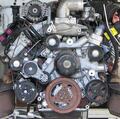
I'm touching this: