


Changing to fuel injection
Thread Starter
|
Junior User
Joined: Feb 2016
Posts: 52
Likes: 2
From: Spencer, Ma
Changing to fuel injection
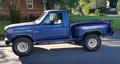
I am considering changing my '82 F150 over to fuel injection and scrap that carb.. Its a 6 cyl and I have been told changes over well... I know someone in here has tried it... Thoughts?? and once again thanks for all your help...
Guns
Guns

Fleet Mechanic
Joined: Mar 2014
Posts: 1,926
Likes: 116
From: Saskatchewan Canada
What to say that has not already been said?
Well, I would strongly recommend a donor truck. Just like the guys who want to ditch the EFI for a carb, the entire fuel system is different.
So, assuming you will use an 87 and up truck for a donor, you are going to be changing fuel tanks and lines. Layout on the trucks are consistent enough through 96 that this can be accomplished. You are going to need a speed sensor, so you will be changing out the rear diff as well. If your truck is 4X4, make sure you match the ratio with the front diff. The engine can be stripped of the manifolds and the distributor and all the fuel injection parts can be installed. Perhaps you would choose to use the entire fuel injected engine?
Wiring will be a bit of a challenge. Get ahold of the EVTM's for both your 82 and the donor truck. The 4.9 was not fuel injected till 1987 and the bricknose variant has quite a bit of different strategy in the wiring. Main connector at the firewall is completely different and the later truck has provisions for mounting the ECM behind the left kick panel. You could fabricate a stand alone wiring harness and install the ECM in a similar manner to the 85/86 V8 trucks. There also is quite a bit of difference in the dash wiring between your 82 and an 87/later truck.
I'm sure Gary will recommend his page and it is a valuable resource. ???Gary's Garagemahal - Home
Big job, but it can be done.
Well, I would strongly recommend a donor truck. Just like the guys who want to ditch the EFI for a carb, the entire fuel system is different.
So, assuming you will use an 87 and up truck for a donor, you are going to be changing fuel tanks and lines. Layout on the trucks are consistent enough through 96 that this can be accomplished. You are going to need a speed sensor, so you will be changing out the rear diff as well. If your truck is 4X4, make sure you match the ratio with the front diff. The engine can be stripped of the manifolds and the distributor and all the fuel injection parts can be installed. Perhaps you would choose to use the entire fuel injected engine?
Wiring will be a bit of a challenge. Get ahold of the EVTM's for both your 82 and the donor truck. The 4.9 was not fuel injected till 1987 and the bricknose variant has quite a bit of different strategy in the wiring. Main connector at the firewall is completely different and the later truck has provisions for mounting the ECM behind the left kick panel. You could fabricate a stand alone wiring harness and install the ECM in a similar manner to the 85/86 V8 trucks. There also is quite a bit of difference in the dash wiring between your 82 and an 87/later truck.
I'm sure Gary will recommend his page and it is a valuable resource. ???Gary's Garagemahal - Home
Big job, but it can be done.

FTE Legend


Joined: Jul 2010
Posts: 32,875
Likes: 48
From: Northeast, OK
I'm seriously thinking about getting a Bronco, and one with EFI is high on the list as I plan to take it to higher elevations and do not want to adjust a carb. So, I understand the draw. But, the 86 EVTM has nothing regarding EFI for the 4.9L as that happened later.

Junior User
Joined: Mar 2012
Posts: 94
Likes: 0
From: North East Arkansas
FiTech Fuel Injection
Attached is a link I've been mulling over. Might want to check it out. Anyone with an opinion on these?
Attached is a link I've been mulling over. Might want to check it out. Anyone with an opinion on these?
FTE Legend


Joined: Nov 2015
Posts: 30,906
Likes: 4,122
From: Angier, NC

If I was to do EFI on anything I would not try and use factory system.
One how old is this system, what is bad and warn out and can you get any replacement parts?
The as pointed out senders don't work with some year trucks and I am sure there is a lot more.
Go with a bolt on after market set up. They are made to be used on cars/trucks that did not come with EFI. If you have any issues you have someone you can call, if factory system who you going to call.
Dave ----
One how old is this system, what is bad and warn out and can you get any replacement parts?
The as pointed out senders don't work with some year trucks and I am sure there is a lot more.
Go with a bolt on after market set up. They are made to be used on cars/trucks that did not come with EFI. If you have any issues you have someone you can call, if factory system who you going to call.
Dave ----
Trending Topics

Moderator


Joined: Jan 2001
Posts: 56,983
Likes: 2,736
From: Virginia
Are you ready to learn about the fuel injection system and repair it when it breaks? No one is going to want to work on a converted truck, so you will be the one to fix it.
The Fitech looks like throttle body. One of the biggest drawbacks a inline engine has is fuel distribution in the intake. The very end cylinders have a hard time getting fuel. The port fuel injection gets rid of this problem, the intake becomes a dry intake. No heat needed under the intake too, which opens up exhaust options.
The Fitech looks like throttle body. One of the biggest drawbacks a inline engine has is fuel distribution in the intake. The very end cylinders have a hard time getting fuel. The port fuel injection gets rid of this problem, the intake becomes a dry intake. No heat needed under the intake too, which opens up exhaust options.
FTE Stories
Ford Trucks for Ford Truck Enthusiasts

Top 10 Most Expensive Ford Trucks Ever Sold on Bring a Trailer
Joe Kucinski
2027 Ford Super Duty Buyer's Guide (Every Model, Engine, & Package)
Brett Foote
Top 10 Ford Truck Tragedies
Joe Kucinski
AEV FXL Super Duty - the Super Duty Raptor Ford Doesn't Make
Brett Foote
Lobo Vs Lobo: Proof the F-150 Lobo Should Be Even Lower!
Michael S. Palmer
Ford's 2001 Explorer Sportsman Concept Looks For a New Home
Verdad Gallardo
10 Best Ford Truck Engines We Miss the Most!
Joe Kucinski
2026 Shelby F-150 Off-Road: Better Than a Raptor R?
Brett Foote
2027 Super Duty Carhartt Package First Look: 12 Things You NEED to Know!
Michael S. Palmer
Cargo Master

Joined: Oct 2005
Posts: 2,298
Likes: 26
From: NJ
Why? What are you hoping to fix or gain?
My thoughts are that there are zero benefits. You'll spend a bunch of time and money to have a less reliable truck simply from the added complexity. There will be no ROI on this expenditure. If you want to improve performance and driveability I would remove emissions equipment and convert it to a Holley 600 CFM 4160 and standard Duraspark II system if it's the feedback setup.
My thoughts are that there are zero benefits. You'll spend a bunch of time and money to have a less reliable truck simply from the added complexity. There will be no ROI on this expenditure. If you want to improve performance and driveability I would remove emissions equipment and convert it to a Holley 600 CFM 4160 and standard Duraspark II system if it's the feedback setup.
Fleet Mechanic
Joined: Mar 2014
Posts: 1,926
Likes: 116
From: Saskatchewan Canada
Lots of generalization here, some I agree, some I don't.
First, Fitech vs. factory. The Fitech product has it's place, but it is primarily designed to replace a 4 bbl carb with a throttle body EFI. The Ford EFI as used on the 4.9 is simple, well designed and widely supported. Pricewise, the Fitech will set you back a minimum of $800 plus the cost of a 4 bbl manifold for your inline 6. Chances are you can buy a complete parts truck with an EFI 4.9 for much less. The factory system is better.
Serviceability is going to be something of an issue. Nobody wants to work on someone else's Frankenstein, but someone is going to put this together and if that someone is you, you will have a good working knowledge of EFI by the time you have it running. Once again, going with the OEM system will ensure parts availability. Not sure that any aftermarket system will easily match that.
One more on serviceability. I hope nobody really thinks their carburetor equipped vehicle is going to be easier to service in this day and age. Should you have to seek help, just how many carburetor fluent mechanics are you going to find at your Ford dealership today? It does not matter because they will steer you into the showroom and the sales pitch is on. No sale here!
The fuel gauge sender issue was mentioned. This is simply a gauge issue and it is not the show stopper you have been told. There always is a solution and I would suggest using 85/86 5.0 EFI in-tank pumps and senders which will be compatible with your 82 gauges.
Is it worth it? Well, that depends. If you are dealing with the dreaded feedback carburetor, either going to the earlier simple carburetor or ditching it all in favour of EFI is going to yield significant improvements. Now, the ever present question is carb or EFI, which is better and both sides have their adherents. I used to have a 92 Bronco with a 4.9 EFI. It always started and ran well, but the power was disappointing as was the fuel mileage. I currently have a 68 F350 with a carbureted 300 six. It starts reliably, idles poorly and has power and fuel mileage comparable to the Bronco.
I said earlier, it is difficult, but it can be done. Would I do it? Not likely as I think any gains would be insignificant enough to be disappointing. Note I said gains, the carburetor is not going to run better than EFI! If I was looking for real gains, I would be swapping in an EFI equipped V8. What the six does best is hard work at low speeds. If you are looking for economy, a 5.0 is a better choice. Power, choose a 5.8 or a 7.5.
One last option which would be heavily modification intensive, (again for little gain) would be a conversion using GM TBI components. I know of a 300 six running like this and it does run quite well. The GM components again have the advantage of wide availability and those GM tuners really know their ECM inside and out. Cost is determined by your ability to scrounge the junkyards. There are millions of 305 calibrated TBI's out there which will work and can be had cheaply. Not an easy project, but quite possible.
First, Fitech vs. factory. The Fitech product has it's place, but it is primarily designed to replace a 4 bbl carb with a throttle body EFI. The Ford EFI as used on the 4.9 is simple, well designed and widely supported. Pricewise, the Fitech will set you back a minimum of $800 plus the cost of a 4 bbl manifold for your inline 6. Chances are you can buy a complete parts truck with an EFI 4.9 for much less. The factory system is better.
Serviceability is going to be something of an issue. Nobody wants to work on someone else's Frankenstein, but someone is going to put this together and if that someone is you, you will have a good working knowledge of EFI by the time you have it running. Once again, going with the OEM system will ensure parts availability. Not sure that any aftermarket system will easily match that.
One more on serviceability. I hope nobody really thinks their carburetor equipped vehicle is going to be easier to service in this day and age. Should you have to seek help, just how many carburetor fluent mechanics are you going to find at your Ford dealership today? It does not matter because they will steer you into the showroom and the sales pitch is on. No sale here!
The fuel gauge sender issue was mentioned. This is simply a gauge issue and it is not the show stopper you have been told. There always is a solution and I would suggest using 85/86 5.0 EFI in-tank pumps and senders which will be compatible with your 82 gauges.
Is it worth it? Well, that depends. If you are dealing with the dreaded feedback carburetor, either going to the earlier simple carburetor or ditching it all in favour of EFI is going to yield significant improvements. Now, the ever present question is carb or EFI, which is better and both sides have their adherents. I used to have a 92 Bronco with a 4.9 EFI. It always started and ran well, but the power was disappointing as was the fuel mileage. I currently have a 68 F350 with a carbureted 300 six. It starts reliably, idles poorly and has power and fuel mileage comparable to the Bronco.
I said earlier, it is difficult, but it can be done. Would I do it? Not likely as I think any gains would be insignificant enough to be disappointing. Note I said gains, the carburetor is not going to run better than EFI! If I was looking for real gains, I would be swapping in an EFI equipped V8. What the six does best is hard work at low speeds. If you are looking for economy, a 5.0 is a better choice. Power, choose a 5.8 or a 7.5.
One last option which would be heavily modification intensive, (again for little gain) would be a conversion using GM TBI components. I know of a 300 six running like this and it does run quite well. The GM components again have the advantage of wide availability and those GM tuners really know their ECM inside and out. Cost is determined by your ability to scrounge the junkyards. There are millions of 305 calibrated TBI's out there which will work and can be had cheaply. Not an easy project, but quite possible.
Cargo Master
Joined: Oct 2005
Posts: 2,298
Likes: 26
From: NJ
One more on serviceability. I hope nobody really thinks their carburetor equipped vehicle is going to be easier to service in this day and age. Should you have to seek help, just how many carburetor fluent mechanics are you going to find at your Ford dealership today? It does not matter because they will steer you into the showroom and the sales pitch is on. No sale here!
There's very little to fail or go wrong, problems typically come from sitting for extended periods of time with the poor excuse for fuel we are forced to live with these days. Even then, I have carbureted engines that sit for 6-9 months at a time and fire right up and just plain work every time I need them. Small engine carbs (motorcycle, lawn equipment) are more susceptible to these fuel issues and should have fuel bowls drained before extended storage.

Elder User
Joined: Nov 2013
Posts: 524
Likes: 0
From: Maryland
Just a minor correction, but you'll want a 4.9 parts truck with a stick or C6 auto so you won't have to fool the E4OD computer; this also eliminates the axle switching, etc. If you want to keep your gas tank, look for an '87 to '89 truck, they use the same diameter sending unit hole (in 90 they changed the fuel system up)
In my honest opinion, if you're looking for more power or future mods, stick with the carb. If drivability, carry on with your EFI swap Personally, after I rebuilt the carb on my feedback truck, it starts right up in 15 degree weather, as does my son's non feedback truck
In my honest opinion, if you're looking for more power or future mods, stick with the carb. If drivability, carry on with your EFI swap
Personally, after I rebuilt the carb on my feedback truck, it starts right up in 15 degree weather, as does my son's non feedback truck
FTE Legend
Joined: Nov 2015
Posts: 30,906
Likes: 4,122
From: Angier, NC
Are you ready to learn about the fuel injection system and repair it when it breaks? No one is going to want to work on a converted truck, so you will be the one to fix it.
The Fitech looks like throttle body. One of the biggest drawbacks a inline engine has is fuel distribution in the intake. The very end cylinders have a hard time getting fuel. The port fuel injection gets rid of this problem, the intake becomes a dry intake. No heat needed under the intake too, which opens up exhaust options.
The Fitech looks like throttle body. One of the biggest drawbacks a inline engine has is fuel distribution in the intake. The very end cylinders have a hard time getting fuel. The port fuel injection gets rid of this problem, the intake becomes a dry intake. No heat needed under the intake too, which opens up exhaust options.
Lots of generalization here, some I agree, some I don't.
First, Fitech vs. factory. The Fitech product has it's place, but it is primarily designed to replace a 4 bbl carb with a throttle body EFI. The Ford EFI as used on the 4.9 is simple, well designed and widely supported. Pricewise, the Fitech will set you back a minimum of $800 plus the cost of a 4 bbl manifold for your inline 6. Chances are you can buy a complete parts truck with an EFI 4.9 for much less. The factory system is better.
Serviceability is going to be something of an issue. Nobody wants to work on someone else's Frankenstein, but someone is going to put this together and if that someone is you, you will have a good working knowledge of EFI by the time you have it running. Once again, going with the OEM system will ensure parts availability. Not sure that any aftermarket system will easily match that.
One more on serviceability. I hope nobody really thinks their carburetor equipped vehicle is going to be easier to service in this day and age. Should you have to seek help, just how many carburetor fluent mechanics are you going to find at your Ford dealership today? It does not matter because they will steer you into the showroom and the sales pitch is on. No sale here!
The fuel gauge sender issue was mentioned. This is simply a gauge issue and it is not the show stopper you have been told. There always is a solution and I would suggest using 85/86 5.0 EFI in-tank pumps and senders which will be compatible with your 82 gauges.
Is it worth it? Well, that depends. If you are dealing with the dreaded feedback carburetor, either going to the earlier simple carburetor or ditching it all in favour of EFI is going to yield significant improvements. Now, the ever present question is carb or EFI, which is better and both sides have their adherents. I used to have a 92 Bronco with a 4.9 EFI. It always started and ran well, but the power was disappointing as was the fuel mileage. I currently have a 68 F350 with a carbureted 300 six. It starts reliably, idles poorly and has power and fuel mileage comparable to the Bronco.
I said earlier, it is difficult, but it can be done. Would I do it? Not likely as I think any gains would be insignificant enough to be disappointing. Note I said gains, the carburetor is not going to run better than EFI! If I was looking for real gains, I would be swapping in an EFI equipped V8. What the six does best is hard work at low speeds. If you are looking for economy, a 5.0 is a better choice. Power, choose a 5.8 or a 7.5.
One last option which would be heavily modification intensive, (again for little gain) would be a conversion using GM TBI components. I know of a 300 six running like this and it does run quite well. The GM components again have the advantage of wide availability and those GM tuners really know their ECM inside and out. Cost is determined by your ability to scrounge the junkyards. There are millions of 305 calibrated TBI's out there which will work and can be had cheaply. Not an easy project, but quite possible.
First, Fitech vs. factory. The Fitech product has it's place, but it is primarily designed to replace a 4 bbl carb with a throttle body EFI. The Ford EFI as used on the 4.9 is simple, well designed and widely supported. Pricewise, the Fitech will set you back a minimum of $800 plus the cost of a 4 bbl manifold for your inline 6. Chances are you can buy a complete parts truck with an EFI 4.9 for much less. The factory system is better.
Serviceability is going to be something of an issue. Nobody wants to work on someone else's Frankenstein, but someone is going to put this together and if that someone is you, you will have a good working knowledge of EFI by the time you have it running. Once again, going with the OEM system will ensure parts availability. Not sure that any aftermarket system will easily match that.
One more on serviceability. I hope nobody really thinks their carburetor equipped vehicle is going to be easier to service in this day and age. Should you have to seek help, just how many carburetor fluent mechanics are you going to find at your Ford dealership today? It does not matter because they will steer you into the showroom and the sales pitch is on. No sale here!
The fuel gauge sender issue was mentioned. This is simply a gauge issue and it is not the show stopper you have been told. There always is a solution and I would suggest using 85/86 5.0 EFI in-tank pumps and senders which will be compatible with your 82 gauges.
Is it worth it? Well, that depends. If you are dealing with the dreaded feedback carburetor, either going to the earlier simple carburetor or ditching it all in favour of EFI is going to yield significant improvements. Now, the ever present question is carb or EFI, which is better and both sides have their adherents. I used to have a 92 Bronco with a 4.9 EFI. It always started and ran well, but the power was disappointing as was the fuel mileage. I currently have a 68 F350 with a carbureted 300 six. It starts reliably, idles poorly and has power and fuel mileage comparable to the Bronco.
I said earlier, it is difficult, but it can be done. Would I do it? Not likely as I think any gains would be insignificant enough to be disappointing. Note I said gains, the carburetor is not going to run better than EFI! If I was looking for real gains, I would be swapping in an EFI equipped V8. What the six does best is hard work at low speeds. If you are looking for economy, a 5.0 is a better choice. Power, choose a 5.8 or a 7.5.
One last option which would be heavily modification intensive, (again for little gain) would be a conversion using GM TBI components. I know of a 300 six running like this and it does run quite well. The GM components again have the advantage of wide availability and those GM tuners really know their ECM inside and out. Cost is determined by your ability to scrounge the junkyards. There are millions of 305 calibrated TBI's out there which will work and can be had cheaply. Not an easy project, but quite possible.
As for who would be doing the install and work on it you will not find any dealers that will do this and I am thinking few if any garages so it would be the owner install.
If the owner is up to this then he/she would be up to working on carbs.
Port injection would be the way to go on any motor for better power & fuel management than TBI but I have not seen any DIY kits to do this in your garage.
The GM TBI DIY is MegaSquirt | Premier DIY EFI Controller and I know if a person using it on an AMC 258 used for off roading and the only thing he had go bad was an O2 sensor.
BTW IIRC MOPAR made a EFI kit for Jeeps at one time, think it was TBI but not 100% sure on that.
Dave ----

Cargo Master
Joined: Dec 2004
Posts: 3,362
Likes: 22
From: Florence, SC
Originally Posted by Franklin2
Are you ready to learn about the fuel injection system and repair it when it breaks? No one is going to want to work on a converted truck, so you will be the one to fix it.
Originally Posted by NotEnoughTrucks2014
Serviceability is going to be something of an issue. Nobody wants to work on someone else's Frankenstein, but someone is going to put this together and if that someone is you, you will have a good working knowledge of EFI by the time you have it running. Once again, going with the OEM system will ensure parts availability. Not sure that any aftermarket system will easily match that.
Carburetor or EFI? Pick your poison:
Set up correctly, a complete and functioning EFI system works very well. However, when these vehicles get older, you are going to have to replace sensors and electronics as they go bad. If you don't, the vehicle will not run correctly.
- There are MANY sensors on an EFI system that must be present and functioning. Therefore:
- It is generally more expensive to replace parts on an EFI system. But,
+ No tuning is required with an EFI system. And,
+ Most "mechanics" today can diagnose and repair a stock* EFI system. However,
- Finding a mechanic today who will troubleshoot, repair, and tune an aftermarket system is going to be difficult.
*****
Set up correctly, a complete and functioning carbureted system works very well. However, when these vehicles get older, you are going to have to rebuild the carburetor and re-tune the engine as the engine wears. If you don't, the vehicle will not run correctly.
+ NO sensors are required with a carbureted system. Therefore:
+ There is a lot less than can malfunction. And,
+ It is generally MUCH cheaper to replace parts on an a carbureted system. But,
- Manual tuning is required with a carbureted system. And,
- Finding a mechanic today who can troubleshoot, repair, and tune a carbureted system anymore is becoming difficult.
Capiche?

Thread
Thread Starter
Forum
Replies
Last Post
dlanders71
1973 - 1979 F-100 & Larger F-Series Trucks
9
Apr 16, 2013 09:31 PM
egmeyer
1980 - 1986 Bullnose F100, F150 & Larger F-Series Trucks
3
Nov 10, 2007 07:02 PM
canadianfordman
1980 - 1986 Bullnose F100, F150 & Larger F-Series Trucks
8
Oct 1, 2001 05:00 AM
