






HELP MEH!
Thread Starter
|
Elder User
Joined: Jul 2016
Posts: 533
Likes: 0
From: Northwest Indiana
My crank procedure after disrupting oil in the rails for any reason: Fire up an OBDII tool and monitor battery volts, RPMs, ICP, IPR and FIPW at a minimum. FIPW top left in the video, ICP top middle, IPR top right, RPM bottom right.
First Start After Sticks and Cups - YouTube
The FIPW will show 0.6 as a sync signal with the PCM until the starting minimums are met, then it will fire the injectors once "everything is a go" in the engine while cranking (minimum 500 PSI ICP). In my case, the delay of the ICP rise is due to the purging of air from the oil rails - and you can see the IPR going nuts to compensate. In my video, the situation is less than ideal, because I allowed the IPR to climb to high and the truck initially overfueled. I have since learned to watch the ICP very carefully, and when I see the ICP start to rapidly climb past 100-150 PSI, I let go of the key. I know from experience that the truck will fire off pretty quickly on the next crank.
Pay little heed to the running FIPW time - stock sticks will read closer to 2.8 ms (2800 microseconds).
If your drive gear bolt for the HPOP didn't reach the proper torque, the gear will spin and not deliver the pressure you need.
As for your codes, I'd clear them and see what comes up fresh.
First Start After Sticks and Cups - YouTube
The FIPW will show 0.6 as a sync signal with the PCM until the starting minimums are met, then it will fire the injectors once "everything is a go" in the engine while cranking (minimum 500 PSI ICP). In my case, the delay of the ICP rise is due to the purging of air from the oil rails - and you can see the IPR going nuts to compensate. In my video, the situation is less than ideal, because I allowed the IPR to climb to high and the truck initially overfueled. I have since learned to watch the ICP very carefully, and when I see the ICP start to rapidly climb past 100-150 PSI, I let go of the key. I know from experience that the truck will fire off pretty quickly on the next crank.
Pay little heed to the running FIPW time - stock sticks will read closer to 2.8 ms (2800 microseconds).
If your drive gear bolt for the HPOP didn't reach the proper torque, the gear will spin and not deliver the pressure you need.
As for your codes, I'd clear them and see what comes up fresh.
Thread Starter
|
Elder User
Joined: Jul 2016
Posts: 533
Likes: 0
From: Northwest Indiana
Attempted to start it again before pulling batteries, Heard some gurgling(?) noises from the frame, I believe it is the fuel pump? I know that there is fuel getting to the fuel bowl as I can drain it out of the back.
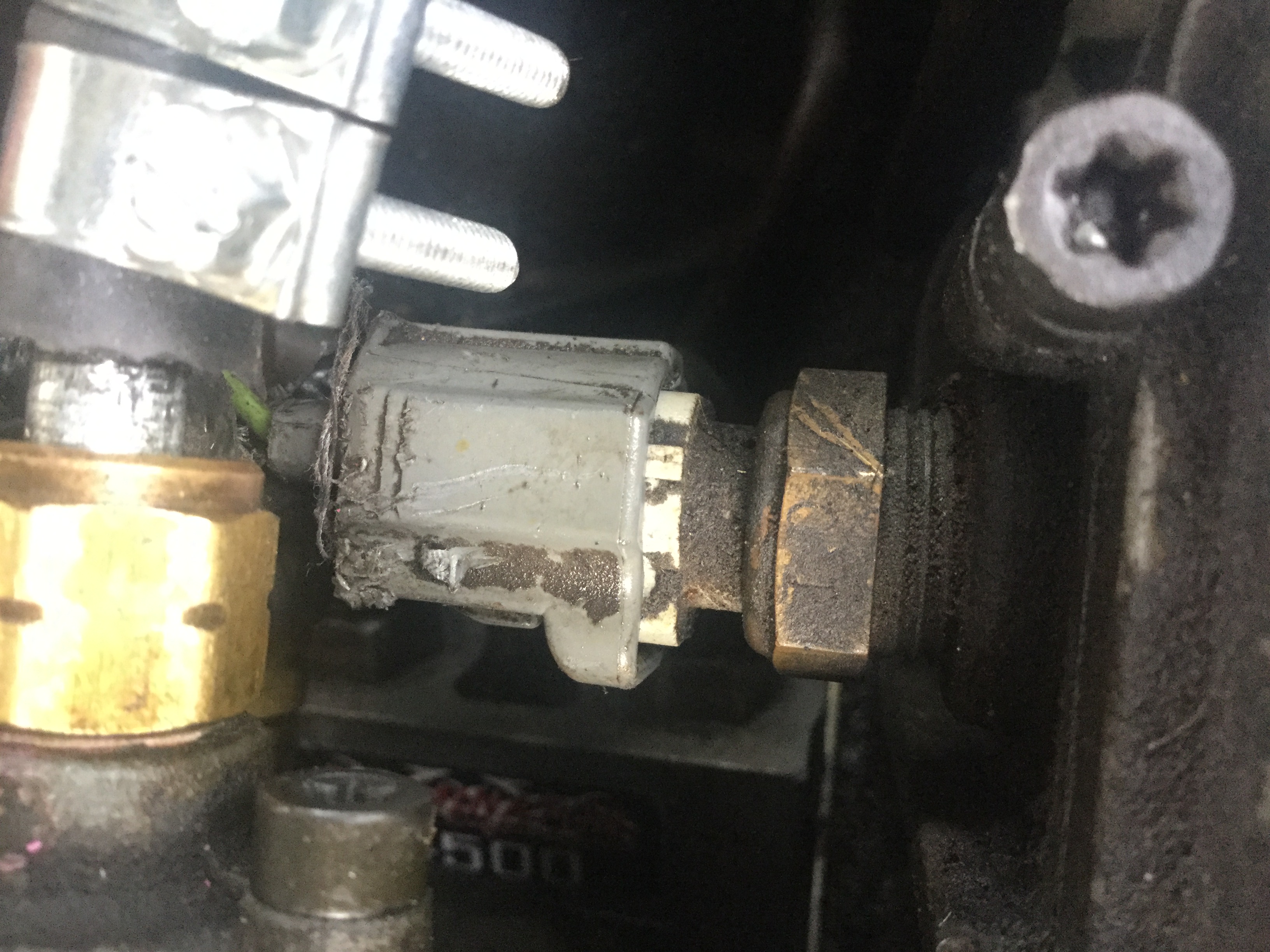
I also found this sensor unplugged, did not cause the engine to start.
You can see my tacky fuel line patch haha, Im planning to replace the lines dont worry its just a temporary fix. Guy at auto zone said that it wouldnt work, I was like gimme some 5/8 fuel hose and some hose clamps. Not a drip from it as of yet.
I also found this sensor unplugged, did not cause the engine to start.
You can see my tacky fuel line patch haha, Im planning to replace the lines dont worry its just a temporary fix. Guy at auto zone said that it wouldnt work, I was like gimme some 5/8 fuel hose and some hose clamps. Not a drip from it as of yet.
Thread Starter
|
Elder User
Joined: Jul 2016
Posts: 533
Likes: 0
From: Northwest Indiana
Just tried to start it again, cleared the codes before doing so, the only code that showed up again was the ebp sensor, which I know is bad. So I guess for the time being I can move on, Im getting ready to take the batteries out and take them in for testing.
Hotshot


Joined: Jan 2011
Posts: 18,849
Likes: 179
From: Puget Sound
As for the HPOP drive bolt torque, 96 ft/lbs - according to the book. Of course... putting that much torque on the bolt will turn the engine long before you get the bolt tight enough to function, so you need counterforce on the flywheel nut (15/16" or 24mm).
Thread Starter
|
Elder User
Joined: Jul 2016
Posts: 533
Likes: 0
From: Northwest Indiana
The video shows my AE at play, but FORScan with a Bluetooth OBDII adapter (OBDII tools link in my signature) is my common solution now.
As for the HPOP drive bolt torque, 96 ft/lbs - according to the book. Of course... putting that much torque on the bolt will turn the engine long before you get the bolt tight enough to function, so you need counterforce on the flywheel nut (15/16" or 24mm).
As for the HPOP drive bolt torque, 96 ft/lbs - according to the book. Of course... putting that much torque on the bolt will turn the engine long before you get the bolt tight enough to function, so you need counterforce on the flywheel nut (15/16" or 24mm).

FTE Leadership Emeritus


Joined: May 2014
Posts: 27,354
Likes: 5,946
From: Lake Hartwell, GA

Get someone to help you hold the crank while you torque down the HPOP drive to 96 ft/lbs. Or, put a bar on the wrench and try to leverage it onto something that will not be damaged by force being applied to it, like the ground or frame, etc...
FTE Stories
Ford Trucks for Ford Truck Enthusiasts

3 Best / 3 Worst Parts of Modern Ford Ownership
Brett Foote
10 Amazing Upgrades That Solve Common Ford Truck Owner Headaches
Pouria Savadkouei
Every 2026 Ford Engine Explained
Brett Foote
10 Ugly Ford Trucks That We Still Kinda Love
Joe Kucinski
10 Things Every Truck Owner NEEDS (2026 Edition)
Michael S. Palmer
Rezvani's Latest Post-Apocalyptic Monster Is a Ford F-150 Raptor Underneath
Verdad Gallardo
Top 10 Most Expensive Ford Trucks Ever Sold on Bring a Trailer
Joe Kucinski
2027 Ford Super Duty Buyer's Guide (Every Model, Engine, & Package)
Brett Foote
Top 10 Ford Truck Tragedies
Joe Kucinski
Thread Starter
|
Elder User
Joined: Jul 2016
Posts: 533
Likes: 0
From: Northwest Indiana
Just got back from testing my batteries, both are fine just need a good charge, both of them were at about 30-35% which is understandable with as much cranking they have been doing. Im starting to suspect the ICP. Still need to check some other things first tho.
EDIT: Just checked the upper reservoir level, that was fine.
EDIT: Just checked the upper reservoir level, that was fine.
Thread Starter
|
Elder User
Joined: Jul 2016
Posts: 533
Likes: 0
From: Northwest Indiana
Yeah probably coulda figured that out, but am I right about the location? Ive gotta take that little cover off correct?
Thread Starter
|
Elder User
Joined: Jul 2016
Posts: 533
Likes: 0
From: Northwest Indiana
Yes, little cover needs to come off to check the torque.
Diesel Tech Ron video at 6:30...
Ford 7.3 powerstroke diesel High pressure pump H-pop - YouTube
Diesel Tech Ron video at 6:30...
Ford 7.3 powerstroke diesel High pressure pump H-pop - YouTube
Why is the fuel pump mounted on the frame? I thought that was something mounted on or in the tank? Is it possible that is the issue? That video a few posts up had some weird sounds coming from that area. Any chance a bad IPR valve would do it? I have to wait for another vehicle before I can go get another one, but thats something I wouldnt mind trying to eliminate. Plus I hear having one of those on hand is a good idea.
FTE Leadership Emeritus
Joined: May 2014
Posts: 27,354
Likes: 5,946
From: Lake Hartwell, GA
All of our (unless modified) fuel pumps are on the frame under the drivers seat. Sometimes when replacing one thing, you bump or move another just enough to damage it or make it jump off the bridge. It is similar to a domino effect and unless you have air in the system or the torque was too light on the HPOP drive gear, you will need to hook it up to a tester.
Thread Starter
|
Elder User
Joined: Jul 2016
Posts: 533
Likes: 0
From: Northwest Indiana
All of our (unless modified) fuel pumps are on the frame under the drivers seat. Sometimes when replacing one thing, you bump or move another just enough to damage it or make it jump off the bridge. It is similar to a domino effect and unless you have air in the system or the torque was too light on the HPOP drive gear, you will need to hook it up to a tester.
FTE Leadership Emeritus
Joined: May 2014
Posts: 27,354
Likes: 5,946
From: Lake Hartwell, GA
If there is air in the fuel system it will eventually work its way back to the tank via a fuel return line. Do you hear the pump turn on for a few seconds when you turn the key to on, but not start yet? Without a gauge, there really is no way to tell what the fuel pressure is.