When you click on links to various merchants on this site and make a purchase, this can result in this site earning a commission. Affiliate programs and affiliations include, but are not limited to, the eBay Partner Network.
That looks like mine except I ran a connection internally and then hooked the wires up where they would normally be. I emptied out the relays inside first.
Yours looks nicer - I might do that some day when I get all of the other bugs worked out.
The ghost of Henry finally smiled on me today. I guess I just needed to invest enough sweat equity!
I checked the voltage arriving at the coil, and it seemed like a reasonable amount (roughly 4V). So, in hopes that I wouldn't have to either have the coil rebuilt or monkey with the distributor, I pulled the coil-to-distributor wire from the coil. And here's what came out...
I may be new at this, but even I could see that something was missing. Looking in the housing for the wire on top of the coil, I could see the missing clip. I fished it out, and it was not even the right kind of clip. On top of that, there was so much grime inside of the housing that I couldn't see metal. So, I bought another short spark plug wire, harvested the clip from it (since the wire was slightly smaller than mine), cleaned up the housing, put it all back together, and it started right up! In fact, I think it's running smoother than I've ever seen it - no doubt, the gunk was preventing adequate firing of the spark plugs, making the engine run rough.
Now I can turn my attention to some issues that arose once I got the truck started...
1) I noticed that when I flipped the ignition on, one brake light would light up.
2) The headlights don't go on.
3) When I rev the engine, the ammeter on the cluster moves from the middle of the gauge toward Discharge, which seems backwards. I'm guessing that I've got the wire behind the gauge going backwards through the loop.
These all seem trivial though, compared to the starting issues, and I'll deal with them after I figure out why the brakes failed.
Getting it to run for the first time in nearly a year had me dancing in the garage! Thanks again to all of you for keeping me from losing hope.
Well there is some good news! I'm shocked that problem didn't turn the check engine light on If you end up needing a new stop light switch, I've heard that Harley Davidson use the same switch on some of their bikes.
Glad to hear it was something "normal" instead of something wonderful. On a side note, looking at your regulator hookup, I'd remove the wires from the regulator altogether. It looks like it could end up being a minor battery drain (ground) path. It may not be trying to energize the relay inside, but why take the chance.
Glad to hear it was something "normal" instead of something wonderful. On a side note, looking at you regulator hookup, I'd remove the wires from the regulator altogether. It looks like it could end up being a minor battery drain (ground) path. It may not be trying to energize the relay inside, but why take the chance.
Good thought - I'll do that - thanks for the suggestion!
Well there is some good news! I'm shocked that problem didn't turn the check engine light on If you end up needing a new stop light switch, I've heard that Harley Davidson use the same switch on some of their bikes.
Do you know if the Harley check engine relay works on these, as well?
It might just be me but I never had any luck with those "make your own" plug wires. It seemed like I was always fishing the end out that didn't stay on like it was supposed to.
Custom made plug wires only for me.
It might just be me but I never had any luck with those "make your own" plug wires. It seemed like I was always fishing the end out that didn't stay on like it was supposed to.
Custom made plug wires only for me.
Is there a brand you're happy with? I've got an 8ba flatty, and I assume the coil is specific to the 8ba as well, but the cap looks pretty generic. I suppose this could mean that the coil-to-distributor wire might be specific to the 8ba. I'm also going to replace the high tension wire from the coil, since it looks like it's sparking through a crack in the insulation. That may explain why now that I've gotten it to start, it doesn't always do so.
I've realized that I may be confused (surprise, surprise...) about which wire is the high tension wire. Part of this confusion is from the fact the distributor setup seems very different from what I've been reading about as 'normal' for flatheads of this era. For one, I've got a cap that looks like this:
This looks nothing like the caps I'm seeing in the old manuals.
The center of the cap has a wire (the one that had the bad connector) that goes to the top middle of the coil. Is that the high tension wire, or is the high tension wire the smaller one that goes from the bottom of the coil to around the back of the distributor? I'm pretty sure the lower one has been sparking (I need to check at night when I get the chance), and it has a crack in the insulation. A search for 'high tension wire' in various online catalogs has come up blank, so I'm not sure which one it is. However, from stuff I've read on Ford Barn, it sounds like ignition troubles can often be fixed by replacing the high tension wire. Can anyone help me out with the terminology? Also, should it be ok to have a configuration with that cap, or should I be looking to replace the cap with something else?
"High tension" is an old Brit term for the secondary ignition circuit. The coil is basically nothing more than a step up transformer. The primary winding is fed by battery voltage around an iron core made up of a small number of turns of heavy wire, the secondary or "high tension" part is made up of many, many turns of fine wire. When the points open the magnetic field produced by the primary collapses and induces a voltage in the secondary windings, and on to the correct spark plug. So yes, the coil wire is, long story short, the "high tension" wire.
I've realized that I may be confused (surprise, surprise...) about which wire is the high tension wire. Part of this confusion is from the fact the distributor setup seems very different from what I've been reading about as 'normal' for flatheads of this era. For one, I've got a cap that looks like this:
This looks nothing like the caps I'm seeing in the old manuals.
The center of the cap has a wire (the one that had the bad connector) that goes to the top middle of the coil. Is that the high tension wire, or is the high tension wire the smaller one that goes from the bottom of the coil to around the back of the distributor? I'm pretty sure the lower one has been sparking (I need to check at night when I get the chance), and it has a crack in the insulation. A search for 'high tension wire' in various online catalogs has come up blank, so I'm not sure which one it is. However, from stuff I've read on Ford Barn, it sounds like ignition troubles can often be fixed by replacing the high tension wire. Can anyone help me out with the terminology? Also, should it be ok to have a configuration with that cap, or should I be looking to replace the cap with something else?
Thanks in advance!
The Cap'n
I think you should be looking at a manual from a '52 because of the fact that your engine is from a later truck. Your distributor looks entirely correct, but it wouldn't match anything in your '46 manual because the 59ab used an entirely different system. The one you have is way easier to work on than the correct year distributer. Keep at it Cap'n, you are getting closer!
I think you should be looking at a manual from a '52 because of the fact that your engine is from a later truck. Your distributor looks entirely correct, but it wouldn't match anything in your '46 manual because the 59ab used an entirely different system. The one you have is way easier to work on than the correct year distributer. Keep at it Cap'n, you are getting closer!
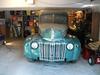
Sounds like a good plan - thanks. I want to make sure I've got the year right before I order another manual. Isn't mine an 8ba (or since it's a truck, I guess it'd be proper to call it an 8rt)? Here's a photo from when I bought it. I'll try to get a photo of the right side this evening.
"High tension" is an old Brit term for the secondary ignition circuit. The coil is basically nothing more than a step up transformer. The primary winding is fed by battery voltage around an iron core made up of a small number of turns of heavy wire, the secondary or "high tension" part is made up of many, many turns of fine wire. When the points open the magnetic field produced by the primary collapses and induces a voltage in the secondary windings, and on to the correct spark plug. So yes, the coil wire is, long story short, the "high tension" wire.
Thanks! I had no idea the coil was clear - mine looks bakelight black.
This Hennessey Takes the Expedition Tremor's Off-Roading Capability to the Next Level
Slideshow: The VelociRaptor Expedition gains a lift, upgraded suspension, Brembo brakes, and trail-ready equipment while retaining the stock 440-horsepower EcoBoost V6.
Rezvani's Latest Post-Apocalyptic Monster Is a Ford F-150 Raptor Underneath
Slideshow: Called the Fortress, the 850-horsepower pickup combines Raptor underpinnings with military-inspired features, survival equipment, and a starting price of $285,000.


 If you end up needing a new stop light switch, I've heard that Harley Davidson use the same switch on some of their bikes.