


Difference in IPs from R&D
Lead Driver
Joined: Apr 2008
Posts: 6,944
Likes: 13
No a 7.3 doesnt have to be sleeved to rebuild, depends on bore taper. That said, the chances of cavitation are real if you bore. My machine shop has done hundereds of IDIs and said its 1 in 7 or 8 that pinhole after boring. Bad enough that they have stopped working on them. Only doing mine because im did dissasembly and will reasemble, and i didnt even bore it (.003" over after honing). I was quoted 600-1000 to drill a 6.9 to 1/2" headbolts.
Laughing Gas
Joined: Aug 2003
Posts: 919
Likes: 4
From: Newberg Oregon
This is purely for comparing purposes as it pertains to fuel economy.
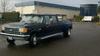
Before going to sanjose for memorial weekend I put a bone stock, used, factory turbo kit on the dually. Downpipe and exhaust are the only modded parts, 3 inch down to 4 inch exit in front of tire, no muffler, too loud.lol
Anyway I didnot turn up the pump or check the timing before heading out. The difference was last years trip,NA ,less than 10 mpg, no power on hills hard to do 70 in cali. With turbo 13.3 average whole trip, 7 to 10 lbs boost, hills were a breeze and doing 70 was no issue. I could make more boost by turning up the fuel but this is a bone stock engine with approx 100k on it and seeping head gaskets where it sat in the rain before I owned it. Didnt want to push my luck
I think this is a good compare before and after turbo all other things equal..
Now, getting a hot pump from Justin and turning it down is not a good idea, it does not take advantage of the design and I think would be false economy. I would run what you have till you can do what you want.
FWIW
Before going to sanjose for memorial weekend I put a bone stock, used, factory turbo kit on the dually. Downpipe and exhaust are the only modded parts, 3 inch down to 4 inch exit in front of tire, no muffler, too loud.lol
Anyway I didnot turn up the pump or check the timing before heading out. The difference was last years trip,NA ,less than 10 mpg, no power on hills hard to do 70 in cali. With turbo 13.3 average whole trip, 7 to 10 lbs boost, hills were a breeze and doing 70 was no issue. I could make more boost by turning up the fuel but this is a bone stock engine with approx 100k on it and seeping head gaskets where it sat in the rain before I owned it. Didnt want to push my luck
I think this is a good compare before and after turbo all other things equal..
Now, getting a hot pump from Justin and turning it down is not a good idea, it does not take advantage of the design and I think would be false economy. I would run what you have till you can do what you want.
FWIW

Thread Starter
|
Laughing Gas
Joined: Oct 2012
Posts: 755
Likes: 3
From: Rockport MA
I know we are crossing the boundary of off topic so maybe I will start another thread.
I was up at the junkyard where i pulled the turbo from and the engine is still there. I asked for a price, and it is 300 as-is and 500 with a 60 day warranty. I am curious though, since this is a 93-94 engine maybe this is my best chance at a engine at a good price, but how do I know if it will be good for a rebuild?
Devin
I was up at the junkyard where i pulled the turbo from and the engine is still there. I asked for a price, and it is 300 as-is and 500 with a 60 day warranty. I am curious though, since this is a 93-94 engine maybe this is my best chance at a engine at a good price, but how do I know if it will be good for a rebuild?
Devin

Elder User
Joined: Dec 2005
Posts: 776
Likes: 3
From: Felton, Delaware
FTE Stories
Ford Trucks for Ford Truck Enthusiasts

10 Things Every Truck Owner NEEDS (2026 Edition)
Michael S. Palmer
Rezvani's Latest Post-Apocalyptic Monster Is a Ford F-150 Raptor Underneath
Verdad Gallardo
Top 10 Most Expensive Ford Trucks Ever Sold on Bring a Trailer
Joe Kucinski
2027 Ford Super Duty Buyer's Guide (Every Model, Engine, & Package)
Brett Foote
Top 10 Ford Truck Tragedies
Joe Kucinski
AEV FXL Super Duty - the Super Duty Raptor Ford Doesn't Make
Brett Foote
Lobo Vs Lobo: Proof the F-150 Lobo Should Be Even Lower!
Michael S. Palmer
Ford's 2001 Explorer Sportsman Concept Looks For a New Home
Verdad Gallardo
10 Best Ford Truck Engines We Miss the Most!
Joe Kucinski
Postmaster
Joined: Aug 2010
Posts: 2,554
Likes: 7
From: Northern Arizona
For the price you can't really go wrong just for the value of the rods and core parts. Unfortunately there is not much way to tell if a JY engine (or even a running engine for that matter) is a good rebuild candidate until you open it up. I don't know if this makes a difference in your situation, but unless you need turbo rods (i.e. 150cc pump or higher, 400+ rwhp) the turbo piston availability is a disadvantage. Justin is trying to look into alternate suppliers but as it stands right now Mahale is the only manufacturer and the un-official word is that they may only be in production for another year or so. More than likely Justin will find options, but for the here and now if you are doing more than a re-ring on an IDIT it would be a good idea to get those pistons coming. If you don't plan to build to a power level over 400 rwhp, an NA would be just fine and easier to get pistons for. Just something to consider.
Postmaster


Joined: Dec 2004
Posts: 2,941
Likes: 30
From: Maple Valley, WA
I kinda read through things fast, so if I missed anything, feel free to slap me.
First of all, the 6.9, Studded to 100ft/lbs with stock compression is probably good to 525-550wtq before you start having issues. Now that said, thats well within the red zone, with a wide margin of error. It seems like 6.9 ARP's variance in yield strength is really put to the test up that high. If you have studs that felt fine at 100ft/lbs, youll probably have no issues, but if they felt really rubbery and inconsistent there, you may have issues. Its very important to use a good torque wrench. My 6.9 at ~18:1 was probably around 700wtq when I lifted the heads, and I was really pushing it with 37psi referenced fuel inlet pressure (Causing the timing to advance even further), and 32psi boost.
As far as the pumps go, it just depends in what kind of shape the core is in and what sized oversize parts it needs internally to deliver fuel to calibration. The R&D N/A pump is just a 5013 calibration, and the R&D IDIT pump is just a 5070 (auto) calibration. The RD2-80 has more peak fueling than the IDIT pump, and settles in right around 80-85cc at 2800, is basically the same calibration as the 90, but with 10 less cc's across the whole curve. The RD2-90 is around 105-110 at peak, and levels out to 90-95 at 2800, while still doing about 80 at 3300 till defuel above 3800. The 110 is totally different, while the smaller pumps are structurally the same as a stock DB2 with maybe some different sized internals to get the fueling, the 110 uses all the big stuff the RD4 pumps use, but utilize a DB2 H/R and all the largest internals to get peak fueling around 130-135cc, and 110-115cc at 2800. There is no defuel worked into the calibration, the governor is set to carry as much fuel out as long as possible, which is usually 100cc+ til almost 4K. The RD4-150 has the large DB4 cam pin and input thrust bearing which are both necessary to make a DB pump live above 150cc. Its calibrated to run as close to 150cc flat across the board with no defuel built in. It still utilizes the HPCA and Idle is aimed as close to stock as possible. The RD4-180 is the big guy and he is a bit of a bitch to calibrate correctly. It uses the largest roller shoes for the DB pumps, and Ive seen peak numbers as high as 235cc, but its hard to get anything over 175-180 at 2800 because the metering valve and governor are too far out of range to allow more fuel to pass to the plungers. This pump requires 10-20psi inlet for full fueling, has no HPCA, and the governor resolution makes for a touchy pump.
I hope that clears up some of the curiosity.
First of all, the 6.9, Studded to 100ft/lbs with stock compression is probably good to 525-550wtq before you start having issues. Now that said, thats well within the red zone, with a wide margin of error. It seems like 6.9 ARP's variance in yield strength is really put to the test up that high. If you have studs that felt fine at 100ft/lbs, youll probably have no issues, but if they felt really rubbery and inconsistent there, you may have issues. Its very important to use a good torque wrench. My 6.9 at ~18:1 was probably around 700wtq when I lifted the heads, and I was really pushing it with 37psi referenced fuel inlet pressure (Causing the timing to advance even further), and 32psi boost.
As far as the pumps go, it just depends in what kind of shape the core is in and what sized oversize parts it needs internally to deliver fuel to calibration. The R&D N/A pump is just a 5013 calibration, and the R&D IDIT pump is just a 5070 (auto) calibration. The RD2-80 has more peak fueling than the IDIT pump, and settles in right around 80-85cc at 2800, is basically the same calibration as the 90, but with 10 less cc's across the whole curve. The RD2-90 is around 105-110 at peak, and levels out to 90-95 at 2800, while still doing about 80 at 3300 till defuel above 3800. The 110 is totally different, while the smaller pumps are structurally the same as a stock DB2 with maybe some different sized internals to get the fueling, the 110 uses all the big stuff the RD4 pumps use, but utilize a DB2 H/R and all the largest internals to get peak fueling around 130-135cc, and 110-115cc at 2800. There is no defuel worked into the calibration, the governor is set to carry as much fuel out as long as possible, which is usually 100cc+ til almost 4K. The RD4-150 has the large DB4 cam pin and input thrust bearing which are both necessary to make a DB pump live above 150cc. Its calibrated to run as close to 150cc flat across the board with no defuel built in. It still utilizes the HPCA and Idle is aimed as close to stock as possible. The RD4-180 is the big guy and he is a bit of a bitch to calibrate correctly. It uses the largest roller shoes for the DB pumps, and Ive seen peak numbers as high as 235cc, but its hard to get anything over 175-180 at 2800 because the metering valve and governor are too far out of range to allow more fuel to pass to the plungers. This pump requires 10-20psi inlet for full fueling, has no HPCA, and the governor resolution makes for a touchy pump.
I hope that clears up some of the curiosity.

Thread
Thread Starter
Forum
Replies
Last Post
quality1construction
1999 - 2003 7.3L Power Stroke Diesel
8
Apr 2, 2014 07:51 AM
blaksmoker
Pre-Power Stroke Diesel (7.3L IDI & 6.9L)
10
Jun 27, 2007 07:09 PM