When you click on links to various merchants on this site and make a purchase, this can result in this site earning a commission. Affiliate programs and affiliations include, but are not limited to, the eBay Partner Network.
Does anyone know why there would be coupler/union in the vacuum line in the pic ? Was it there to reduce vacuum ? I'm getting ready to re-assemble and was wondering if I should re-use it with the new lines or can I omit it to run one solid line.
I'm guessing that since some of the air cleaners used a VRDV there they used two pieces of hose coupled with either a VRDV or that coupler. But, that is just a guess.
- Some calibrations used a VRDV in that location and others didn't, the rubber hoses were merely connected together in configurations not including the valve.
- An after-the-build emissions recall may have led to the removal of a factory-installed VRDV at which time the hoses were merely connected together.
Thanks for responses everyone...Being as the air cleaner was off of an '81, it may or may not apply to my '84. I'm going to run a solid line, but keep the coupler just in case. I did a brief search for TSB's (for the '81) but couldn't find anything applicable.
Thanks for responses everyone...Being as the air cleaner was off of an '81, it may or may not apply to my '84. I'm going to run a solid line, but keep the coupler just in case. I did a brief search for TSB's (for the '81) but couldn't find anything applicable.
No such valve installed on my '84 F250 (8600 GVW) 351W VIN code G, nor shown on the vacuum diagram. Do you still the vacuum diagram on your truck? That should tell you.
kr98664:
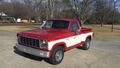
The PO obviously cobbled this truck together being as how the VIN vs. the Labels don't seem to add up, nor does anything else for that matter. According to the core support vacuum diagram, it WAS a 351. The truck had a whipped 302 in it with chewed mains when purchased last year and was rebuilt using a '87 block. The cab VIN and, as titled is : 1FTEF14F4ENA13627. Both the door jamb ident. sticker (6250 GVWR) and the dash VIN plate match. If VIN code "G" designates 351 5.8L, then I'm left to assume that the core support was replaced. The VIN decodes as a 302. The seller was not a conversationalist by any means with the only conversation being : If Ya want it, gimme 400 cash and get it the h#ll outta here ! and abruptly walked away. Nasty 'ol cuss, to say the least. Given that intellectual conversation,
I have no history from the PO and it's been forensics since day one.
I would think if it was to reduce vacuum the fitting opening would be really small so pull it and look.
Dave ----
I have had it out since the break down and the I.D. of the coupler is minimal, but enough to reduce flow by a significant amount (at least 50%) . Given that my engine is not stock, I'm electing to omit it (for now).
If VIN code "G" designates 351 5.8L, then I'm left to assume that the core support was replaced.
Yes, code G is for the 351W with the 2bbl carb. That's what my '84 has.
Working from memory, I think code H is for the high output 351W with the 4bbl carb.
Not sure if either engine code is related to GVW. (Mine is 8600 GVW, if that matters.) I think it does, as the higher GVW trucks had less strict emissions standards. We should wait for the voice of enlightenment and certaintude to confirm this, however.
Rezvani's Latest Post-Apocalytic Monster Is a Ford F-150 Raptor Underneath
Slideshow: Called the Fortress, the 850-horsepower pickup combines Raptor underpinnings with military-inspired features, survival equipment, and a starting price of $285,000.







 Nasty 'ol cuss, to say the least. Given that intellectual conversation,