When you click on links to various merchants on this site and make a purchase, this can result in this site earning a commission. Affiliate programs and affiliations include, but are not limited to, the eBay Partner Network.
Most meters I've seen have a separate port for the POSITIVE lead for DC current up to 10 amperes. But they typically also will read up to 100 mA on the "main" positive lead.
The OP does not want to measure current draw while cranking. When the battery is charged, the starter cranks and starts the engine just fine. The OP is looking for a PARASITIC draw, one that is draining the battery while it's parked.
I realize that, it wasn't clear until his post #7 exactly what he was trying to do and "not getting an amperage reading on two different meters" reason for a couple posts/comments that had been made by others to that aspect.
I didn't see where anyone suggested he attempt an amp reading during "crank" using a DVOM in series. My post was only to expanded a little bit on what Benztechnc and Tedster9 mentioned nothing beyond that.
There's no reason to measure current draw during engine cranking, at least not if parasitic draw is suspected.
V8 engine starters will draw 200 to 250 amperes FWIW.
I tested couple vehicles before making my post rather than go off memory.
I tested my 351 along with a Pontiac with a V6.
The V8 and the V6 run great and about instantly fire right up, they drew right around that 50 amp mark the V6 a tad higher than the V8's. V6 = 58amps, 351= 48amps, each reading a rapid/instant climb until moment they lit off and where running.
Keep in mind I only tested the amps drawn to start, short moment the starter is active to do so. I did not disable them from starting by removing fuel and or spark allowing for a continuous load. It wasn't necessary wasn't what I was going for.
Naturally many things effect total amps drawn and in part reason I stated if "everything as it should be". How easy or hard any particular engine is to rotate, its number of cylinders and condition/age of the starter.
I tested couple vehicles before making my post rather than go off memory.
I tested my 351 along with a Pontiac with a V6.
The V8 and the V6 run great and about instantly fire right up, they drew right around that 50 amp mark the V6 a tad higher than the V8's. V6 = 58amps, 351= 48amps, each reading a rapid/instant climb until moment they lit off and where running.
Naturally many things effect total amps drawn and in part reason I stated if "everything as it should be". How easy or hard any particular engine is to rotate, its number of cylinders and condition/age of the starter.
Your clamp on meter is probably not reacting fast enough. The guy in that video you linked measured a cranking current of around 130 amps, and that was on a little USPS LLV with a 2.5L 4 cylinder.
Your clamp on meter is probably not reacting fast enough.
+1 on that.
blinkerf150, post up the make and model of meter you're using. I have a feeling you either have a blown fuse as mentioned above OR maybe you just need some instruction on how to use it correctly. No offense if you do happen to know what you're doing, just trying to help in case you don't.
Most meters I've seen have a separate port for the POSITIVE lead for DC current up to 10 amperes. But they typically also will read up to 100 mA on the "main" positive lead.
The OP does not want to measure current draw while cranking. When the battery is charged, the starter cranks and starts the engine just fine. The OP is looking for a PARASITIC draw, one that is draining the battery while it's parked.
Correct! I haven't been able to measure any parasitic draw from the battery. I did measure voltage at the fuses across the two test points on each fuse in the engine compartment and in the cabin. Most measure 11 millivolts or less.
One fuse in the cabin measured around 60 millivolts, so maybe that is the source of the parasitic draw. This was in the fuse no. 4 spot, which the fuse panel cover said was for the cabin buzzer, instrument lighting, and some other stuff. I've never heard a buzzer in the cabin, so I don't know if it's broken or missing. I feel like this may be a difficult circuit to find a bad ground or other problem.
blinkerf150, post up the make and model of meter you're using. I have a feeling you either have a blown fuse as mentioned above OR maybe you just need some instruction on how to use it correctly. No offense if you do happen to know what you're doing, just trying to help in case you don't.
No offense taken. I think I have just enough knowledge to be dangerous. I'm not well-versed in electronics, but I know a little.
I've been using a couple of DVOMs I borrowed from work. One is an older Fluke, and I used a newer Fluke 111 to measure the voltage across the fuses. I checked the fuses for the meters, and they were OK. I also definitely had the positive leads in the correct port for checking amperage.
I also attempted to use a clamp-style amperage meter called a TIF 1000. I used this clamped around the negative cable while the cable was connected to the battery to measure parasitic draw, but I don't know if I was using it correctly.
I definitely wasn't using the meters to measure current during cranking. I'm only interested in parasitic draw at rest.
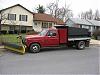
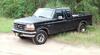
The truck in question is a 1993 F-150 XL 4.9l 5 spd. I'm probably the 3rd or 4th owner, and I have a feeling this truck may be a combination of other trucks.
I did install an aftermarket stereo, but I've done that several times and I think I did a good job. I didn't see any problem when I measured the voltage across the fuse for that circuit.
Did you try measuring current with the meter connected in series and with a door open, to include the dome light? That would at least be a proof-of-concept that your setup is correct. If that doesn't show a current draw, then there's a setup or meter issue.
I apologize if my post confused everyone and got off topic. that was not the intention. I suspected that he had blown his meter's fuse with cranking. If that is not the case, he should see something at rest even if it's a few mili-amps. Assuming that he has the meter set to the correct setting.
To test the fuse, put the meter on the Sound waves or Ohms and connect a lead from Amps to Gnd. Sould tell you if the fuse is open OL or good 0.00 Approximately.
What mad pogue suggests is the correct next step. The light should come on the meter should read. Meter connected between battery and cable with battery and cable not touching.
Rezvani's Latest Post-Apocalytic Monster Is a Ford F-150 Raptor Underneath
Slideshow: Called the Fortress, the 850-horsepower pickup combines Raptor underpinnings with military-inspired features, survival equipment, and a starting price of $285,000.














 I'm not well-versed in electronics, but I know a little.