



1972 F100 Blinker Problem

Thread Starter
|
New User
Joined: Dec 2014
Posts: 17
Likes: 0
 1972 F100 Blinker Problem
I have a 1972 F100 which i just recently replaced all my lights to LEDs, as well as my flasher relays. Everything Works Perfectly, Except (And Yes, There's always an except) my Right Blinker when i turn it on doesn't flash or stay solid or anything, If i'm lucky It will flash once. My Hazards work and my running lights work, it's just the blinker in the right side rear and front.
Here is a video:
Thanks in advance.
-Kevin
Here is a video:
Thanks in advance.
-Kevin

Fleet Owner
Joined: Dec 2009
Posts: 20,678
Likes: 83
From: NorCal
Kevin,
Avoid starting a new thread on the same issue because doing so results in a lack of troubleshooting continuity....
ORIGINAL THREAD LINKED BELOW!!!!
https://www.ford-trucks.com/forums/1...r-problem.html
Avoid starting a new thread on the same issue because doing so results in a lack of troubleshooting continuity....
ORIGINAL THREAD LINKED BELOW!!!!
https://www.ford-trucks.com/forums/1...r-problem.html

Elder User
Joined: Aug 2015
Posts: 535
Likes: 3
Maybe the hazards use a different ground and the ground on that side is poor. Just guessing. My hazards are a different flasher unit so it is its own circuit and wouldn't apply. If that's the case, it could still be a ground, or maybe a bad flasher? It could be the switch too. Easy to test that buy just bypassing it to check if the flasher and circuit is ok. Id check the flasher ground first, then start bypassing switch to test that. Another way is reversing the outputs on the switch, then if it works, it pretty much tells you the signal switch is toast. Since it does light up but not flash, I'm guess the ground for the flasher is bad. That said. LED's can be a pain. Some work, some don't. For how reliable they are said to be, I have had nothing but problems with them, and never use them any more. I replaced all the lights on my 40ft fifth wheel hoping to save battery. Boy did I ever save power. Because the led's burned out about every three days, so they never worked. LOL. Spent hrs checking circuits to see why, and never found an issue or a reason. They just don't work on that thing. Regular bulbs last forever. I have found there are cheap led's, and pricey good ones. They look the same, but its the brain inside that makes them work that's the difference. The cheap ones burn out fast, the expensive ones last as advertised. My 2 cents. LOL.
Thread Starter
|
New User
Joined: Dec 2014
Posts: 17
Likes: 0
Maybe the hazards use a different ground and the ground on that side is poor. Just guessing. My hazards are a different flasher unit so it is its own circuit and wouldn't apply. If that's the case, it could still be a ground, or maybe a bad flasher? It could be the switch too. Easy to test that buy just bypassing it to check if the flasher and circuit is ok. Id check the flasher ground first, then start bypassing switch to test that. Another way is reversing the outputs on the switch, then if it works, it pretty much tells you the signal switch is toast. Since it does light up but not flash, I'm guess the ground for the flasher is bad. That said. LED's can be a pain. Some work, some don't. For how reliable they are said to be, I have had nothing but problems with them, and never use them any more. I replaced all the lights on my 40ft fifth wheel hoping to save battery. Boy did I ever save power. Because the led's burned out about every three days, so they never worked. LOL. Spent hrs checking circuits to see why, and never found an issue or a reason. They just don't work on that thing. Regular bulbs last forever. I have found there are cheap led's, and pricey good ones. They look the same, but its the brain inside that makes them work that's the difference. The cheap ones burn out fast, the expensive ones last as advertised. My 2 cents. LOL.
Logistics Pro
Joined: Dec 2004
Posts: 4,651
Likes: 60
From: Hemet ca.
Don't bypass anything yet, It definitely looks like a ground issue. Your video did not show the rear signals. What are the rear signals doing?
The problem with bypassing is, the problem is still there. You need to correct this problem.
The problem with bypassing is, the problem is still there. You need to correct this problem.
Thread Starter
|
New User
Joined: Dec 2014
Posts: 17
Likes: 0
The rears do exactly what the fronts do. From my understanding there is a ground in the front left and the rear right. The connections look good.
Fleet Owner
Joined: Dec 2009
Posts: 20,678
Likes: 83
From: NorCal
Trending Topics
Elder User
Joined: Aug 2015
Posts: 535
Likes: 3
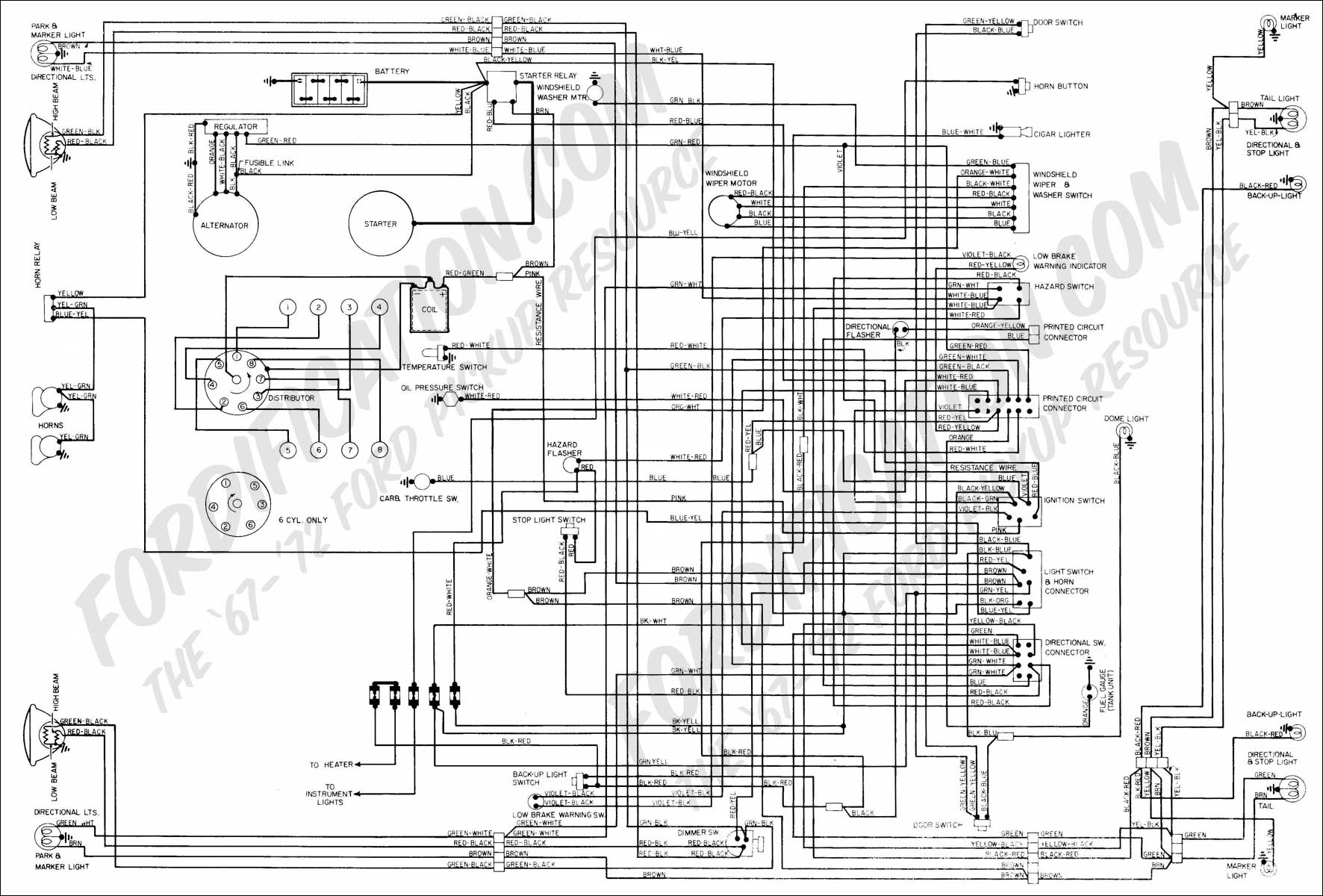
You would supply 12v to the flasher post that has the switch feed. Wont hurt the switch if its in the neutral position, but if the signal starts flashing with the jump then it tells you the feed from the switch for that side is pooched. If no difference the feed is probably ok, then you bypass the flasher to that side. If it will flash with you supplying 12v, on and off like you are the flasher, then it points to a malfunctioning flasher. I use a button switch on my jumper wire so there is no arcing pretending to be the relay. LOL. So if the flasher is the culprit it could just be the ground, or the flasher. I followed the drawing and its grounded in several places, and combined with other grounds with several grounds reduced down to one in a few places. So any of those joints could be a bad ground, and could cause the resistance making the flasher not function on that side. Its complicated, but if you start at the switch, or bulb, and test each component and wire all the way to the other end. You will eventually find the issue. Sounds stupid, but if you jump around on the circuit you will take for ever to find it. Start at one end and work you way to the other without skipping a piece, you will be isolating each part and will run into the issue. You now have a diagram from the other thread, so get the test light and continuity tester (multimetre), and start tracing and ohm testing grounds and wires. Note: when ohm testing grounds, put the ground lead on the battery ground, not the frame or motor. Also, isolate and ohm test every wire along the way. A test light will still light even though a + wire has resistance, so by ohm testing it will tell you if the wire is 100% or leaking,(grounding out) and if there is any corrosion not visible outside that is causing resistance. A lot of guys don't ohm test, they think it doesn't tell anything if the test light works. The test light will light with as little as 1 volt. Although that would be noticeable because it would be dim, a small leak will not be noticeable.
FTE Stories
Ford Trucks for Ford Truck Enthusiasts

10 Fords to Drive Before You Die
Joe Kucinski
3 Best / Worst Features Of The 2025+ Ford Expedition
Brett Foote
10 Ways Ford is LOSING to the Competition
Joe Kucinski
Top 6 Best Deals Available on New Fords & Lincolns Right Now
Brett Foote
This Hennessey Takes the Expedition Tremor's Off-Roading Capability to the Next Level
Verdad Gallardo
Top 10 Fords at 2026 Carlisle Ford Nationals
Joe Kucinski
3 Best / 3 Worst Parts of Modern Ford Ownership
Brett Foote
10 Amazing Upgrades That Solve Common Ford Truck Owner Headaches
Pouria Savadkouei
Every 2026 Ford Engine Explained
Brett Foote
Elder User
Joined: Aug 2015
Posts: 535
Likes: 3
[QUOTE=gangstakr;16111228]Don't bypass anything yet, It definitely looks like a ground issue. Your video did not show the rear signals. What are the rear signals doing?
The problem with bypassing is, the problem is still there. You need to correct this problem.[/QUOTE
Hahaha. That's funny. No , bypassing is the way you test components to FIND your issue if you don't own the multimetre you need to test properly. My writing may be bad, but I didn't mean bypass to make it work as a permanent solution. I meant for a testing procedure. If you have tools, unplug and test. Sorry for the confusion.
The problem with bypassing is, the problem is still there. You need to correct this problem.[/QUOTE
Hahaha. That's funny. No , bypassing is the way you test components to FIND your issue if you don't own the multimetre you need to test properly. My writing may be bad, but I didn't mean bypass to make it work as a permanent solution. I meant for a testing procedure. If you have tools, unplug and test. Sorry for the confusion.

Post Fiend
Joined: Apr 2002
Posts: 19,311
Likes: 97
From: Waterloo, Iowa
Looks got nothin' to do with it. Replace all the old, corroded or missing worn out cables, grind down to bright shiny metal at block, frame, and firewall and tighten securely.

Thread
Thread Starter
Forum
Replies
Last Post
Chess67
1967 - 1972 F-100 & Larger F-Series Trucks
13
Jun 28, 2018 11:29 AM
ovaknike1
1967 - 1972 F-100 & Larger F-Series Trucks
10
Mar 9, 2016 09:10 AM
Adam Woolridge
1961 - 1966 F-100 & Larger F-Series Trucks
4
Dec 7, 2015 04:31 AM
DBROWN76
1973 - 1979 F-100 & Larger F-Series Trucks
6
Dec 1, 2010 10:31 PM