



Click with no start

Thread Starter
|
New User
Joined: Nov 2015
Posts: 3
Likes: 0
From: New Jersey
Click with no start
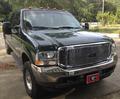
So I bought a Lifted 1999 F250 a couple weeks ago and last night the thing wouldn't start. The battery connections are not perfect but there's power going to the truck because it will give me the wait to start light and all. When I try to start it there's one really loud click and certain lights like the clock momentarily turn off when it clicks. Tried hitting the starter didn't work. Tried putting a jump pack to the starter and it didn't spark like expected. Any help would be appreciated. Thanks!

Posting Guru
Joined: Sep 2014
Posts: 2,404
Likes: 3
From: Asheville-where weird is
Hi and welcome to the forum. You can work this from the batts to the starter or reverse.
Check and clean all of your grounds: at the battery, at the block, and at the chassis.
Then, if there is no change, clean all positives from the batteries, to the starter solenoid, all the way to the starter.
Then, if it isn't fixed, start looking at the B+ to the components. Batteries, then solenoid, then see if you are getting power all the way to the starter. If so, the starter is probably gone. If not, make sure the solenoid is powering up properly. If not, then the solenoid is probably done.
It all comes down to tracing wire from the Batts to the starter. If it is none of this come back and tell us what you've accomplished.
Check and clean all of your grounds: at the battery, at the block, and at the chassis.
Then, if there is no change, clean all positives from the batteries, to the starter solenoid, all the way to the starter.
Then, if it isn't fixed, start looking at the B+ to the components. Batteries, then solenoid, then see if you are getting power all the way to the starter. If so, the starter is probably gone. If not, make sure the solenoid is powering up properly. If not, then the solenoid is probably done.
It all comes down to tracing wire from the Batts to the starter. If it is none of this come back and tell us what you've accomplished.

Junior User
Joined: Feb 2013
Posts: 71
Likes: 0
From: Bishop
My starter died on me with no warning at all. I actually thought it might be the batteries at first. The starter was seized up and after a couple of tries you will know if it is bad because it will get really hot, especially if it isn't moving. You can either get down there and feel if its hot, or have someone else try to crank it and watch it when they do. Mine puffed a little bit of smoke when I had my brother in law try and turn it over. I didn't want to take a chance so I bought OEM from the stealership. It's super easy to replace. If your batteries are no good, you won't have any luck cranking over these beasts.
Thread Starter
|
New User
Joined: Nov 2015
Posts: 3
Likes: 0
From: New Jersey
Hi and welcome to the forum. You can work this from the batts to the starter or reverse.
Check and clean all of your grounds: at the battery, at the block, and at the chassis.
Then, if there is no change, clean all positives from the batteries, to the starter solenoid, all the way to the starter.
Then, if it isn't fixed, start looking at the B+ to the components. Batteries, then solenoid, then see if you are getting power all the way to the starter. If so, the starter is probably gone. If not, make sure the solenoid is powering up properly. If not, then the solenoid is probably done.
It all comes down to tracing wire from the Batts to the starter. If it is none of this come back and tell us what you've accomplished.
Check and clean all of your grounds: at the battery, at the block, and at the chassis.
Then, if there is no change, clean all positives from the batteries, to the starter solenoid, all the way to the starter.
Then, if it isn't fixed, start looking at the B+ to the components. Batteries, then solenoid, then see if you are getting power all the way to the starter. If so, the starter is probably gone. If not, make sure the solenoid is powering up properly. If not, then the solenoid is probably done.
It all comes down to tracing wire from the Batts to the starter. If it is none of this come back and tell us what you've accomplished.
Posting Guru
Joined: Sep 2014
Posts: 2,404
Likes: 3
From: Asheville-where weird is
A volt/ohm meter is best so that you will know how many volts are actually reaching the starter. A simple test light will let you know if there is absolutely 0 power getting there...not likely.
Test your B+ first.
Yes, there are other things that it could be. These are the most likely, obvious, and easy to change.
A decent wire brush. Baking soda and water to address the areas where there is corrosion which will neutralize the acid, avoid the alternator, and some decent conductive grease/sealant to coat the "now" clean metal to finish up.
Test your B+ first.
Yes, there are other things that it could be. These are the most likely, obvious, and easy to change.
A decent wire brush. Baking soda and water to address the areas where there is corrosion which will neutralize the acid, avoid the alternator, and some decent conductive grease/sealant to coat the "now" clean metal to finish up.
Thread Starter
|
New User
Joined: Nov 2015
Posts: 3
Likes: 0
From: New Jersey
A volt/ohm meter is best so that you will know how many volts are actually reaching the starter. A simple test light will let you know if there is absolutely 0 power getting there...not likely.
Test your B+ first.
Yes, there are other things that it could be. These are the most likely, obvious, and easy to change.
A decent wire brush. Baking soda and water to address the areas where there is corrosion which will neutralize the acid, avoid the alternator, and some decent conductive grease/sealant to coat the "now" clean metal to finish up.
Test your B+ first.
Yes, there are other things that it could be. These are the most likely, obvious, and easy to change.
A decent wire brush. Baking soda and water to address the areas where there is corrosion which will neutralize the acid, avoid the alternator, and some decent conductive grease/sealant to coat the "now" clean metal to finish up.
Posting Guru
Joined: Sep 2014
Posts: 2,404
Likes: 3
From: Asheville-where weird is
That is a good question...and everyone has to make their own decision.
Dielectric Grease vs Conductive Grease
Dielectric Grease vs Conductive Grease
Trending Topics
Fleet Mechanic
Joined: Aug 2006
Posts: 1,465
Likes: 17
From: Jacksonville, FL
Originally Posted by BuckYoung
What grease or sealant would you recommend
Most of the large home improvement stores have it in their electrical section.
I have also used di-electric grease on terminations before, and while it is an insulator it does well at keeping oxidization at bay and can provide a sound termination if used correctly.
FTE Stories
Ford Trucks for Ford Truck Enthusiasts

2027 Ford Super Duty Buyer's Guide (Every Model, Engine, & Package)
Brett Foote
Top 10 Ford Truck Tragedies
Joe Kucinski
AEV FXL Super Duty - the Super Duty Raptor Ford Doesn't Make
Brett Foote
Lobo Vs Lobo: Proof the F-150 Lobo Should Be Even Lower!
Michael S. Palmer
Ford's 2001 Explorer Sportsman Concept Looks For a New Home
Verdad Gallardo
10 Best Ford Truck Engines We Miss the Most!
Joe Kucinski
2026 Shelby F-150 Off-Road: Better Than a Raptor R?
Brett Foote
2027 Super Duty Carhartt Package First Look: 12 Things You NEED to Know!
Michael S. Palmer
10 Most Surprising 2026 Ford Truck Features!
Joe Kucinski


Thread
Thread Starter
Forum
Replies
Last Post
Ponyboychris
1999 - 2003 7.3L Power Stroke Diesel
75
Jun 21, 2009 10:48 AM
quad4x4
Ford Inline Six, 200, 250, 4.9L / 300
8
Jan 3, 2007 01:10 AM